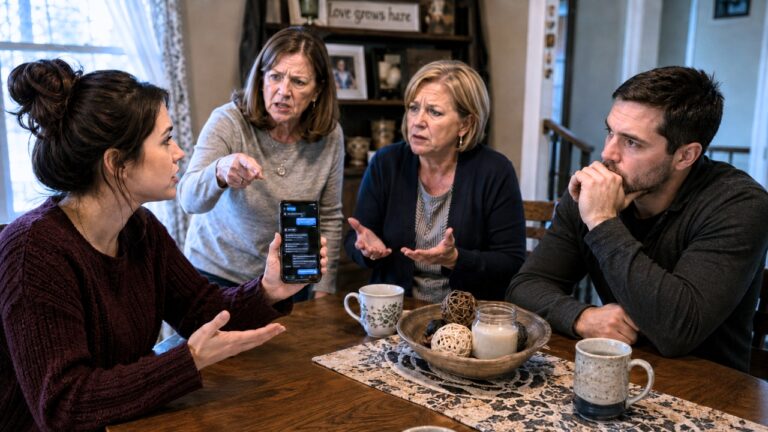
Mother-in-Law Was Told She Wasn’t Allowed in the Delivery Room — Then She Rallied the Whole Family Against the Decision
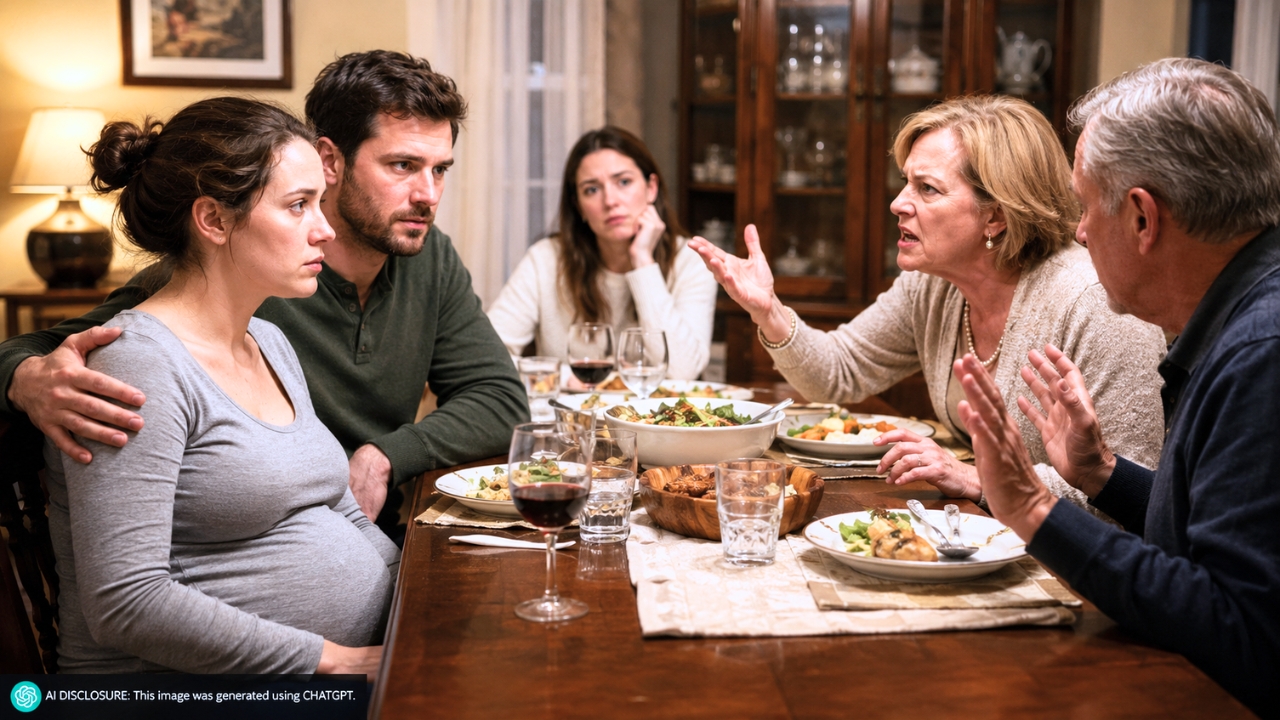
Photo credit: AI-generated image created using ChatGPT. Illustrative only.
She thought the exciting part was finally here: the happy dinners, the baby planning, the family celebrating. Instead, one conversation at her in-laws’ table turned her pregnancy announcement into a full-on family drama—complete with a relative texting to call her cruel for saying “no” to the delivery room.
A 27-year-old newlywed, pregnant for the first time, said she and her husband were over the moon. But she also knew marrying into a big, close-knit family came with a downside: everyone felt entitled to every detail. And once baby talk started, it didn’t sound like support. It sounded like a takeover.
The problem started before the big blowup
Before she was even pregnant, she’d already noticed a pattern. In her own family, her sisters had kids, and she’d learned what “respectful” looks like—like not posting children’s faces online and following the parents’ preferences. It wasn’t dramatic. It was just basic courtesy.
Her husband’s side didn’t operate that way. She described them as large and tightly connected, which often turned into “we do what we want.” The family posted freely, shared freely, and expected access without needing to ask.
One comment from her mother-in-law stuck with her: a friend of theirs was about to give birth, and her MIL openly talked about meeting the baby before the parents left for a New Year’s trip planned long ago. The mom-to-be couldn’t help asking why her MIL assumed visitors would be welcome during a season when sickness spreads fast. Her MIL didn’t answer—just gave her a look and moved on.
It wasn’t a fight yet. But it was a preview.
The pregnancy news got shared before she was ready
When she found out she was pregnant, she was excited—but also cautious. She didn’t even know how far along she was, and like many people in the earliest weeks, she wasn’t ready to blast the news. She wanted to tell her parents and sisters first, and she was honest about why: it was early, and she wasn’t out of the woods yet.
Her husband was so excited that he told his parents and sister immediately. And from there, it spread fast. She said she started getting a flood of congratulatory texts from extended family, which hit her like a gut punch—not because they weren’t happy, but because the moment wasn’t hers anymore.
She told her husband she felt hurt, especially because she didn’t even get to share the news with her own family. At first he got defensive, but when he heard how shaken and upset she was, he apologized.
That set the stage for what they hoped would be a calmer reset: a dinner at his parents’ house where they could celebrate, but also spell out some expectations for privacy moving forward.
Dinner turned into a “so here’s the plan” monologue
At the dinner, the conversation eventually shifted to the pregnancy itself—due dates, hospitals, what they were thinking. That’s when her MIL started talking less like a curious grandparent and more like someone scheduling a role.
Her MIL asked about birth plans and when she thought the baby would arrive so she could ask for time off. She asked which hospital they’d be using. Then she said she couldn’t wait to be in the room. Before the mom-to-be could even respond, her MIL kept going—mentioning they should have a room ready in their house so she could assist with the baby.
The pregnant woman looked to her husband, then back to her MIL, because the pace of the conversation didn’t leave much space to speak. It was like the plans were being announced at her, not discussed with her.
Finally, she cut in and said it plainly: the delivery room would be just her and her husband. And once they got home, they wanted a week alone to enjoy their baby. As for her MIL staying with them, she thanked her for the offer—but said no, that wouldn’t be happening.
She said “just us,” and the family didn’t take it quietly
Her MIL looked offended and pushed back, insisting her son would want her there. It was a not-so-subtle attempt to turn it into a loyalty test: mother versus wife, who does he pick in the biggest moment?
But her husband didn’t leave her hanging. He told his mom he agreed—only the two of them in the room, no one else. In that moment, it could have ended there. It was a clear answer, delivered respectfully, with both spouses aligned.
Her father-in-law tried to cool things down, telling his wife it was okay and that times are different now. And for a second, it sounded like the conversation might settle.
But the evening didn’t fully recover. Her MIL switched topics and asked if she could do a gender reveal once they knew. The mom-to-be said they didn’t want to find out the gender—they wanted it to be a surprise.
That’s when her MIL said, “that’s okay bring me the ultrasound photos and I’ll know.”
It wasn’t even framed like a joke. It landed like a workaround. Like no matter what the parents chose, she’d find a way to get what she wanted anyway.
The pregnant woman said she wanted to respond, but she was emotionally drained. She went quiet the rest of the night, then found herself feeling distant from her husband afterward—not because he hadn’t supported her, but because the whole situation left her raw.
The next day, someone else jumped in to shame her
Then came the part that made it feel bigger than one tense dinner. The next day, she received a text from one of her husband’s relatives calling her an AH for saying her MIL couldn’t be in the delivery room and accusing her of “robbing” her MIL of the experience.
That message changed the temperature completely. Now it wasn’t just a mother-in-law disappointed she didn’t get front-row access. It was family members getting recruited into the argument, turning a private medical decision into a group debate.
And to the mom-to-be, it likely confirmed what she feared from the start: in this family, “close-knit” can quickly become “everybody weighs in.”
Her question—laid out in the original post—was simple: was she wrong to tell her mother-in-law no?
She wanted a calm start, but it’s already turned into a power struggle
What makes this situation so intense is that it isn’t really about one seat in one room. It’s about who gets to call the shots in the earliest, most vulnerable moments of becoming parents.
From her perspective, she tried to handle it directly: she didn’t scream, she didn’t insult anyone, and she even thanked her MIL for the offer to help—while still saying it wouldn’t work for them. Her husband backed her up in the moment, which is huge. But the fact that a relative felt comfortable sending a scolding text suggests the pressure isn’t going to stop on its own.
For now, she’s pregnant, newly married, and already having to defend decisions that should have stayed between her and her husband. And unless the family backs off, the next milestones—ultrasounds, baby name ideas, the birth itself, the first week home—could come with even more “helpful” demands dressed up as entitlement.
Right now, she isn’t just planning for a baby. She’s planning for how to keep her peace while her husband’s family tries to make her pregnancy a shared event.