Mother-in-Law Kept Kissing the Newborn — Then One Simple Health Rule Became a Family Problem

Photo credit: Smolina Marianna/Shutterstock.com
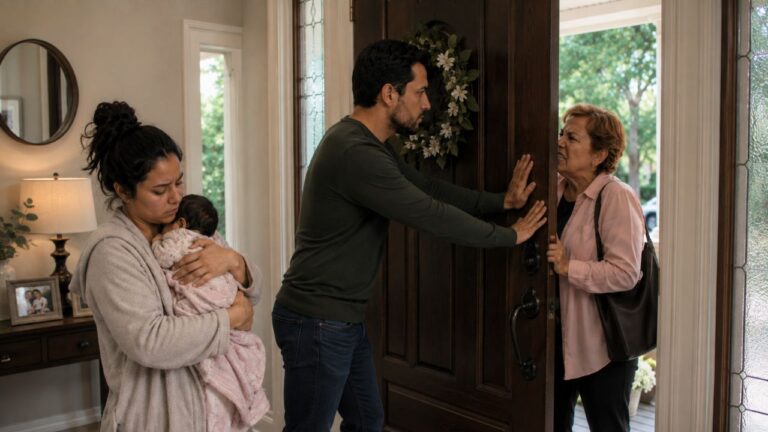
A new mom said she tried to set one clear health boundary for her newborn, but her mother-in-law kept ignoring it until the parents finally had to put a harder limit on visits.
The woman shared the situation on Reddit, explaining that she and her husband had recently welcomed a baby. Like many new parents, they were careful about visitors, germs, and what people were allowed to do around the newborn. One of their rules was simple: no kissing the baby.
It was not a complicated rule. It was not aimed at one person. It was not meant to punish anyone. The parents wanted to protect their newborn from unnecessary exposure, especially during those early weeks when babies are still tiny, vulnerable, and unable to handle illness the way older kids or adults can.
But the poster said her mother-in-law did not respect it.
According to the new mom, her mother-in-law kept kissing the baby even after being told not to. The parents would remind her, and she would do it anyway. What should have been a basic safety request turned into an ongoing fight because the grandmother seemed to treat the rule as optional.
The poster said she eventually reached the point where she did not want the mother-in-law holding the baby anymore if she could not follow the no-kissing rule. That caused tension, and the mother-in-law appeared to take the boundary personally.
The woman brought the situation to Reddit in a post titled “AITA for not letting my mother in law kiss my newborn baby?”: https://www.reddit.com/r/AmItheAsshole/comments/17aotlq/aita_for_not_letting_my_mother_in_law_kiss_my/
The emotional conflict came from how small the request seemed compared with how big the reaction became. The parents were not asking the grandmother to stay away from the baby forever. They were not saying she could not love the child. They were not even saying she could not hold the baby at first. They were asking her not to put her mouth on a newborn.
For many parents, that boundary feels like common sense. Newborns can get sick quickly, and adults can carry germs without realizing it. A kiss that feels sweet to a grandparent can feel risky to parents who are responsible for the baby’s health.
But for some grandparents, kissing a baby feels like affection, bonding, or a normal family habit. Being told not to do it can feel cold or controlling if they do not understand the concern. That appeared to be part of the problem here. The mother-in-law seemed to view the rule as unnecessary or insulting, while the parents viewed it as basic protection.
The issue became less about the kiss itself and more about trust.
If a grandparent cannot follow one clear rule while the parents are watching, how can the parents trust that same person with other rules later? If she kisses the baby after being told no, will she also ignore feeding instructions, nap routines, allergy warnings, car seat rules, or illness precautions?
That is why the poster seemed so frustrated. The boundary was easy to follow. The mother-in-law was making it difficult by acting as if her desire to kiss the baby mattered more than the parents’ decision.
New parents already have enough to manage. They should not have to monitor every second of a visit because someone keeps trying to sneak around a health rule. Once a visit turns into supervision, it stops feeling like family support and starts feeling like stress.
The poster’s decision to limit holding was not about being cruel. It was a consequence. If someone cannot hold the baby without kissing the baby, then they cannot hold the baby. That is not punishment. It is the parents making sure their boundary can actually be enforced.
The bigger question was whether the mother-in-law would accept that the parents were in charge. Grandparents can love deeply. They can be excited. They can have opinions. But they do not get to override the people responsible for the child.
For the poster, the answer became clear: no kissing meant no kissing, even if Grandma did not like it.
Commenters overwhelmingly sided with the new mom and said she was not wrong for enforcing the rule.
Many said the no-kissing rule is common for newborns and should not be hard for adults to respect. Several commenters pointed out that a baby’s health matters more than a grandparent’s feelings, especially when the request is so simple.
Others focused on the mother-in-law repeatedly ignoring the boundary. They said one mistake might be corrected with a reminder, but continuing to kiss the baby after being told no showed disrespect for the parents.
A common suggestion was to stop giving warnings and start using consequences. If the mother-in-law kissed the baby, the visit should end or she should lose holding privileges. Commenters said boundaries only work when people know ignoring them will change what happens next.
Some also encouraged the husband to take the lead with his mother. Since it was his parent breaking the rule, commenters felt he should be the one to explain clearly that the baby’s parents make the rules and that no one gets exceptions.
Several people said the grandmother did not need to kiss the baby to bond. She could hold the baby if allowed, talk to the baby, help the parents, bring food, wash bottles, fold laundry, or simply enjoy being present. Love does not require ignoring a health boundary.
The strongest advice was to trust the parents’ instincts and stop apologizing for protecting the baby. If a relative refuses to follow a simple rule, the problem is not the rule. The problem is the refusal.