Mom Says Her Daughter’s Paternal Grandparents Want a Relationship After Hurting the Family Dynamic
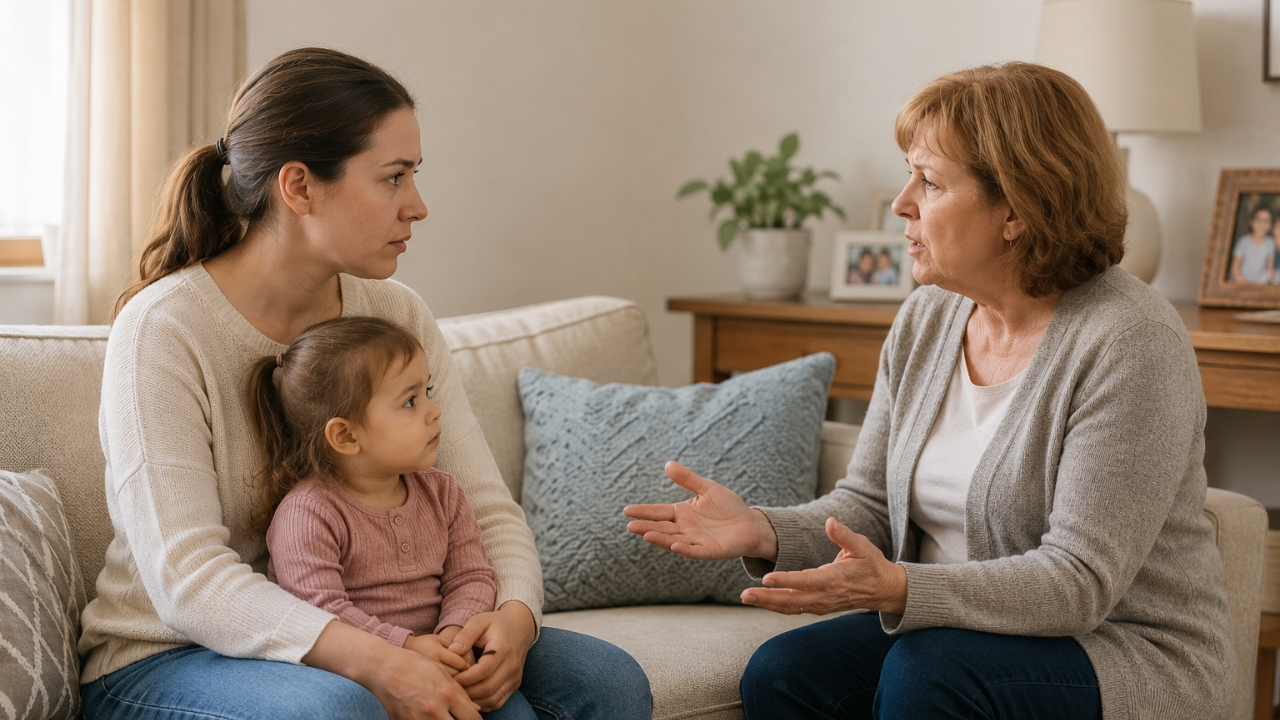
A 25-year-old mother said she feels guilty for limiting her daughter’s relationship with her paternal grandparents, but after years of ignored boundaries, uncomfortable comments, and family blowups, she no longer believes access to her child should come at the cost of being disrespected as the mother.
The woman shared the situation on Reddit, explaining that she is happily married to her 28-year-old husband and they have a 2-year-old daughter. She said her daughter is the center of her life, and she put much of her own life on pause so she could be present for her until school age.
The trouble with her mother-in-law began while she was pregnant, but the poster said she did not fully grasp how serious it was until after her daughter was born.
During pregnancy, her mother-in-law pushed to be in the delivery room. The couple said no. She also pushed for a baby shower, and they said no to that too. According to the poster, those were early signs of a pattern: the parents would set a boundary, and the mother-in-law would keep doing what she wanted anyway.
One example involved a baby jumper.
The poster said she never liked the idea of using a jumper for her daughter. She was not judging other parents who used one, but after reading about possible concerns, she decided it was not something she wanted for her own baby. When her daughter was 3 months old, her mother-in-law bought one anyway.
The poster tried to shrug it off because she assumed her daughter would not use it. But when they visited the mother-in-law’s house when the baby was 4 months old, the grandmother brought out the jumper and put the baby in it.
The parents took the baby out.
Then, according to the poster, the grandmother put her right back in.
That moment seemed to capture the larger problem. The mother-in-law did not simply disagree with the parents. She acted as though their decision did not count.
There were other issues too. The poster breastfed and pumped for her daughter, and she said her mother-in-law made comments suggesting her milk was not enough or not filling the baby up. When they visited, the grandmother would get angry and demand to feed the baby. At times, according to the poster, she even snatched bottles from her hand.
The comments did not stop there.
The poster said her mother-in-law told the little girl she had “no mom” when the child fussed while being held by her grandmother. She also allowed screen time even though the parents had specifically said they did not want their daughter watching shows or videos.
The woman shared the full situation in a Reddit post titled “AITAH for not wanting my daughter to have a relationship with her paternal grandparents?”: https://www.reddit.com/r/AITAH/comments/1nwri0n/aitah_for_not_wanting_my_daughter_to_have_a/
The poster said her husband had tried talking to his mother multiple times, but the conversations only seemed to make things worse. In one case, the mother-in-law blocked both of them and kicked them out of her house. Later, she unblocked them, but the poster said no real apology ever came.
After that, the couple took some distance.
The poster said it has been about a year since they have gone to the mother-in-law’s house. Instead, they see the grandparents in public places so both her husband and daughter can still have some level of relationship with them. The mother-in-law no longer brings up having the baby at her house, but the lack of apology still bothers the poster.
That is where the guilt comes in.
The poster said she can see that her husband wants his mother to have a relationship with their daughter. She can also see that her mother-in-law loves the child. But she does not believe someone can hurt the child’s mother, ignore the parents’ rules, and still expect normal access to the child.
For a long time, she said, she allowed the behavior because she did not want to be the reason her husband and daughter lost that relationship. But she eventually realized the responsibility was not fully hers. She could not keep letting someone walk over her boundaries just because that person was “grandma.”
In the comments, the poster added that her husband and mother-in-law now have a strained relationship too, and she feels guilty because the tension grew out of everything that happened after the baby was born. But she also said she should not have to go against her boundaries so other people can maintain a relationship.
She clarified that she and her husband are on the same page about how they want to raise their daughter. They still go out to eat with the grandparents occasionally, and the grandparents are welcome in the couple’s home, even though the poster no longer feels welcome in theirs.
The issue, then, is not a complete cutoff. It is trust.
The grandmother has asked to be alone with the child, but the poster said she does not feel comfortable with that. It would take time and real rebuilding before she could consider it.
That hesitation makes sense in light of what she described. When a grandparent repeatedly ignores feeding boundaries, puts a baby into something the parents said no to, allows screen time against instructions, and makes comments that undermine the mother, it becomes hard to believe alone time would be handled respectfully.
The poster’s question was not whether grandparents matter. It was whether a grandparent’s love for a child is enough when respect for the child’s parents is missing.
Commenters largely told the poster she was not wrong for limiting the relationship.
Many said the mother-in-law had repeatedly gone against the parents’ choices and then acted like the victim when confronted. To them, the grandmother’s own behavior caused the distance, not the poster’s reaction to it.
Several commenters focused on the “no mom” comment. They said telling a child something like that, especially because the child was fussing for her mother, crossed a serious line. Some felt that alone would be enough to make visits supervised only.
Others encouraged the poster not to feel guilty over her husband’s strained relationship with his mother. Commenters pointed out that the mother-in-law had also disrespected him and ignored boundaries he agreed with, so the consequences were not solely because of the poster.
A repeated piece of advice was that if the grandparents ever do see the child more often, the visits should stay supervised. Commenters warned against allowing alone time until there is a long pattern of changed behavior, not just promises.
Some also encouraged the parents to teach their daughter, as she gets older, that adults should never ask her to keep secrets from her parents. That advice came from concern that someone who already ignores parenting rules might also try to hide rule-breaking from the parents.
A few commenters argued that children can benefit from grandparent relationships, even when the adults are difficult. But most said that benefit only exists when the relationship is safe, respectful, and not built on undermining the parents.
The strongest advice was simple: boundaries need consequences. If the grandmother refuses to respect the parents, then she loses access until she can do better.
By the end of the discussion, the poster seemed more confident that protecting her daughter and herself did not make her cruel. The grandparents could still have a relationship, but not one that required the mother to be ignored, insulted, or pushed aside.