MIL Wore a White Ballgown to the Wedding — Then the Photos Told the Whole Story
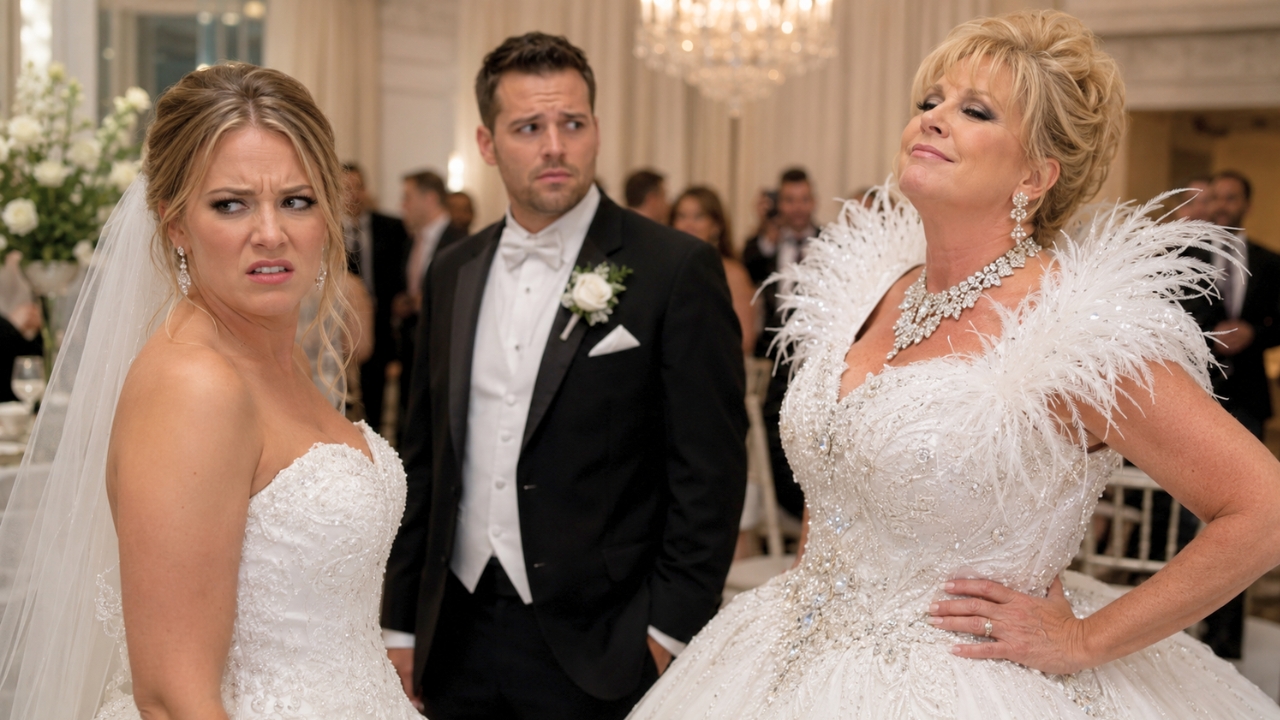
The bridal suite had barely gone quiet when the first text started making the rounds. Not from a guest, but from the photographer’s assistant, who’d been offloading memory cards and noticed something odd in the previews. The groom’s mother hadn’t just worn a light dress to the ceremony—she’d arrived in a full-length white ballgown with a structured skirt, beading at the bodice, and a train that needed to be carried.
At first, the couple tried to keep their eyes on the day they’d planned. The ceremony was outdoors, the reception was in a rented hall, and family members kept stepping in with the classic “don’t let it ruin it” advice. But the more the night went on, the more people noticed the visual imbalance: in photos, the mother-in-law looked like the bride’s twin, and in wide shots she looked like the main event.
It started with a dress, but it wasn’t just about a dress
In the months leading up to the wedding, the bride had kept the peace as best she could. There had been little power plays—insisting on inviting “friends” the couple had never met, trying to change the seating chart, pushing for a mother-son dance song the groom didn’t want. Every time, the couple compromised to avoid a blowup.
When it came to outfits, the bride and groom were clear: no white, no ivory, nothing that photographs white. The dress code was written on the website, repeated in a group message to immediate family, and brought up again a week before the ceremony. The groom’s mother responded with a short confirmation and a vague comment about having something “formal and classic.”
She arrived early, before most guests. The bride’s maid of honor saw her first, standing near the entryway with her garment bag open, the white fabric catching sunlight. The maid of honor tried to redirect her to a side room, hoping she’d change into something else. The mother-in-law brushed past, smiling, and walked straight into the main hall.
The photographer noticed the pattern before anyone said it out loud
The wedding photographer had dealt with difficult families before, so he didn’t confront anyone in the moment. He did, however, quietly adjust where he placed the mother-in-law during group shots. He tried to keep her to the edge, angled away, or seated when possible, the same way a photographer might work around someone wearing neon to a neutral palette.
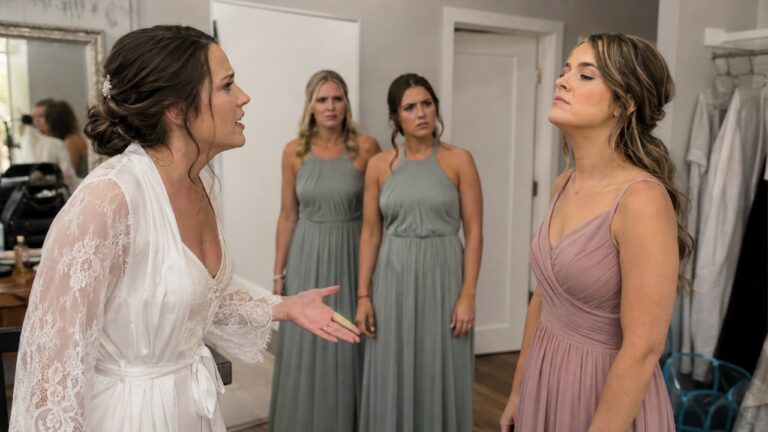
But the dress had a way of pulling focus. In the getting-ready photos, the bride was in a white satin robe while the mother-in-law—who wasn’t supposed to be in that room at all—wandered in and tried to “help” with the veil. In the family portraits, she positioned herself shoulder-to-shoulder with the groom and kept turning her torso toward the camera. In the candid reception shots, she appeared in the background of multiple frames, hovering close enough to look like she belonged in the couple’s spotlight moments.
By the end of the night, the bride had that hollow feeling people get when they realize they’ve been managing someone else’s behavior all day. She didn’t want to fight at her own wedding. She also didn’t want to spend the next decade looking at framed photos where someone else tried to occupy her place.
Then the album preview made it impossible to downplay
The next morning, the photographer sent a small “sneak peek” gallery—just a few dozen images so the couple could share something quickly. That’s when the scale of it hit. In several of the most important shots, the mother-in-law’s dress read as brighter than the bride’s, especially under reception lighting.
Even worse were the moments that looked intentional once frozen into still frames. There was a shot of the couple’s first look where the groom turned, teary, toward the bride—and behind them, the mother-in-law stood in the doorway in white, watching. Another photo captured the father-daughter dance, and in the background, the mother-in-law was facing the dance floor, hands clasped, with an expression that didn’t match the celebratory mood.
When the bride zoomed in, she noticed details she hadn’t clocked in real time. The mother-in-law had a small bouquet. Not a corsage—an actual bouquet, held low to avoid attention, but clearly styled for a formal portrait. In one image, she was even standing near the bride’s florals, as if she’d been grouped with the wedding party.
The groom, who’d spent months trying to keep peace between his mother and his future wife, finally stopped defending the “maybe she didn’t realize” angle. The photos made it look like the day had been staged to blur roles. It wasn’t a misunderstanding. It was a message.
The fallout hit fast: money, boundaries, and the question of what to keep
Once relatives started asking for pictures, the couple had to decide what to share and what to hide. The bride didn’t want to post anything that centered the white gown. The groom didn’t want to start married life by curating a social media feed like it was a crime scene, but he also didn’t want the narrative to become “two brides, one groom” jokes in the family group chat.
They called the photographer and asked what could be fixed. Some shots could be cropped. Others could be edited to darken the mother-in-law’s dress or adjust tones so it read less bridal. But extensive retouching costs money, and the couple had already spent more than they wanted. The photographer gave them an estimate for targeted edits on key images, plus an hourly rate if they wanted full-gallery adjustments.
Then came the harder part: the family conversation. The groom called his mother and asked her directly why she wore it. She didn’t apologize. She questioned why the bride was “so sensitive” and suggested the bride should feel “honored” that the wedding looked “so elegant.” When the groom brought up the bouquet, she dismissed it as something she’d grabbed so her hands “wouldn’t look empty.”
The couple set a boundary they hadn’t been willing to set before: they would not share the full gallery with extended family, and they would not allow her to choose or distribute photos. They also told her she would not be included in the couple’s formal wedding portraits that would be printed and framed. That line landed badly, and within days, other relatives started calling, urging them to “just move on.”
Commenters focused on documentation and controlling the narrative
As the couple described the situation to friends, the advice turned practical fast. Keep everything in writing. Save the messages where the dress code was stated. Screenshot any family comments that tried to twist the story into the bride “attacking” the groom’s mother.
People also urged the couple to lock down the photos the way they’d lock down any other asset. Don’t share high-resolution files broadly. Use a gallery link with download permissions turned off for anyone outside trusted friends. If prints are being ordered, route them through the couple only, so no one can pick images that make the mother-in-law look like the co-star.
A few suggested a more direct approach: ask the photographer to deliver a “family share” folder that simply doesn’t include the worst frames. Others recommended paying for edits on a handful of core photos—the first kiss, the aisle walk, the cake cutting—so the couple would have a clean set for anniversaries and future family events.
And almost everyone agreed on the same point: this wasn’t about fashion etiquette. It was about someone testing what they could get away with, in public, on a day with built-in witnesses.
The biggest challenge was stopping the next escalation without turning life into a standoff
The wedding ended, but the tension didn’t. The mother-in-law started asking when the couple would host a “proper” post-wedding brunch, hinting she could wear the gown again “since it barely got seen.” She also pushed to be involved in holiday plans immediately, as if nothing happened.
The couple decided to treat it like any other boundary issue: predictable rules, predictable consequences. They told her they would not attend events if she brought up the dress as a joke or used it to bait arguments. They also agreed, privately, that if they ever hosted a vow renewal or large anniversary party, she’d be given a clear dress expectation in writing—and a friend would be assigned to handle disruptions so the bride wouldn’t have to.
In the end, the photos did what the couple’s gut couldn’t do in the moment. They captured the dynamic clearly, without anyone needing to raise their voice. The bride and groom still had their wedding, still had their marriage, and now had a sharper understanding of what needed protecting—starting with their own peace.