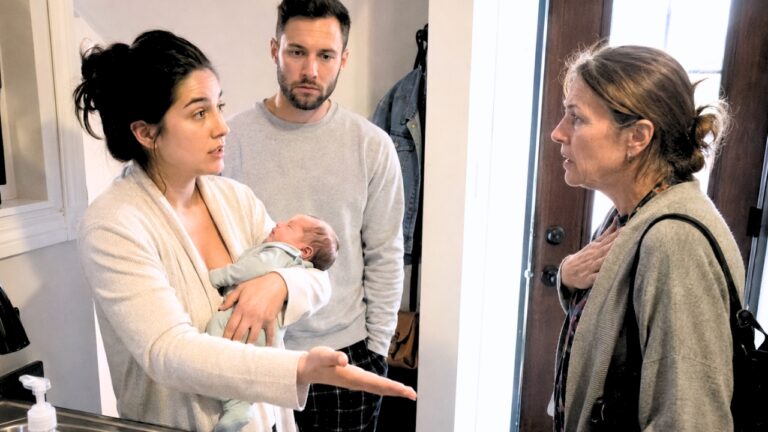
Her In-Laws Said Two Years Was Long Enough to Stay Angry — Then She Said She Still Wasn’t Done
Photo credit: AI-generated image created using ChatGPT. Illustrative only.
Two years is a long time to hold a grudge, at least if you ask the people who caused it. But for one 25-year-old mom, the distance from her husband’s family wasn’t a dramatic punishment—it was the first time her marriage and parenting felt peaceful.
In the original post, she explained that she and her husband, both 25, have been completely no contact with his mom, dad, and sister for more than two years. And now the pressure is coming from both sides: grandparents and even her own parents are telling them to “lay down” their pride and reconnect because their son “needs grandparents.”
The problem started before the big blowup
From the beginning, she says his family didn’t really do limits. Little things were treated like suggestions, and bigger things—like postpartum recovery and a baby’s health—were treated like inconveniences.
Even during pregnancy, the tone was set. Her mother-in-law repeatedly ignored the registry and instead gave gifts that felt more like public digs than support. One of them was a shirt that read, “the baby made me eat it,” given when she was in that uncomfortable stage where she didn’t look obviously pregnant yet and already struggled with body image.
She says she thanked her, walked away, and cried in the bathroom. Not because a silly shirt ended her world, but because it fit the pattern: being put on the spot, expected to smile, and then being told she was too sensitive if she didn’t.
Then the baby arrived—and so did the constant visits
After she gave birth, things didn’t calm down. They intensified.
She had an emergency C-section and wanted only her own mother there to help, which makes sense when you’re healing from major surgery. Her dad was cleaning the house. Her mom was helping her recover, including helping her bathe while she was still in rough shape from delivery. She wasn’t hosting guests; she was trying to get through the day.
But she says her in-laws insisted it was “unfair” that her family got to see the baby and they couldn’t. So they started visiting when she wasn’t even two weeks postpartum.
And despite promising they wouldn’t be a burden, she ended up playing host anyway—serving food and cleaning up—while her mother-in-law held the baby. What should have been a short meet-the-baby moment turned into an exhausting marathon. She describes a rotation of visits between her mother-in-law, father-in-law, sister-in-law, and even a grandmother-in-law, stretching into what felt like over six months of constant drop-ins.
That kind of “help” doesn’t help. It drains you. It makes a new mom feel like she has to perform, even when she’s still healing and barely sleeping.
A health boundary turned into an all-night standoff
The turning point, she says, came when she tried to draw a line around illness and a newborn.
After learning someone was sick in her mother-in-law’s home, she told them she didn’t want them holding her five-week-old baby who wasn’t vaccinated yet. It wasn’t an insult; it was a basic safety call. But instead of hearing her, her mother-in-law exploded, told her husband to “just shoot her in the head,” and kept them up until 2 a.m.
In the end, she says she caved—not because she suddenly agreed, but because she was exhausted and worn down. And after the boundary fell, her baby got sick anyway.
It’s hard to explain how deeply that changes your trust in someone. When you’re a new parent, you’re already scared you’ll miss something important. When someone talks you out of your instincts and the worst thing happens, it sticks.
She also added one heavy detail that gives the whole story a darker backdrop: her husband was abused by these same family members growing up. So this wasn’t just a disagreement over “grandparent privileges.” There was already history, and it wasn’t good.
Christmas was the final straw—and the timing was brutal
By the time the holidays rolled around, she wasn’t asking for perfect. She was asking for precautions.
She says they knew their son was immunocompromised and asthmatic. He was close to turning one, and the vaccine for his age group wasn’t available yet. So back in October, she asked family members to either get the COVID vaccine or test and wear a mask if they wanted to come for Christmas.
A week before the trip, her mother-in-law claimed they were never told any of this and said it was unfair to expect her to get vaccinated or even tested. When the couple held firm, her father-in-law blew up at them. They decided to go no contact three days before Christmas—right when the in-laws were supposed to leave to visit.
And then came the gut punch: three days before Christmas, the in-laws tested positive for COVID.
Her mother-in-law had previously insisted she wasn’t exposed, which was supposedly why she couldn’t get tested. But the poster says they later found out someone at her work had it and she knew. In other words, the precaution wasn’t over-the-top. It was exactly what needed to happen.
Two years later, the apologies still aren’t really apologies
The couple stayed no contact, and she says it’s been one of the best things for their marriage and parenting. Not because they enjoy the drama, but because removing the pressure and chaos gave them space to breathe.
They didn’t cut off everyone. They still have a relationship with her husband’s grandmother, and now they’re also in contact with one sister who has apologized. But communication from the mother-in-law and father-in-law hasn’t sounded like accountability. She says the messages still try to pin the blame on them.
That’s the part that makes it hard to “move on.” People love to push reconciliation when time passes, but time doesn’t undo a pattern. And it definitely doesn’t erase the fact that their baby got sick after she was pressured to drop a safety rule.
The family is pushing a reunion—and she isn’t buying the sales pitch
Now the chorus around them is getting louder. Her husband’s grandparents and even her own parents are encouraging them to build a bridge. They’re framing it like maturity: swallow your pride, forgive, let the grandparents in.
But she’s looking at it differently. Her question is blunt: does her son really need grandparents who will stomp on the parents’ rules, undercut them, and create chaos just to get their way?
She keeps circling back to the same reality: the peaceful two years weren’t an accident. They were the result of stepping away from behavior that never changed—even after multiple conversations, even after major medical recovery, even after the stakes included an immunocompromised child.
And if the people urging a reunion weren’t the ones up at 2 a.m. being screamed at, or postpartum and forced to host, or scared their baby would get sick, it makes sense they can call it “pride.” From the inside, it doesn’t feel like pride. It feels like protection.
For now, she and her husband are holding the line they created, even if others think the timeline should have an expiration date. Because when the cost of “keeping the peace” is your health, your sanity, and your child’s safety, staying away can start to look less like bitterness and more like basic common sense.