Grandparents Wanted Newborn Visits After Months of Silence — Then the Parents Said No
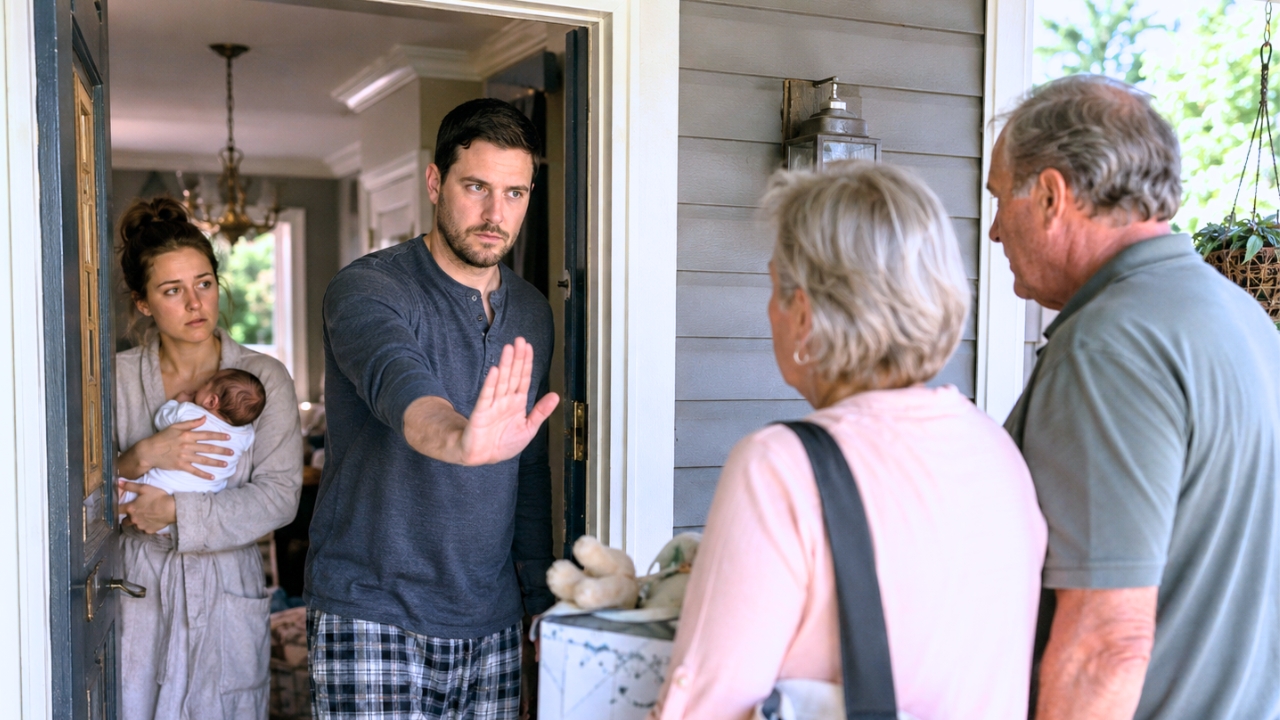
By the time the baby was two weeks old, the front porch had become a pressure point. The new parents had barely slept, the house was still half set up from the nursery scramble, and the last thing they expected was a sudden flood of messages from relatives who hadn’t checked in for months.
The grandparents wanted to come “right away,” bringing gifts and insisting it was their turn to hold the newborn. The parents—still raw from a long stretch of silence—said no. They offered video calls and a plan for a later visit once routines, health precautions, and basic boundaries were in place.
That didn’t end it. It just moved the conflict from awkward family history to something much more immediate: repeated unannounced drop-ins, neighbors watching the driveway, and a couple trying to protect their peace while also documenting behavior that started to feel less like enthusiasm and more like entitlement.
The silence started long before the pregnancy ended
In this family, the distance wasn’t new. The expecting parents had sent ultrasound photos and updates early on, but the responses had been brief, inconsistent, and sometimes nonexistent. Invitations to a small baby shower were ignored, and phone calls went unanswered for weeks at a time.
Behind the quiet were old arguments—hurt feelings about past holidays, disagreements about money, and a long-running expectation that the adult child should “just get over it.” The couple had tried to keep the pregnancy from turning into a battleground, choosing neutral topics and giving plenty of chances for connection.
So when the grandparents suddenly resurfaced right after the birth, it didn’t read as excitement. It read as a switch flipping when there was something they wanted.
Right after the birth, the demands came with urgency
The first message arrived less than 24 hours after the parents came home from the hospital. It wasn’t a simple congratulations. It was a request for a visit, phrased like a plan that had already been decided.
The parents responded with a careful, practical note: the pediatrician wanted limited contact at first, the baby’s immune system was still fragile, and the household needed time. They offered a video call that night and suggested setting a date a few weeks out, with clear expectations about masks, handwashing, and how long the visit would last.
The grandparents didn’t take it as a compromise. They treated it like a personal insult, sending follow-up messages about family rights, “keeping the baby from them,” and how other relatives would “never do this.”
The first “quick stop” turned into repeated boundary-testing
Two days later, a car pulled into the driveway without warning. The parents saw it through the living room window while the baby was asleep on one of them, finally settled after a long feeding.
They didn’t answer the door. The doorbell rang again. Then came knocks that got louder, followed by a text saying they were “already here” and it would only take a minute.
The couple stuck to their message: no unplanned visits. But the drop-ins didn’t stop there. Over the next week, there were more “we were in the area” appearances, sometimes with another relative in tow. At one point, a neighbor later said the grandparents had walked around the side of the house as if looking for another entrance, then returned to the front when they realized the curtains were drawn.
That’s when the situation shifted from uncomfortable to concerning. The parents didn’t want a screaming match on the porch with a newborn inside. They also didn’t want to normalize the idea that showing up uninvited would eventually get rewarded.
The parents moved from emotional explanations to practical steps
After the third unannounced stop, the couple installed a doorbell camera and a second small camera covering the driveway. They started saving screenshots and keeping a simple log of dates, times, and what was said in messages.
They also made their boundary simpler, because the longer the explanation, the more there was to argue with. They told the grandparents visits would be scheduled only, and that they wouldn’t open the door to surprise arrivals. They repeated the offer of video calls and emphasized that contact would depend on respectful communication.
Instead of calming down, the grandparents escalated. They began contacting other family members and pushing them to intervene. The new parents started receiving texts from cousins and an aunt they barely spoke to, all urging them to “just let them come,” as if the issue was stubbornness rather than a pattern of disregard.
One evening, a package appeared on the porch: baby items with a note that implied the gifts were proof they deserved access. When the parents didn’t respond, the grandparents sent another message saying they’d “call someone” if they had to. The parents took that as a warning that the situation could spill into official channels, even if the threat was vague.
The biggest risk became a porch confrontation with a newborn inside
The couple’s main concern wasn’t winning a family argument. It was preventing a scene that could scare them, wake the baby, or spiral into something that required police involvement.
They spoke to a non-emergency line and asked what to do if someone refused to leave private property. They were advised to clearly tell the visitors—preferably in writing—that they were not welcome to stop by unannounced, and to call if there was trespassing or harassment. The parents didn’t want to take that step, but they also didn’t want to be caught improvising under stress.
They also quietly looped in the hospital social worker they’d met during discharge, asking what to do if family members started making welfare-check threats. The guidance was blunt: keep the home safe and calm, keep pediatric appointments, and document everything. If someone tried to weaponize agencies or police, a clean paper trail would matter.
Meanwhile, the grandparents started waiting longer on the porch when they came by, sometimes sitting in their car across the street. A neighbor texted the parents after noticing the pattern, saying it looked like they were hoping to catch someone taking out trash or checking the mail.
People zeroed in on documentation, consistency, and not negotiating on the doorstep
Those who heard about the situation tended to focus less on the emotional history and more on the practical mistake families often make: arguing in real time at the door. The consistent advice was to avoid in-person debates, because that’s where boundaries get worn down and tempers flare.
Others emphasized keeping communication in writing, not because the parents were looking to build a case, but because written boundaries reduce confusion. A few pointed out that if the grandparents were willing to ignore a basic request—call first—they were likely to ignore bigger ones too, like illness precautions or visit length.
There was also discussion about changing routines. Some suggested using a side gate less, keeping blinds closed during nap windows, and coordinating with neighbors about suspicious lingering. Not because the grandparents were strangers, but because persistent boundary-pushing can start to look the same no matter who is doing it.
The parents’ friends focused on one thing: the newborn period is hard enough without managing other adults’ emotions. If someone disappears for months and reappears only when they want access, that’s not support. It’s a demand.
In the end, the parents kept their stance. They offered a scheduled visit weeks later if the grandparents could agree to basic rules and stop showing up uninvited. Until then, the door stayed closed, the camera stayed on, and the couple concentrated on feeding schedules, pediatric checkups, and the quiet work of becoming a family—while the unresolved tension sat, literally, at the edge of their driveway.