Grandparents Kept Ignoring Every Rule They’d Agreed To — Then the Parents Paused All Visits Until Further Notice
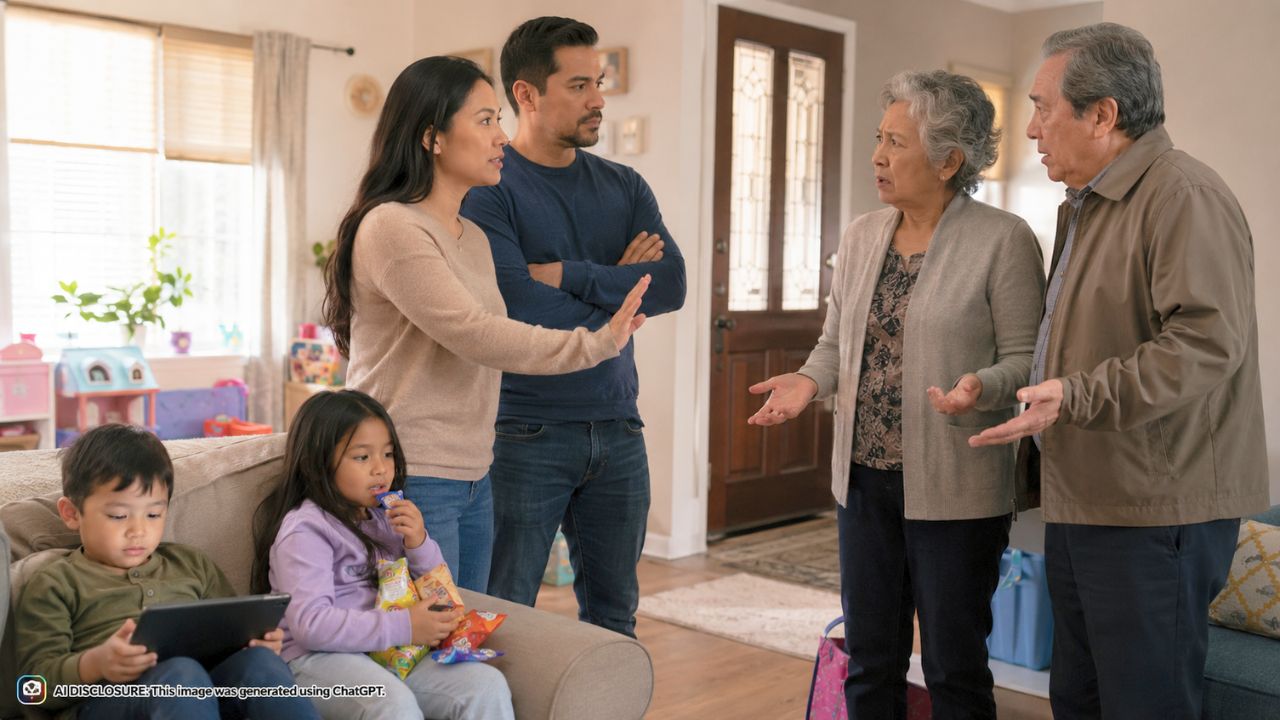
Photo credit: AI-generated image created using ChatGPT. Illustrative only.
It started as the usual grandparent “fun house” routine: a few extra treats, too much screen time, the kind of stuff that makes kids come home a little wired and a little bratty the next day. Annoying, yes. But survivable.
Then one drop-off turned into a performance. And the parents went from “we can live with it” to “we’re done for now.”
The problem started before the big blowup
The mom had tried to set clear, basic rules for visits with her husband’s parents. If she packed healthy snacks, she wanted the kids to actually eat those. If she said, “Don’t give him that,” she expected the answer to be “okay,” not an eye roll followed by the exact thing she’d just banned.
Same with screen time. She’d ask for a limit, and the kids would end up spending the entire day in front of the TV.
Every time she brought it up, the grandparents brushed it off with the same line: “I raised your husband this way and look how well he turned out!” And her husband, instead of backing her up, treated it like part of the deal. Grandparents spoil. That’s what they do.
So she tolerated it—mostly. The kids still followed rules at home, even if they came back a little more demanding after a visit. It felt like a manageable annoyance… until it wasn’t.
One grandparent thought bad behavior was “cute”
There was one detail that made this situation more than just cookies and cartoons. The mom described her father-in-law as the type who laughs when kids do something inappropriate—say a bad word, hit something, break something, throw a tantrum. Instead of correcting it, he finds it funny. “Cute,” even.
And that attitude matters, because it turns misbehavior into entertainment. If a child sees an adult laughing, the message isn’t “don’t do that.” The message is “do that again.”
The mom had already asked more than once that the grandparents not swear in front of the kids. She wasn’t trying to be controlling; she was trying to avoid the obvious nightmare of a small child repeating adult language at school or around other parents. It was a simple request: watch your mouth around a six-year-old.
Apparently, they didn’t just ignore it. They made it a group activity.
The drop-off turned into a “show us what we taught you” moment
After a three-day weekend stay, the grandparents brought the kids home. The father-in-law stayed for tea, and then he called the six-year-old over like he was about to sing a song from camp.
“[Son’s name] come here! Show what me and gradma taught you! Come on honey,” he said, grinning.
The mom actually got excited for a second, thinking it would be something harmless—maybe a nursery rhyme, maybe a silly little chant. Something cute. Something normal.
Instead, her son launched into a rhyme packed with adult language and explicit references—stuff no first-grader should even be aware of, let alone reciting on command for laughs. The mom described it as a rhyme full of swearing, including references to explicit adult topics and alcohol.
Her father-in-law laughed like it was the funniest thing in the world. Then he topped it off by saying he taught her husband the same thing when he was young, and it was “hilarious.”
That was the moment her patience snapped.
She shut it down immediately—and hit pause on visits
The mom told her son to leave. Then she confronted her father-in-law, furious, and didn’t sugarcoat it. She told him that until he learned to respect the way she and her husband raise their kids, he wouldn’t be allowed to see them.
Not forever, she clarified. But enough to make it real.
From her perspective, it wasn’t just about being offended. It was about consequences. What happens when her child repeats that rhyme at school? In front of a teacher? In front of another kid’s parents? The grandparents get a laugh and go home, but she’s the one who’d be dealing with the fallout.
This wasn’t an accidental slip-up, either. No one “oops” teaches a six-year-old a rhyme like that, then cues them up to perform it at drop-off. The whole thing sounded planned—designed for shock value, and designed to make the mom look uptight when she reacted the way any parent would.
If she’d let it slide, what would they try next?
Her husband said it was “only a stupid rhyme”
The part that made the situation even messier was her husband’s reaction. He didn’t deny it was inappropriate, but he didn’t want to “outright ban” his parents from seeing the kids. He argued that a stern talking-to should be enough.
He also downplayed it with, “it’s only a stupid rhyme honey.”
But to his wife, this wasn’t a one-off joke. It was the culmination of a long pattern: dismiss the parents’ rules, then justify it with “we did it this way and you turned out fine.” The rhyme wasn’t an isolated incident. It was the loudest, most explicit version of the same disrespect she’d been dealing with for years.
And it left her feeling like the only way to get through to them was to make visits conditional. If they wanted access to the kids, they needed to follow the rules. If they couldn’t do that, they didn’t get unsupervised time.
The bigger issue was respect, not snacks or screen time
In her original write-up, the mom wasn’t asking whether grandparents should ever be allowed to spoil kids. She’d already made peace with the occasional sugar rush and the inevitable “but grandma lets me” attitude afterward. She’d even admitted that, up until now, it was “mostly harmless.”
What she couldn’t accept was an adult deliberately teaching her child explicit language and content—after being asked repeatedly not to swear around the kids—then proudly showing it off like a party trick.
She also mentioned that she’d received advice and support, and that someone recommended another community where she made a follow-up post that helped. But the immediate question she was grappling with was simple: was she wrong for suspending visitation until her in-laws could take her seriously?
The original account of the situation can be found in the source post, where she laid out the pattern, the drop-off performance, and the split reaction between her and her husband.
For now, the family is stuck in that uncomfortable in-between: one parent insisting on a hard reset, the other hoping a lecture will fix it, and grandparents who have spent years treating the parents’ rules like optional suggestions.
And the kids, caught in the middle, are learning a lesson either way—either that adults have to be taken seriously, or that the loudest person in the room gets to decide what’s “funny.”