Grandma Said the No-Visitors Rule Was Postpartum Depression Talking — Then the Dad Ended the Call
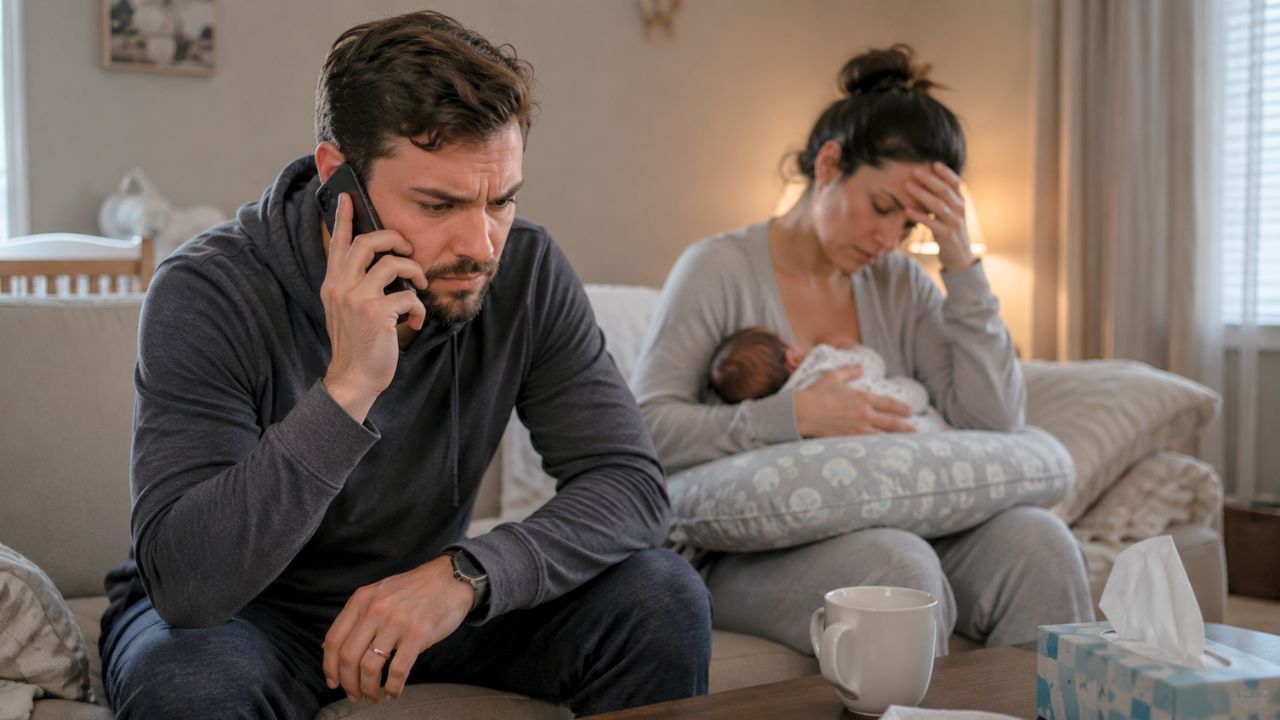
The first week home with a newborn was supposed to be quiet. Instead, it turned into a tug-of-war over a front door, a phone screen full of missed calls, and a grandmother who wouldn’t accept the word “no.” The couple had agreed on one rule before the baby arrived: no visitors until they were ready, no drop-ins, no exceptions.
They weren’t trying to punish anyone. The mother was recovering from a tough delivery, learning to feed the baby, and running on broken sleep. The father had gone back to work and was doing nights in shifts, trying to keep the house calm and predictable.
The rule was simple, but the pressure wasn’t
From the day they announced the birth, family members started asking for times to come by. The couple thanked everyone and repeated the same message: they’d let people know when they were ready. Most relatives took it well.
The grandmother did not. She called multiple times a day, framing it as “help” and “support,” but the conversation kept circling back to her wanting to see the baby immediately. When the father didn’t answer, she switched to the mother, sending long messages about how she “needed” to be there.
The couple tried to make it about logistics. They offered video calls and promised the first visit would happen soon. But every compromise became another opening for a negotiation.
Then she blamed it on postpartum depression
The turning point came during a speakerphone call when the father was home and the mother was sitting on the couch with the baby. The grandmother dismissed the no-visitors rule as an emotional overreaction and suggested the mother wasn’t thinking clearly after giving birth.
It wasn’t framed as concern so much as a diagnosis delivered like a trump card. The idea was clear: if the mother’s boundary came from postpartum depression, it didn’t deserve to be followed. The father, who had been trying to keep the peace, ended the call immediately.
After that, the couple stopped answering. The father sent a short message saying they’d reach out when they were ready and that comments about the mother’s mental health were off-limits. The grandmother replied with a string of texts that swung between apologizing and insisting she was being “kept away.”
The drop-in made it a safety issue, not a feelings issue
Two days later, the grandmother showed up anyway. The doorbell camera caught her walking up with a tote bag and a bouquet, smiling like it was a planned visit. When no one opened the door, she rang again and tried the handle.
Inside, the baby had just fallen asleep after an hour of fussing. The mother froze, then started shaking. The father told her to stay in the back room and checked the camera on his phone.
He didn’t open the door. He spoke through it, repeating that they weren’t accepting visitors and asking her to leave. The grandmother refused, saying she’d come all that way and wasn’t going to be “shut out.” A neighbor’s dog started barking, and the grandmother moved closer to the sidelights, trying to see in.
That was the moment the couple’s mindset changed. This wasn’t about someone being offended. It was about someone testing whether “no” meant anything at all.
They started documenting everything
The father saved screenshots of the messages, including the ones that minimized the mother’s recovery and the ones that threatened to “just stop by.” He downloaded the doorbell footage and backed it up, then adjusted the camera’s motion sensitivity.
They also did the small, practical things people don’t think about until they have to. They confirmed the locks were working, added a simple door brace, and told their building manager—because the couple lived in a small complex where unexpected visitors could follow someone through the main entrance.
The mother called her OB’s office to talk through anxiety and sleep, worried the grandmother’s comments would get twisted into something else. The nurse documented the conversation and reminded her that setting boundaries isn’t a symptom. That note mattered to the couple, because they could already see where the grandmother might take the story if she wanted leverage.
When the grandmother returned the next afternoon, the father didn’t argue. He told her through the door that she needed to leave or he’d call for help. She stayed long enough to knock and then paced in the hallway, talking loudly about how she was being “punished.” A neighbor peeked out. The father called the non-emergency line.
By the time someone arrived to take a report, she had left. But the couple had timestamps, camera clips, and a paper trail showing a pattern, not a one-off misunderstanding.
The family fallout hit work, money, and the building
The grandmother didn’t stop at the front door. She began contacting other relatives, describing the couple as unstable and claiming she was being blocked from seeing the baby “for no reason.” A cousin messaged the father at work, urging him to “calm things down.” Another family member suggested the mother needed to be evaluated.
That’s where it got expensive in ways that aren’t obvious. The father left early twice to handle unexpected visits and to meet with the building manager about security. The mother started keeping the blinds closed and avoided going to the mailroom alone. They ordered extra camera storage and a second indoor camera pointed at the entryway.
The building manager also wanted reassurance that the situation wouldn’t spill into common spaces again. The couple provided the footage and asked that the grandmother not be buzzed in without their consent. It felt extreme to say it out loud, but it was better than another scene in the hallway.
When the grandmother finally spoke to the father on the phone again, she tried to reframe everything as “concern.” She insisted she was the only one being reasonable and brought up postpartum depression again, as if repeating it made it true. The father ended that call too.
People kept coming back to proof and boundaries
Those close to the couple focused less on the emotional drama and more on the practical steps. They urged the father to keep communications in writing, not to take calls that could turn into he-said-she-said disputes. They also pointed out that the grandmother’s mental-health framing could be used to justify showing up “for welfare checks,” which is why documentation mattered.
Others emphasized safety basics: don’t open the door, don’t argue on the porch, and don’t let a confrontation become a physical tug-of-war over the baby. If the grandmother wanted a relationship, it had to happen through consent, not pressure.
A few people suggested formal options if the visits continued, like having a lawyer send a no-trespass notice or asking property management to issue one. The couple didn’t want to escalate into court or permanent estrangement, but they also didn’t want to teach anyone that persistence wins.
For now, they’re sticking to a single message: they’ll reach out when they’re ready, and any attempt to undermine the mother’s recovery will end the conversation. The baby is still too new for the family politics, but the parents aren’t. They know that if they can’t protect the first boundary, they’ll be fighting the same battle at every milestone that follows.