His Family Expected His Wife To Share the Baby on Holidays — Then He Said They Were Staying Home
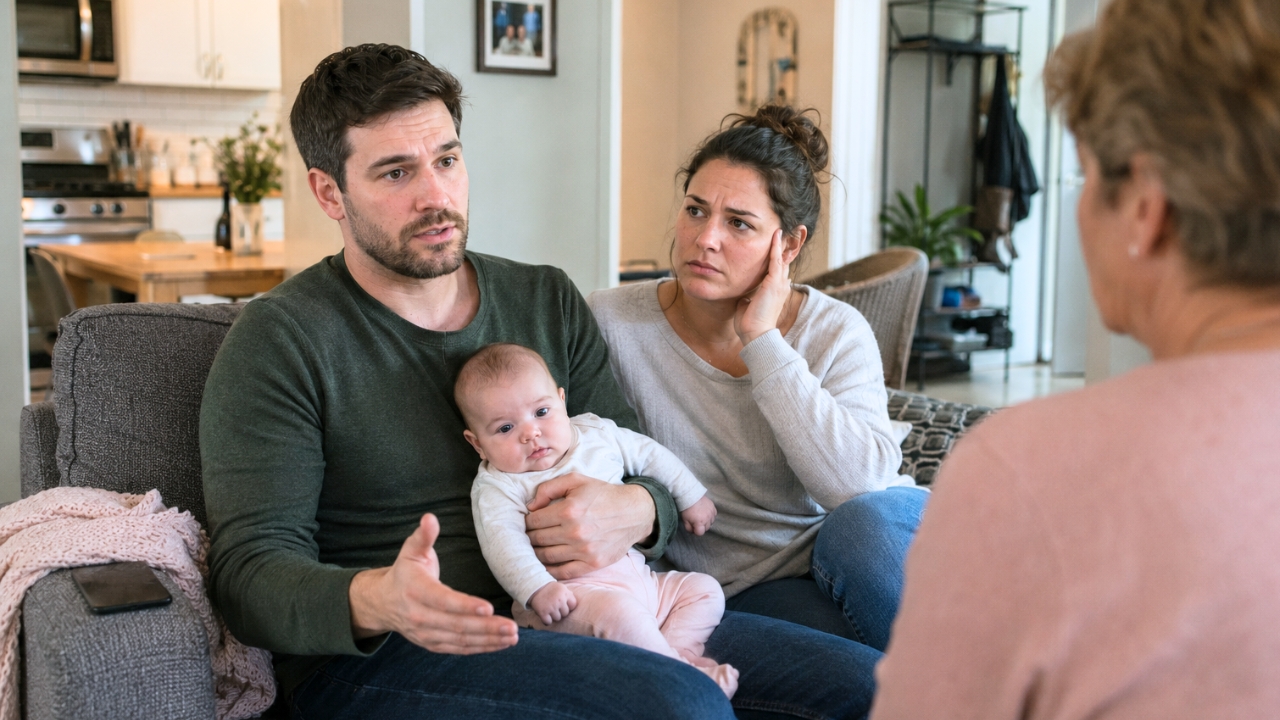
By the time their baby was eight months old, the holidays stopped feeling like a break for Maya and her husband, Daniel. Every invitation came with an assumption: pack the diaper bag, drive across town, and hand the baby around from lap to lap until bedtime melted down in someone else’s living room.
Daniel’s relatives weren’t shy about what they wanted. The first-time grandparents wanted “their” holiday time, an aunt wanted a photo tradition, and Daniel’s sister treated the baby like the centerpiece of every gathering. Maya, still running on interrupted sleep and managing postpartum anxiety, started counting down the hours before each event even began.
The “sharing” expectation crept in a little at a time
It started with small comments that sounded harmless. If Maya wore the baby in a carrier, someone would ask how long she planned to “keep her all to herself.” If the baby fussed, a relative would insist they could calm her better, then walk away to another room without asking.
At Thanksgiving, Daniel’s mother set up a bassinet in a spare bedroom and told Maya she could nap while everyone else “enjoyed the baby.” Maya didn’t nap. She hovered in the doorway, listening to the baby’s cry change pitch, feeling her stomach tighten each time a new person tried rocking, bouncing, or feeding without checking first.
The final straw came when Daniel’s sister posted a group photo captioned like the baby was her own holiday accessory. Maya asked for it to be taken down. The sister rolled her eyes and told her she was being “protective for no reason.”
A holiday visit turned into a custody-style argument
In early December, Daniel got a text chain from his mother laying out “the plan” for the next few weeks: a Christmas Eve dinner at one house, Christmas morning at another, and a full-day visit the weekend after so “everyone gets their turn.” The phrasing hit Daniel wrong—like a schedule for a timeshare, not a baby.
When he didn’t respond quickly, the messages escalated. His mother pointed out how far people were traveling and how expensive gifts were. An aunt chimed in that it wasn’t fair for Maya’s parents to “see the baby whenever they want” simply because they lived closer.
Daniel called his mother to reset the tone, but it turned into an argument about who was entitled to the baby and when. The family’s idea of “compromise” was Maya handing the baby over while being told to relax, eat, and be grateful.
That night, Daniel and Maya looked at their calendar and realized they were booked solid with other people’s expectations. There was no real rest day, no time for their baby to keep a routine, and no space for Maya to recover from the stress that had been building for months.
He drew the line: no travel, no passing the baby around
Daniel sent a message to the family group chat saying they were staying home for the holidays. They would do a short video call on Christmas and would plan a small visit later in January when the baby’s sleep had stabilized. He added that they weren’t doing “handoff” visits anymore, and if they did come by later, it would be one household at a time and only if Maya felt comfortable.
Within minutes, the responses poured in. His sister accused Maya of “controlling” him. An uncle called Daniel ungrateful. His mother said Maya was keeping the baby from the family and that Daniel was letting it happen.
Daniel replied once more, calmer but firmer. He said Maya wasn’t the problem and that he was making the decision as a parent. He reminded them that a baby isn’t a holiday activity, and that their home was not a place where anyone got to argue with his wife about access to their child.
That message didn’t end the conflict. It just changed its shape.
The pressure moved from texts to real-world boundary testing
A few days later, Daniel’s mother showed up at their apartment with wrapped presents and a casserole, acting like nothing had happened. She stood in the hallway long enough that a neighbor peeked out, then asked to be let in “just for a minute.”
Maya froze. Daniel stepped outside and kept the door nearly closed behind him, speaking quietly so the baby wouldn’t wake. His mother pushed past the conversation and asked where the baby was, then tried to slip her foot over the threshold as if she could force the visit to happen.
Daniel didn’t yell, but he didn’t budge. He told her she had to leave and that showing up uninvited wasn’t going to change anything. When she refused and started crying louder, a neighbor asked if everything was okay. Daniel said it was a family matter and asked the neighbor to give them space.
After she finally left, Daniel installed a doorbell camera the same day. Maya saved screenshots of the group chat and started keeping notes on unannounced visits, messages, and any mention of coming over again. It wasn’t about “building a case” against family, she told friends later. It was about being able to prove what was happening if the situation escalated.
It did, at least in smaller ways. Daniel’s sister left a bag of gifts outside their door with a note that included a line about “not keeping her niece away forever.” Someone else mailed a card addressed only to the baby, with a message about how she was “missed at Christmas.” Maya stopped checking the mail without Daniel there because her hands would shake.
Commenters focused on safety, documentation, and a united front
When Daniel described the situation online, people didn’t treat it like typical holiday drama. Many focused on how quickly “we want to see the baby” can turn into boundary violations when relatives feel entitled.
A lot of readers pointed out the practical steps Daniel had already taken: keeping communication in writing, installing a camera, and refusing doorstep negotiations. Several urged him not to open the door for anyone who arrived uninvited, even if they brought gifts, and to avoid being pulled into long phone calls where family could later twist what was said.
Others suggested a simple script if they chose to visit later: a short time limit, no taking the baby into other rooms, no kissing the baby, and immediate ending of the visit if anyone argued with Maya. More than a few reminded Daniel that postpartum anxiety can spike in chaotic environments and that protecting Maya’s mental health is part of protecting the baby.
Some also flagged the risk of family members trying to involve authorities by claiming “wellness checks” if they were angry enough. The advice was to keep pediatrician visits up to date, keep the home stocked and normal, and document any threats or strange messages in case they needed to explain a pattern.
The biggest cost was what it did to relationships
Daniel didn’t pretend the decision was painless. He loved his family, and he had pictured his daughter’s first holidays surrounded by relatives. But he also watched Maya flinch at every notification and realized the old pattern—placating everyone—wasn’t sustainable now that they were parents.
The days leading up to Christmas were quieter than they’d ever been, but not calm. Daniel’s phone kept buzzing with guilt-laced messages. Maya worried that saying no now would poison every future birthday, graduation, and family reunion.
On Christmas morning, they stayed in pajamas, made coffee, and let their baby crawl around the living room with wrapping paper. They did a short video call and ended it the moment someone started asking when they could “have her” for a visit.
They weren’t sure what January would look like, or whether Daniel’s family would accept a slower, more respectful kind of access. But for the first time since the baby was born, their home felt like it belonged to them—and Daniel made it clear that any relationship with his daughter would have to start with respecting her mother.