Her New Stepmum Was 39 Years Younger Than Her Dad and Got the Lot in a Deathbed Will — Then a Judge Tore It Up
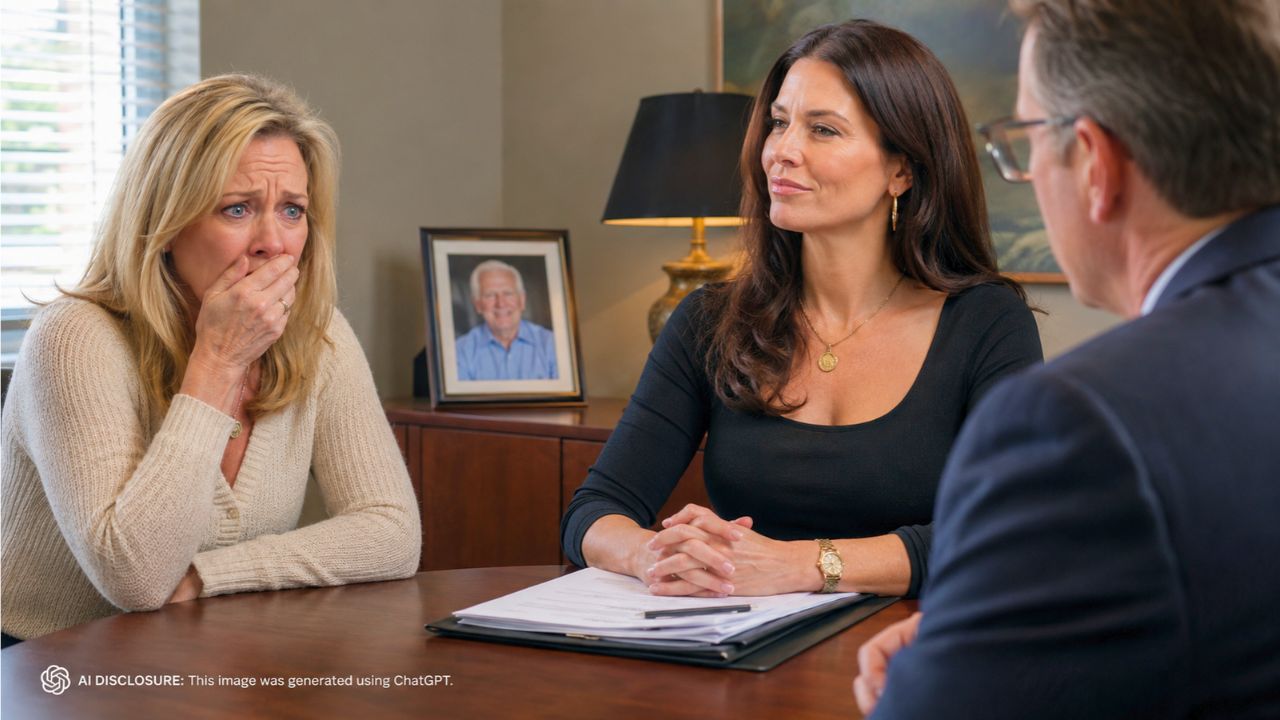
Photo credit: AI-generated image created using ChatGPT. Illustrative only.
There are a few things that can turn a family upside down faster than a sudden remarriage late in life, followed by a will that shuts the children out completely. Add a serious age gap, failing health, and a spouse controlling the money, and you’ve got the kind of mess that doesn’t get handled at the kitchen table. It gets handled in court.
That’s where this case ended up, as reported in the source material. A judge ruled that a will made just two months before 94-year-old Robert Harrington died was invalid, after finding his much younger wife, Guixiang Qin, had exerted undue influence and played a “guiding hand” role behind the scenes.
The end result wasn’t some clean victory where one side walks away with everything. It was the legal system stepping in to say, “No, this isn’t how a sound mind makes decisions,” and then defaulting to intestacy rules. That meant Harrington’s daughter, Jill Langley, would receive about £200,000 from an estate valued at roughly £680,000, while Qin—as the widow—would still receive around £475,000, though she faced significant legal costs.
A whirlwind marriage with a lot of money at stake
Robert Harrington was a wealthy pensioner who died in May 2020 at age 94. He had married Guixiang Qin—54 at the time of the report and 39 years younger than him—about 11 months before his death. Qin, a former lawyer, had moved from China to the UK and worked as a translator and in a pub, and she said she met Harrington after responding to a local newspaper advert he placed offering free food and drink at Christmas.
Qin described Harrington as “adorable” and said the relationship became romantic quickly. Her account was that they first spoke by phone, met in person in January 2019, moved in together in February, and he proposed in March. Fast, yes, but fast relationships do happen, especially when people are lonely.
Still, when someone is 94 and frail, “fast” isn’t just a personality detail. It becomes a risk factor, because speed can be used to outrun the questions that would normally get asked—by family, by professionals, and sometimes by the person themselves.
The will that cut his daughter out
The conflict ignited over a new will written in March 2020, only two months before Harrington died. That will left everything to his new wife and disinherited his adult daughter, Jill Langley, who was 70. Langley said she would have benefited under an earlier 2012 will that named her as the ultimate heir.
Langley told the court the last time she saw her father was at her mother Eileen’s funeral in January 2018. She recalled him looking frail, vulnerable, and rambling, and later she received a letter from him saying it would be the last contact he ever attempted to make. She also said she didn’t learn about the marriage until a note from Qin in March 2020 saying, “just to let you know that Dad married again last year.”
If you’ve ever seen family distance grow, you know how quickly misunderstandings harden into “truth” once someone new is in the middle of it. Sometimes that new person is loving and stabilizing. Other times, they’re the one holding the pen while the older person signs.
What the judge found: delusions, capacity, and a “guiding hand”
After a trial at Central London County Court, Recorder Robert McAllister declared the 2020 will invalid. The judge found Harrington lacked “testamentary capacity” at the time the will was made. In plain terms, the court determined he wasn’t mentally fit to make that kind of decision and understand what he was doing.
The ruling described Harrington as mentally vulnerable and said he held false beliefs, including that he was a retired army major and that he had been estranged from his daughter for 30 years. The judge found these views were delusional and that it would not have taken much for Qin to build upon them to produce a will that benefited her financially.
The judge also found there was no proof Harrington “knew and approved” the contents of the will. That’s a serious point, because it speaks to more than forgetfulness or confusion. It suggests a man might have signed something without fully grasping what it said or what it meant for his own daughter.
The money transfers that raised suspicion
Langley’s side argued the estate would have been worth about £1 million if not for payments totaling up to £350,000 that were transferred from Harrington’s accounts to Qin in his final years. Some of those transfers were labeled “care.” Qin denied she was Harrington’s carer and said she received about £100,000, portraying the payments as part of a legitimate romantic relationship where her husband wanted to look after her.
Recorder McAllister didn’t find that Qin was a carer, but he did find there was “an element of control” over Harrington and his finances that increased over time. The judge noted the money movements were “multiple and frequent,” not properly explained, and at minimum “suspicious,” especially those made when Harrington was in hospital or just discharged.
Money doesn’t prove motive by itself, but it does reveal patterns. And when large transfers happen alongside declining mental health, those patterns start to look less like generosity and more like extraction.
Undue influence isn’t romance, and it isn’t care
One of the most significant findings was “undue influence.” The judge concluded Qin exerted influence and control, and that the numerous enquiries for will services suggested “shopping around” that she knew about and was involved in. He said the enquiries tended to suggest a “guiding hand,” which he found to be Qin’s.
Importantly, the judge acknowledged an argument Qin’s side raised: that it can be rational for a married man to leave his estate to his wife, even if he doesn’t benefit an adult child. That’s true as far as it goes. Plenty of decent men make that choice openly, with clear heads, and with family conversations that—while uncomfortable—are honest.
But rational outcomes don’t redeem irrational processes. The court’s point wasn’t “a wife shouldn’t inherit.” The point was that a mentally compromised man appeared to be steered into a will that matched someone else’s interests, while he was operating under delusions about his own life and relationships.
How the estate gets split now, and what “intestacy” really means
Because the 2020 will was overturned, Harrington was deemed to have died intestate—legally treated as having no valid will. Under intestacy rules, Langley is set to receive about £200,000. Qin, as his surviving spouse, would automatically receive about £475,000.
Even with that, the fight carried a cost. As the losing party, Qin faced lawyers’ bills estimated at around £139,000. Court battles over estates have a nasty habit of consuming the very money everyone is arguing about, and they tend to grind up relationships along the way.
One more detail matters: Langley did not challenge her father’s capacity to marry during the trial. The dispute centered on the will, the finances, and the influence, not on whether the marriage itself was legally valid.
The uncomfortable part families avoid until it’s too late
This story has the usual ingredients people gossip about—age gaps, sudden remarriage, money, and a will signed near the end. But underneath it is something quieter and more common: an elderly person slipping mentally, a family already strained, and a new relationship that moves faster than wisdom would advise. Whether Qin saw herself as a wife, a helper, or something else, the judge concluded the dynamic crossed lines the law doesn’t tolerate.
If there’s anything worth sitting with here, it’s how easily confusion becomes leverage when nobody is paying attention. A good will is more than paperwork; it’s a final act of stewardship, and it deserves clarity, witnesses, and transparency—especially in blended families where suspicion is already waiting at the door.
Read more from Thrive Girly:
- Mother-in-Law Expected to Sleep Over After Every Visit — Then the Mom Said Overnight Stays Were No Longer an Option
- Relatives Showed Up to the Wedding Without Being Invited — Then the Couple Refused to Find Them Seats
- Grandma Buckled the Baby Into Her Car and Left Without Telling Anyone — Then the Mom Made Sure It Never Happened Again