MIL Spent Years Cornering Her About ‘Pressuring’ Her Son Into Marriage — Then She Wasn’t Invited to Get Ready on the Wedding Morning
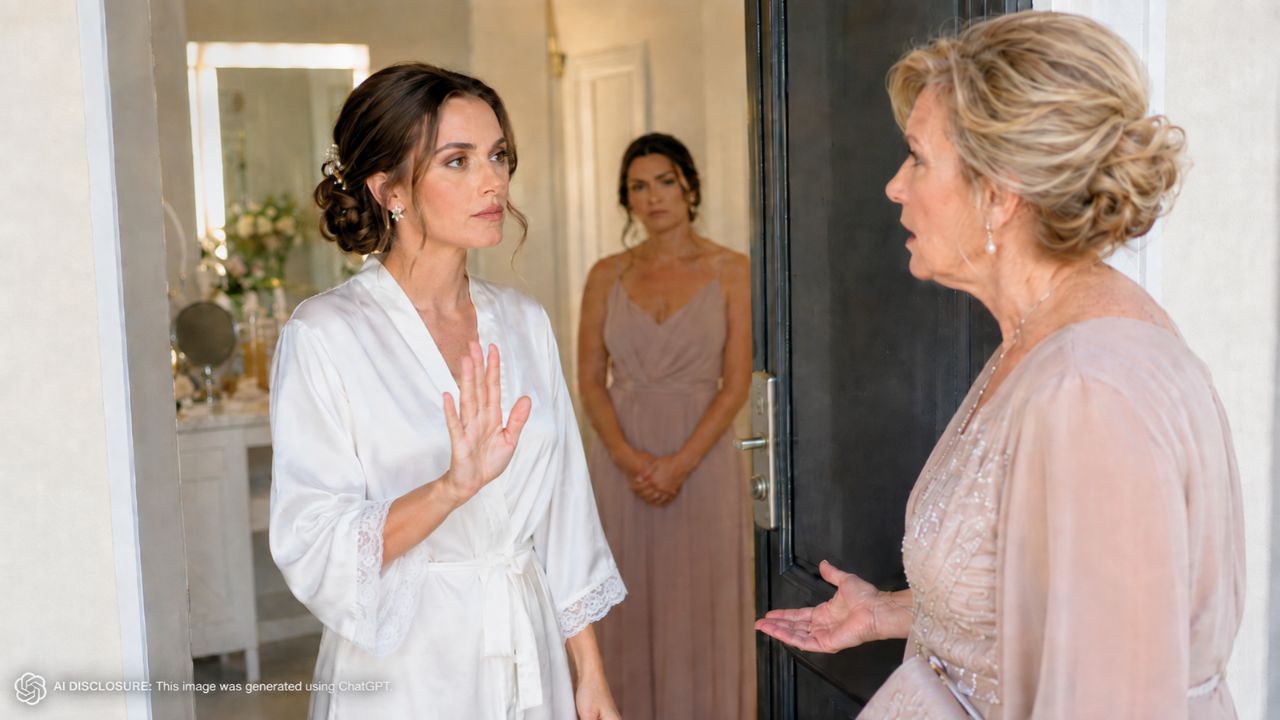
Photo credit: AI-generated image created using ChatGPT. Illustrative only.
There’s a special kind of exhaustion that comes from trying to win over someone who’s already decided you’re the problem. Not because you did something unforgivable, but because your very presence changes the family gravity. A woman planning a wedding laid out that situation plainly: years of being cornered, criticized, and ignored by her future mother-in-law, then a final question about whether it’s wrong to uninvite her from getting ready on the wedding morning.
In the original post, she describes being in her late 20s when the relationship started, and hearing early warnings that she was “pressuring” her boyfriend. Over time, she learned her future MIL was speaking badly about her to family friends, blaming her for the mother’s strained relationship with her son, and even bringing up the son’s ex as the woman he “should” marry. Now, with the wedding approaching, the bride is asking whether she should send back money the MIL paid for hair and makeup and tell her not to join the bridal party’s getting-ready time.
It’s a small decision on paper. It’s also the kind of decision that tells you what your marriage is going to feel like when pressure shows up at the door wearing a polite smile.
When a parent treats the spouse like a rival
Some moms struggle with letting go, and some dads do too, but the pattern described here isn’t simple sadness. It’s control. The bride says her future MIL has “toxic and controlling tendencies,” and that her fiancé has been working through that dynamic since before he met her, even noting that he didn’t have the best relationship with his mom long before the engagement.
That matters because it reframes the common excuse: “She’s just protective.” Protective looks like asking good questions and wanting to know your character. Rivalry looks like talking you down to others, pretending you don’t exist in the room, and keeping a sentimental spotlight on an ex to make a point.
In families like this, the spouse becomes the easiest target. If the son is pulling away, the mother doesn’t want to confront her own behavior or the old wounds. It’s simpler to blame the newcomer who “changed him.”
She offered an olive branch, and it got slapped away
What stands out is that the bride tried. She invited her future MIL to family days with her own family. She tried one-on-one get-togethers with her fiancé. She says she values family and hoped to have a close relationship with the woman who raised the man she loves, especially since she has an “amazing relationship” with his father and brother.
Then she did something generous: she invited the MIL to get ready with her and her bridesmaids on the wedding morning, calling it a peace offering. The response wasn’t warmth or gratitude. It was more like the MIL felt burdened by the invitation, and in recent interactions she’s been colder, giving nasty looks with friends, responding to a greeting with silence, and making “horrible comments” as the bride walked away.
There’s a time to keep trying, and there’s a time to stop offering your throat to someone who keeps sharpening a knife. If a person refuses basic civility, “including them” can become a way of rewarding contempt.
The wedding morning isn’t a reconciliation summit
Getting ready before a wedding isn’t a neutral meeting. It’s a high-emotion, high-stress window where the bride is vulnerable, where timing matters, and where the people in the room set the emotional temperature. One sour presence can turn a meaningful morning into a tense performance where everyone feels like they have to manage the adult who can’t manage herself.
The bride’s reasoning is straightforward: she wants to be surrounded by people who love and support her, not someone who puts her on edge. That’s not petty. That’s stewardship. You don’t schedule conflict for the morning you’re about to make vows.
If the MIL wanted closeness in that moment, she’s had years to lay groundwork: small kindnesses, honest apologies, basic respect. Showing up for hair and makeup doesn’t replace the work of being decent.
Sending the money back can be clean, but it should be handled carefully
The practical detail here is money. The bride says it isn’t in the budget to pay for everyone’s hair and makeup, so she communicated pricing in advance, and the MIL sent money to pay for her own services. Now the bride is considering sending it back and kindly asking the MIL not to be there.
Returning the money is a good instinct because it closes the loop and removes the “I paid, so I’m entitled” argument. But it needs to be done in a way that doesn’t create more chaos. A simple, written message with a clear plan beats a long explanation that turns into a debate. Short, polite, firm. No courtroom evidence. No replaying every insult.
Something like: the getting-ready space is limited, the bride is keeping it to the bridal party, and the MIL will be included later at the ceremony and reception. If the bride wants to be especially fair, she can offer the details of the hair/makeup vendor so the MIL can book independently, elsewhere, on her own schedule.
This is really the groom’s problem to manage
Here’s the part a lot of men don’t want to hear: your mother is your responsibility in the early years of marriage. Not in a “control her” way, but in a “protect your household” way. The bride can set boundaries, but the groom has to back them, clearly and consistently, or she’ll spend the first decade of marriage feeling like she’s fighting alone.
The bride already hints at this dynamic: she says her fiancé is working on the relationship, and that the MIL blames her for losing closeness with her son. If he tries to keep everybody happy by staying vague, he’ll create the exact environment his mom thrives in. Controlling people feed on ambiguity.
A wise husband learns to say, calmly, “Mom, this is my wife. You will treat her with respect.” Not as a speech, but as a line that doesn’t move. Marriage, at its core, is leaving and cleaving. That doesn’t mean dishonoring parents; it means reordering loyalties like an adult.
Boundaries don’t have to be cruel to be real
Some folks hear “boundary” and picture revenge or coldness. A solid boundary is closer to a fence than a weapon. It marks what’s allowed and what isn’t, and it keeps the peace by removing confusion.
Uninviting someone from the getting-ready suite can be done without humiliating them. No public announcement. No bridal party gossip campaign. Just a private note and a clear plan for where she should be and when. If she reacts with anger, that’s sad, but it’s also information. People who can’t tolerate a reasonable “no” are often the very people who made the “no” necessary.
And if the bride feels guilty, she should remember: she already tried inclusion. She already tried kindness. She’s not refusing reconciliation; she’s refusing sabotage.
Some weddings start marriages with a clean, joyful exhale. Some start with a hard boundary that protects the future. If the groom and bride can handle this with clarity and unity now—returning the money, keeping the morning peaceful, and refusing to reward disrespect—they’re not just managing a guest list. They’re practicing the kind of leadership and loyalty a marriage is going to require for the long haul.
Read more from Thrive Girly:
- Mother-in-Law Expected to Sleep Over After Every Visit — Then the Mom Said Overnight Stays Were No Longer an Option
- Relatives Showed Up to the Wedding Without Being Invited — Then the Couple Refused to Find Them Seats
- Grandma Buckled the Baby Into Her Car and Left Without Telling Anyone — Then the Mom Made Sure It Never Happened Again