Her Fiancée’s Friends Confronted Her Over Her Family’s Wedding Gifts — Then She Removed Them From the Wedding Party

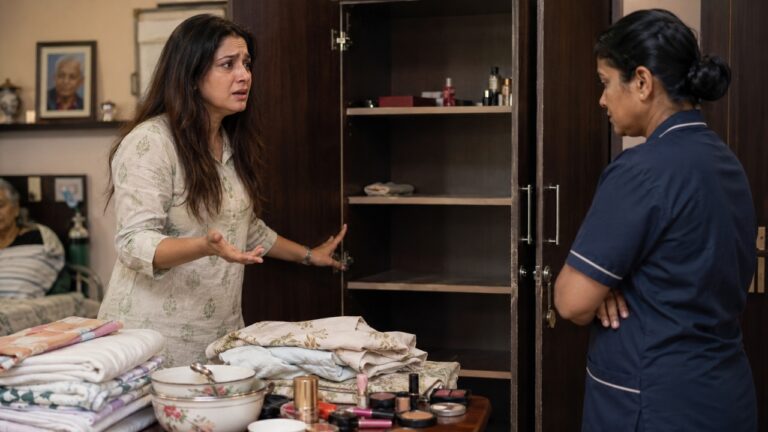
Photo credit: AI-generated image created using ChatGPT.
There’s a particular kind of stress that shows up right before a wedding. It’s not the seating chart or the flowers. It’s the moment you realize you’re not just marrying a person—you’re negotiating peace with everyone who thinks they have a claim on them.
That’s the corner a 33-year-old groom found himself backed into, according to the original post. His fiancée’s tight-knit childhood friend group—two men (one her cousin) and a woman—confronted him at home while she was out, accusing him of “forcing” his family’s traditional heirloom jewelry on her. After they compared him to her past partners and claimed he was manipulative, he removed the two men from his side of the wedding party.
What sounded at first like typical pre-wedding friction turned out to be something darker: long-term meddling, calculated sabotage, and a couple of lies that had already cost his fiancée relationships in the past. The wedding didn’t get canceled, but it did get postponed—and the friend group got cut off entirely.
When “protective” friends stop acting like friends
Most men understand protective friends. If a woman’s been hurt before, her people want to know you’re safe. Fair. But there’s a line between “we love her” and “we run her,” and this groom says it felt like he’d been taking their “friends test” for four years.
Early on, he described them barging into dates, “whisking” his girlfriend away when they were together, and generally making sure he knew his place. Once he finally addressed it, his fiancée did call them out and things improved—but even then, their apology was aimed at her, not him. That detail matters, because it’s often the first clue that someone doesn’t respect the relationship, only the person they can influence.
The heirloom gifts weren’t the problem
The flashpoint was wedding gifts—specifically, heirloom jewelry from the groom’s Indian family. In his tradition, elders welcome the bride with jewelry passed down through the family. He even proposed with a ring that belonged to his grandmother, part of a set his grandmother planned to complete as a wedding gift. He knew the pieces might feel “gaudy” by modern standards, and he also knew his fiancée tends to dress simply.
But the couple had already talked through it. They had a registry, and he told her plainly that if she didn’t want the jewelry, his family could choose registry gifts and the heirlooms could be set aside for his sister. His fiancée told him the jewelry was beautiful, and she could even see herself wearing it to future cultural events where it fit naturally.
Her friends, though, decided to show up without her and announce that he was selfish, forcing unwanted gifts “under the garb of tradition.” Then they went for the throat: they said he was just like her past partners and accused him of emotional abuse and gaslighting. That’s a lot of accusation for people who weren’t part of the couple’s conversations and weren’t asked for an opinion.
Why removing them from the wedding party wasn’t “too much”
Some people treat wedding party roles like party favors: everybody gets a spot if it keeps the peace. But standing beside a groom isn’t a consolation prize. It’s supposed to be a circle of men who support the marriage and who would help protect it, not undermine it.
This groom had agreed—at his fiancée’s request—to include her two male friends as his groomsmen, with his brother as best man. After their confrontation, he removed them on the spot and replaced them with his cousin and a close friend. His fiancée initially felt he’d overreacted, but she also agreed her friends had no right to come into their home and insult him, or to speak for her about gifts she hadn’t rejected.
That response is more mature than people realize. She didn’t pretend the confrontation was fine, and she didn’t force him to take them back “for the photos.” She supported the new groomsmen choices even while grieving the idea that her long-time friends wouldn’t all be included.
The sabotage went deeper than jewelry
After the initial blowup, commenters suggested something the groom hadn’t considered: one of the male friends—“Ray” in the update—might have romantic feelings for the bride. When the groom asked his fiancée directly, she admitted that years earlier Ray had asked her out. She said no, he went cold for a while, and then things returned to “normal,” or at least what passed for normal in that group.
Then came the kind of revelation that makes your stomach drop. The couple talked more about her past relationships. She’d had a couple short relationships where the men suddenly ghosted her. That damaged her confidence and made her afraid to talk about it, worried her current partner would see her as flawed and disappear too.
The groom, needing clarity, contacted one of the exes. The ex agreed to meet and claimed he’d backed away because her friends told him she had schizophrenia—using cruel language—and warned him to ghost her for his own safety. The groom recorded the conversation and played it for his fiancée. She was devastated, but it answered the question both of them needed to face: her “protectors” had been poisoning her life for years.
The confrontation and the confession
The fiancée invited the friend trio over under the pretense of discussing wedding changes. She confronted them with what the ex had said. They denied it, then tried to flip it into the familiar script: the groom was isolating her, ruining lifelong friendships, controlling her. When she played the recording, they still tried to wriggle out—until they cracked.
They admitted they’d always thought she and Ray should be together. They also admitted she’d never complained about the heirloom jewelry. The jewelry conflict, they said, was designed to create tension because it touched the groom’s family and culture—something they assumed he’d take personally—so they could pry open a wedge and exploit it.
At least one of them, her cousin, appeared somewhat repentant in the groom’s telling. But repentance that shows up after the evidence hits the table isn’t the same as integrity. His fiancée ended the friendships immediately, told them to leave, and threatened to call police if they didn’t.
Postponing the wedding was the wise move
Here’s the part that sounds unromantic but is actually loving: they postponed the wedding. Not because they stopped loving each other, but because clean-up work has to happen before you invite a crowd to witness vows. These were childhood friends with overlapping families. One was literally her cousin. Cutting ties sends shockwaves.
According to the update, her parents were furious at what the friends had done and supported her decision. The trio tried to control the narrative, messaging her repeatedly and telling others the groom was abusive and isolating her. Some people took a neutral stance; a few thought the friends deserved another chance because their sabotage “failed.” The couple didn’t agree, and they’re considering further steps if harassment continues.
They also chose counseling: she wants individual therapy, and they agreed on couples counseling as well. That’s not a weakness. It’s stewardship. Marriage is hard enough without carrying untreated wounds and a hostile third party in the background.
There’s a lesson here for any man walking toward marriage: you’re not just choosing a wife, you’re choosing the boundaries that will guard your home. If someone is committed to misunderstanding you, smearing you, and manipulating the woman you love, you don’t negotiate your future with them. You shut the door, lock it, and build your marriage with people who actually want it to live.
Read more from Thrive Girly:
- Mother-in-Law Expected to Sleep Over After Every Visit — Then the Mom Said Overnight Stays Were No Longer an Option
- Relatives Showed Up to the Wedding Without Being Invited — Then the Couple Refused to Find Them Seats
- Grandma Buckled the Baby Into Her Car and Left Without Telling Anyone — Then the Mom Made Sure It Never Happened Again