Her MIL Gave Herself a ‘Mama’ Nickname for the Grandson She Never Cleared With the Parents — Then the Mom Shut It Down

Photo credit: AI-generated image created using ChatGPT.
There’s a certain kind of family tension that doesn’t show up in the Christmas photos. It’s not open shouting or door-slamming. It’s the steady drip of little slights, subtle power plays, and “innocent” choices that somehow always land on the same person.
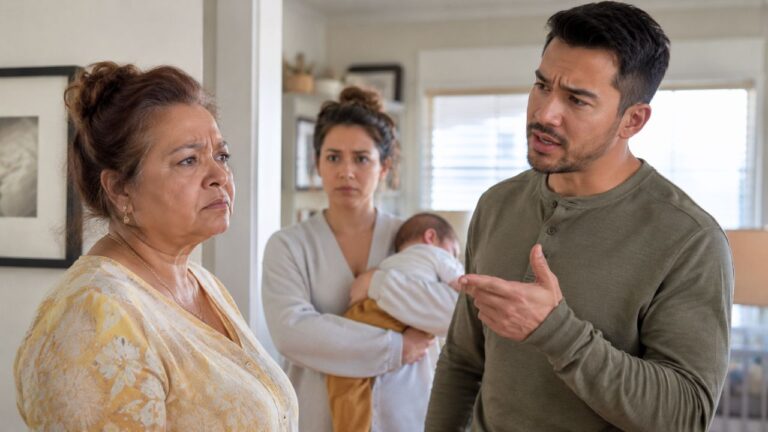
A mom recently laid out that exact pattern in the original post. She’s 29, married for years, and says her mother-in-law has long been polite on the surface while taking quiet digs underneath. Now that there’s a toddler in the mix, what used to be annoying has turned into something that feels personal: what the child calls Grandma.
The mother-in-law picked a nickname for herself tied to “mama,” and it escalated from a shortened version to the full “Mama [Name]” after a visit. The mom’s reaction wasn’t complicated. In her house, “Momma” means one person, and she doesn’t want that title shared or blurred.
The nickname wasn’t an accident, it was a claim
Not every grandparent nickname has hidden meaning. Some grandmas become “Nana” because a kid mispronounced it once, and it stuck. But this one didn’t drift in naturally; it was selected. The mother-in-law “decided she wanted to be called” a name built on “Mama,” and that matters because titles often reveal what someone wants to be to the child.
The mom originally tried to keep the peace and went along with the shortened version. That’s a familiar move for a lot of couples: you tell yourself it’s not worth a fight, and you don’t want to be the difficult one. The trouble is that small concessions can turn into precedent, and precedent turns into entitlement if the other person has that kind of personality.
Small digs add up, and parents feel them differently
This wasn’t happening in a vacuum. The mom described years of “subtle enough” jabs—like getting white chocolate as a gift even though it’s her husband’s favorite, not hers. On paper that’s trivial, but anyone who’s lived with a chronic underminer knows how those “tiny” choices can feel like a quiet way of saying, “I know you, and I don’t care.”
She also mentioned that during pregnancy the mother-in-law used demeaning nicknames for the unborn baby, including “cigarette butt.” Some families are rougher with humor than others, but a pregnant mother is already carrying a lot—physically and emotionally—and it’s not hard to see why she’d store that away as a sign of disrespect. When you’ve got a history like that, a “mama” nickname doesn’t read as cute. It reads as another push.
Why “Momma” hits a nerve for a mother
People like to pretend names are no big deal. But in a family, names are loaded. “Momma” isn’t just a sound a toddler makes; it’s tied to comfort, authority, trust, and the child’s first sense of home. For most mothers, it’s also tied to sacrifice—sleep, body, time, and the slow, daily labor of keeping a small human alive and steady.
So when someone else reaches for a mother-title, even with an added first name, it can feel like stepping into a role that isn’t theirs. Maybe the mother-in-law thinks it’s harmless. Maybe she likes how it sounds. But if the parents don’t like it, that’s the end of the argument. The child doesn’t need a second “Momma” to have a rich relationship with Grandma.
The husband’s “don’t rock the boat” instinct is the real problem
The husband in the story apparently understands his wife’s point but doesn’t want conflict with his mother. That’s a common pressure point for men, especially men who grew up managing a parent’s moods. You learn early that peace is maintained by keeping Mom happy, and you carry that habit into marriage without realizing you just imported a third voice into your home.
Marriage doesn’t mean you stop honoring your parents. It does mean your first loyalty is to your spouse and your children. A man can be respectful and still be clear. If he won’t address his mother’s overreach, his wife is left to either swallow it or become the “bad guy,” and that’s a slow way to poison trust between husband and wife.
How to shut it down without turning it into a war
The cleanest solution is a calm, direct line delivered by the husband, with the wife fully aligned behind it. Something like: “We’re not using ‘Mama’ for anyone but Mom. Please go by Grandma Cornelia, Nana, or MaCo if that works, but not Mama.” No long speeches. No courtroom evidence. Just a simple boundary stated like it’s normal—because it is.
If the mother-in-law argues, negotiates, or plays injured, the response should stay boring. “I hear you, but this is what we’re doing.” If she tries to recruit the child—correcting him, prompting him, insisting—then the parents correct it in real time. Toddlers adapt quickly, and the adults can handle a little awkwardness.
The important part is that the parents enforce it consistently. If the couple only pushes back sometimes, they’ll train everyone to treat the boundary as optional. A respectful grandparent will grumble and adjust. A controlling grandparent will test it, and that test will reveal what’s actually going on.
Grandparent relationships thrive with clear lanes
Healthy families aren’t the ones without boundaries; they’re the ones where boundaries are understood and respected. Grandma has a valuable role—traditions, stories, affection, a different kind of attention than parents can always give. But that role is at its best when it supports the parents rather than competes with them.
A grandmother doesn’t need a mother-title to be close to a grandchild. If anything, trying to borrow “Momma” can create the exact distance she claims to fear, because it signals she’s more interested in status than in relationship. The irony is that kids tend to stick close to the adults who feel safe and settled, not the ones trying to grasp for a position.
And it’s worth saying plainly: a child can love Grandma deeply without calling her anything that resembles “Mom.” The name isn’t the relationship; it’s a symbol of it. Parents have a right to protect the symbols that keep their home clear and stable.
The mom in this situation isn’t wrong for wanting to shut it down. She’s reading the room based on years of experience, and she’s protecting the clarity of her child’s world. The best outcome is a husband who steps up, speaks plainly, and refuses to let “keeping the peace” become a permanent excuse for avoiding his responsibilities at home.
Read more from Thrive Girly:
- Mother-in-Law Expected to Sleep Over After Every Visit — Then the Mom Said Overnight Stays Were No Longer an Option
- Relatives Showed Up to the Wedding Without Being Invited — Then the Couple Refused to Find Them Seats
- Grandma Buckled the Baby Into Her Car and Left Without Telling Anyone — Then the Mom Made Sure It Never Happened Again