Her Brother-in-Law Kept Dumping His Kids on the In-Laws — Then She Told Him to Start Pulling His Own Weight
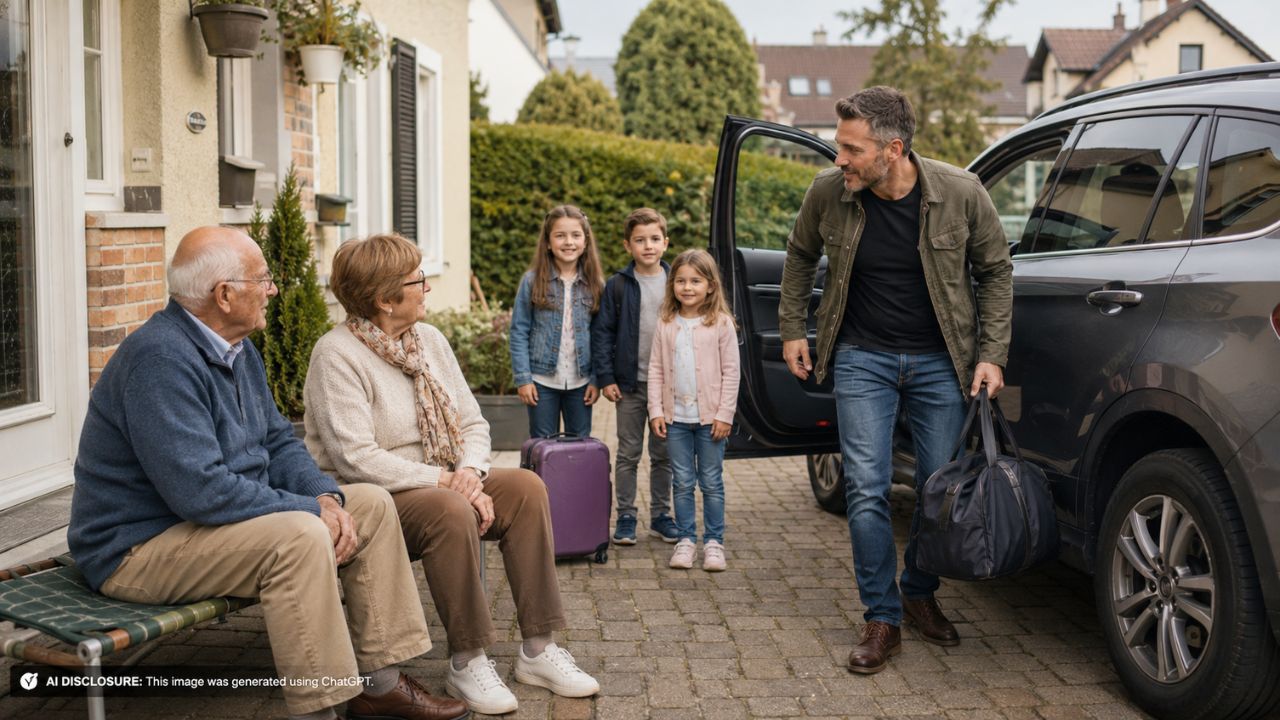
Photo credit: AI-generated image created using ChatGPT. Illustrative only.
When your in-laws live hours away, asking them to “help out” with childcare is already a big favor. But in one family, those favors started stacking up into something that felt less like help and more like an expectation.
In the original post, a woman explained how her brother-in-law and his girlfriend—parents of three young kids—kept leaning on the grandparents for rides, weekends, and long stretches of babysitting. The grandparents didn’t want to blow things up, so they vented privately… and that’s where the trouble started.
The problem started before the big blowup
On paper, the couple had support. They employed a nanny during the week. The girlfriend also had parents just an hour away.
But the girlfriend reportedly didn’t ask her own parents as often because she said they got overwhelmed by the kids. Instead, the requests kept landing on the in-laws—who lived 3.5 hours away, turning any babysitting “favor” into a full travel day.
Behind the scenes, the in-laws were telling their other son (the poster’s husband) and the poster that they felt disrespected. Not just tired—disrespected. And they felt stuck saying yes, because they worried the girlfriend would make life difficult for their son if they didn’t.
Seven-hour round trips and “surprise” babysitting weekends
What made it feel so lopsided wasn’t only the childcare. It was the way the logistics were handled, like the grandparents’ time was endlessly flexible and their gas tanks were bottomless.
One example: the kids’ birthday party. The poster said her step–father-in-law was asked to do a separate seven-hour round trip the night before, and then her mother-in-law was asked to do another seven-hour round trip the next morning—simply because the grandparents weren’t available at the exact same time.
There were also date-night requests that turned into full weekend commitments. The in-laws would be asked to drive down to babysit for “a night,” only to be expected to stay the entire weekend.
Sometimes they’d make the drive and then find out they weren’t truly needed. That kind of thing doesn’t just waste time—it makes people feel used.
Then she tried to recruit the family for even more help
At one point, the girlfriend wanted the poster and her husband to help convince the brother-in-law’s biological father to relocate—specifically to their city—so he could be closer to the grandkids.
The poster explained that the dad did want to move to the same state eventually, but on his own timeline and in a city of his choosing. He didn’t want to move to their specific city just to “be a free babysitter.” The poster kept that particular wording to herself, which says a lot about how carefully everyone was already tiptoeing around this topic.
And then there was Christmas. While seven months pregnant, the girlfriend asked the entire family to travel to their house instead of the in-laws’ home, where Christmas had always been hosted. Her reasoning was that she couldn’t sit through a 3.5-hour drive while pregnant—meaning everyone else would have to travel, and many would need hotels or Airbnbs to make it work.
The in-laws weren’t happy. In the end, the family kept Christmas at the traditional location anyway.
The “mild” suggestion that set her off
The poster said she’d tried to gently test the waters before. A month earlier, she asked the girlfriend if they’d considered backup childcare for date nights.
That did not land well. The girlfriend got defensive and insisted they already had plenty of help between the nanny, her parents, and the in-laws.
Then came the situation that pushed things into the open. The couple went on a four-day trip for a wedding—but asked the in-laws to drive seven hours to pick up the kids, keep them for ten days, and then drive another seven hours to bring them home.
The poster didn’t explode. She didn’t accuse. She simply suggested that in the future they consider sharing the driving or meeting halfway, because it seemed like a lot to ask of the grandparents.
To her, it was a mild, practical point. To the girlfriend, it was an attack.
The girlfriend responded with a long message full of explanations: they had an early flight, she was always respectful, and the poster had hurt her feelings by implying she was disrespectful. She also argued that if the in-laws had a real problem, they would have said so—because she claimed to be close with the mother-in-law.
The update: the girlfriend called the mother-in-law… and doubled down
After that message exchange, the girlfriend called the mother-in-law directly. Then she called the poster.
The poster described the call as condescending and defensive, like the girlfriend’s goal wasn’t to clear the air so much as to prove the poster didn’t “understand what it’s like” or didn’t “have all the details.” But the poster’s frustration was simple: details aside, the people being asked for help were overwhelmed and privately saying they felt disrespected.
When the poster spoke with her mother-in-law afterward, she got confirmation that she wasn’t imagining it. The mother-in-law said she appreciated the poster and her husband looking out for them. She also admitted she had told the girlfriend she’d felt overwhelmed—especially after being there three weekends in a row while still working.
And the mother-in-law brought up the infamous quick visit: the father-in-law driving seven hours round trip to be there for about 30 minutes. The mother-in-law even joked that they must think the grandparents “live around the corner” and “have no life.”
So, no, the in-laws didn’t hate the girlfriend. They were still on decent terms. But they did think she was demanding.
Now everything feels a little awkward
The poster ended the update admitting she’d lost a lot of respect for her brother-in-law’s girlfriend—not because she asks for help, but because she seemed unable to handle the idea that her behavior could be perceived negatively.
Instead of hearing, “This is too much,” and adjusting, the girlfriend focused on defending her image and emphasizing how close she is with the mother-in-law, as if that closeness meant no one else was allowed to notice the strain.
The hardest part is that the poster wasn’t even the one demanding change for herself. She was reacting to what the in-laws had already said privately, trying to put a small, reasonable suggestion on the table before resentment turned into a full family rupture.
It didn’t become a rupture—at least not yet. But now that the topic is out in the open, family gatherings won’t feel as effortless. The in-laws spoke up just enough to be heard, the girlfriend fought to save face, and the poster is left wondering how many more “favors” it’ll take before someone finally says no without guilt.
Read more from Thrive Girly:
- Mother-in-Law Expected to Sleep Over After Every Visit — Then the Mom Said Overnight Stays Were No Longer an Option
- Relatives Showed Up to the Wedding Without Being Invited — Then the Couple Refused to Find Them Seats
- Grandma Buckled the Baby Into Her Car and Left Without Telling Anyone — Then the Mom Made Sure It Never Happened Again