In-Laws Said They Had a Right to Meet the Newborn on Their Timeline — Then the Parents Said the Baby Was on Theirs
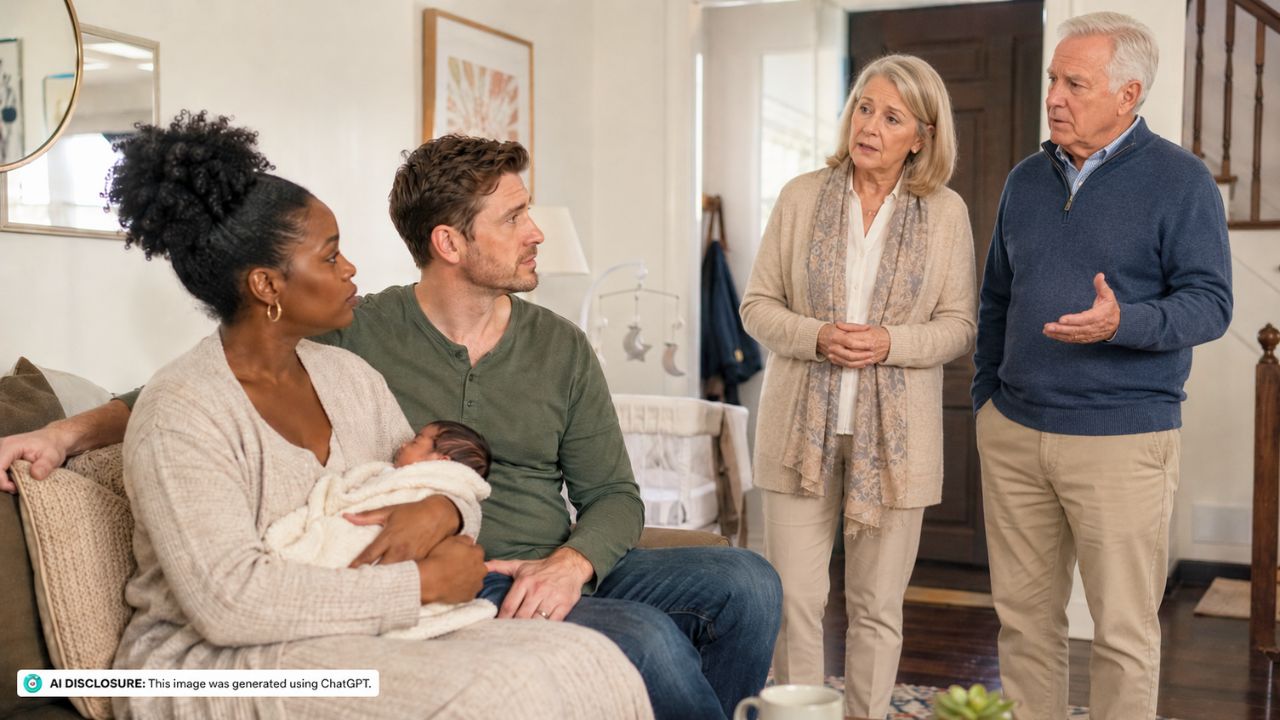
Photo credit: AI-generated image created using ChatGPT. Illustrative only.
The baby arrived at 3 a.m., five weeks early, after a dinner that was supposed to be a calm lead-in to Easter church. Instead, the night turned into a family blowup that followed the new parents straight into the hospital—and right up to the question of who gets to see a newborn, and when.
A woman who has been with her partner for nearly six years said their first child was born at 34 weeks, making the delivery not just emotional, but high-stakes. While she and her partner had long navigated differences in belief—he’s Greek Orthodox and she’s atheist—she said she’d still joined his family for Orthodox Easter traditions for years and even wanted their child to grow up with those customs.
It was supposed to be Easter tradition, not a medical emergency
The couple was at her in-laws’ home for dinner before heading to church when she felt “agonising pain” and her water broke. At 34 weeks pregnant, she wasn’t expecting to be in labor, but it quickly became a viable possibility.
That’s when, she says, her mother-in-law made the moment about loyalty and religion instead of medical urgency. The woman wrote that her MIL told her partner’s “WHOLE family” she was faking the pain to avoid going to church, accused her of trying to pull her son away from his family and religion, and referred to her atheism as a “monstrosity of a religion.”
In the middle of that escalation, she said her father-in-law refused to drive them to the hospital because it was upsetting his wife. The couple still needed to get medical care, and quickly.
The ride to the hospital came from the one person who pushed back
According to the account, the person who cut through the chaos was her sister-in-law. The partner’s sister told their parents to stop being “ridiculous” and stop making it about themselves, then drove the couple to the hospital.
Feeling guilty that her sister-in-law was missing church, the new mother-to-be invited her to stay for the birth. The sister agreed—and ended up becoming the main support person for both parents during the delivery. The woman described her as “the BIGGEST support,” a detail that underscores just how isolated the couple felt from the rest of the family in that moment.
By the time the baby arrived early the next morning, the emotional lines were drawn. The question wasn’t just who was excited to meet the newborn—it was who had made the hours leading up to the birth harder, and who had helped.
Then came the texts: blame, abuse, and a request to visit after Easter services
Not long after the delivery, the sister-in-law showed the new mother the messages she’d been receiving from her parents. The texts, she said, were abusive and full of horrible things being said about her.
The mother described herself as having been close to her in-laws before this, making the sudden shift feel “out of the blue.” But even as she was processing the birth and the fallout, her in-laws began calling and texting her directly, asking to come meet the baby that night—after they finished celebrating Easter.
Her own parents had already visited earlier in the day. Meanwhile, the in-laws were aiming for a 7 p.m. visit, and the timing mattered: the new mother was still in the immediate postpartum window, the baby was premature, and the last interaction with her in-laws involved accusations that she lied about labor to avoid church.
Her partner told her he would support whatever decision she made, and that he understood if she wanted to wait. That support left her with a clear choice, but not an easy one: set a boundary immediately or allow the visit and absorb the message that the earlier behavior had no consequences.
A new boundary formed fast when the in-laws tried to go around the parents
Before she even responded, the in-laws changed tactics. In an update, the woman said they contacted her parents directly—people who hadn’t been told the full story—and asked if they could visit “with them tomorrow,” without asking the baby’s actual parents.
Her mother didn’t take the bait. She held off on responding and checked with her daughter first, preventing what could have turned into a pressure campaign or a surprise visit arranged through a third party.
That move seemed to clarify the power struggle. This wasn’t just about excitement to meet a new grandchild; it was also about control over access, timing, and who gets to make decisions in a vulnerable moment.
In response, the husband sent his parents a pointed message that mirrored their earlier accusation. He told them it was a “fake pregnancy, with a fake labour and now it’s a fake baby,” and that the couple refused to have “fake people having fake relationships with her.” The message landed: his parents were “very confused,” but still didn’t apologize.
The full account appears in the original post.
People focused less on etiquette and more on safety and leverage
While the mother’s initial question centered on whether she’d be wrong to say no, the practical reality she described was bigger than manners. A baby born at 34 weeks can mean extra medical caution, and a mother who gave birth hours earlier is typically exhausted, recovering, and not in a place to manage confrontational visitors.
The details that stood out were the in-laws’ willingness to dismiss a medical emergency, refuse help, and then treat access to the baby as something they could schedule around their holiday plans. Just as notable: when they couldn’t get an immediate yes, they attempted to reroute their request through the new mother’s parents.
In situations like this, readers often zoom in on documentation and boundaries: saving hostile messages, limiting contact while emotions are high, and keeping decision-making between the parents instead of letting extended family negotiate around them. In this case, the sister-in-law’s support and the husband’s unified stance gave the couple leverage they might not have had otherwise.
The unresolved part isn’t the visit—it’s the apology
The mother said the silence on accountability hurt more than the insults themselves. She described her heart breaking not just for her, but for her daughter, who may not know that side of the family if they refuse to own what they did. She also worried for her husband, saying he’s endured years of similar behavior and tried to protect his sisters from it.
For now, the couple’s immediate plan is simple: focus on their newborn and on recovery, and keep the boundary intact until there’s a real apology. The grandparents’ timeline for meeting the baby may be clear, but the parents’ message is clearer—access starts with respect, and the baby doesn’t belong to anyone else’s holiday schedule.