Her Mother-in-Law Refused to Acknowledge What She Did — Then the New Mom Went No Contact and Never Looked Back

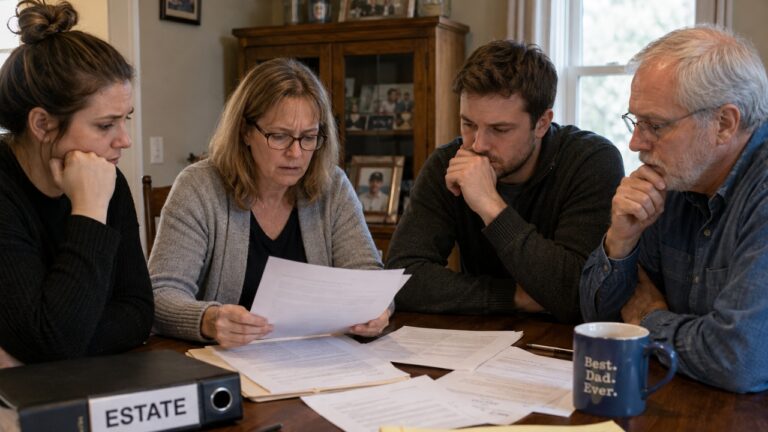
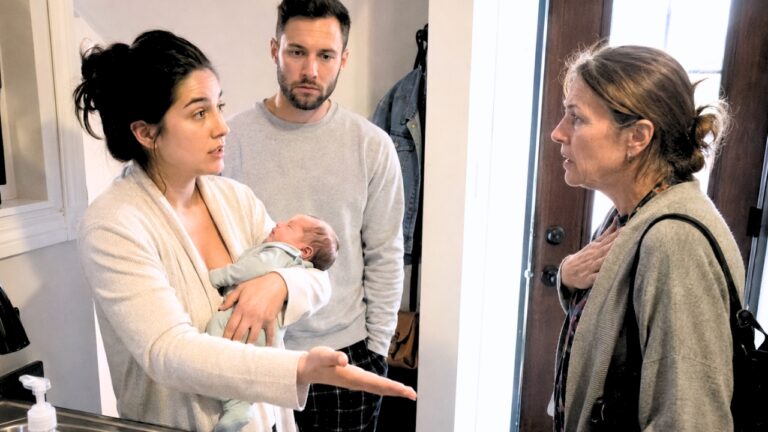
Photo credit: AI-generated image created using CHATGPT. Illustrative only.
She was only a few days postpartum, still raw and exhausted, when the phone call snapped whatever patience she had left. After years of being ignored, needled, and talked about behind her back, this time her mother-in-law didn’t just cross a line—she charged right through it, then acted offended when she was told “no.”
The new mom, 25, says she’d been trying to make the relationship work since the beginning. But after her mother-in-law showed up at the hospital anyway—despite being clearly told there would be no visitors—she and her husband decided they were done. And ten months later, they say the peace has been worth every bit of backlash from extended family.
The problem started long before pregnancy ever entered the picture
From the start of her relationship with her now-husband, Dan, she could tell his mom didn’t like her. It wasn’t even subtle, either—coldness, passive-aggressive comments, and sometimes just flat-out ignoring her. Still, she kept trying to connect, asking questions, making conversation, pushing past the awkwardness because she genuinely wanted a decent relationship.
Over time, though, it started to feel less like awkwardness and more like a test. Dan’s mom began bringing up his exes during visits, comparing them, reminiscing about how sweet and fun they were, and tossing out backhanded comments like “you’re a lot better than so-and-so.” When Dan finally called her out and told her to stop, she didn’t apologize. She pouted, left the room, and later cried to him that she “must be a terrible mom.”
The wife makes a point of saying Dan wasn’t the kind of partner who stayed silent. He stood up for her and called things out, even though he’d spent years being a “doormat” in his own family. They were both learning in real time how to handle a parent who reacts to accountability by turning themselves into the victim.
The engagement made it obvious she wasn’t interested in being supportive
When Dan proposed, his mom had known for weeks that it was coming. Her family didn’t know the timing, but when the couple called to share the news, her relatives threw together a last-minute mini celebration—snacks, champagne, a few small gifts, the kind of happy chaos that happens when people are genuinely excited.
Then they went to Dan’s family home. Instead of a warm welcome, his mom walked past them without speaking. Only after Dan said hi did she respond with a lukewarm “oh hi,” and when another relative rushed in to congratulate them, she followed it up with a flat “oh yeah, congrats.”
Worse, she spent the night showing the bride-to-be endless photos of another woman’s wedding—talking about how she was “the most beautiful bride ever”—instead of celebrating her future daughter-in-law. A few days later, the couple learned she was angry that the bride’s family had thrown an engagement get-together without inviting her, even though the families hadn’t met yet and her family didn’t even have her contact information.
It wasn’t just one weird night. The wife says the disrespect continued through passive-aggressive comments, badmouthing her to others, and shutting her out. They even went to counseling to figure out how to handle it, and tried sitting down face-to-face multiple times. Each time, she deflected, blamed them, and got more hostile.
Even the wedding didn’t reset the relationship
Marriage didn’t soften anything. The wife says her mother-in-law spoke badly about her on her own wedding day—one of those moments you don’t forget, because it’s not just rude, it’s deliberate. Despite that, she still wasn’t asking Dan to cut his mom off. She didn’t want to be the reason he lost his family; she just wanted the disrespect to stop.
Then she got pregnant, and suddenly Dan’s mom was “over the moon”—but not in a way that made the mom-to-be feel valued. The excitement didn’t look like checking in, offering help, or caring about how pregnancy was going for her. It felt like the focus was on the idea that she was getting a grandchild.
She says it was basically radio silence until the week of her due date, when her mother-in-law started what she called “daily check-ins.” But even those felt performative: she’d ask how the pregnant woman was doing, and when she answered honestly, the texts would go ignored.
The hospital boundary was clear—and she ignored it anyway
A week or two before delivery, the couple told both families they didn’t want visitors at the hospital, and that if they changed their minds, they’d let everyone know. Her family respected it. His family pushed back.
When labor started, they texted their families that they were heading in. Dan’s mom immediately asked if they wanted her there, because she wanted to support her son. Not the person giving birth—her son. Dan reiterated multiple times: no visitors.
Two hours later, she texted again to say she was already in the waiting room. She was “too excited” and “had to be there.” The new mom says she stared in disbelief, but Dan told her he’d handle it. He did—he went to the waiting area and told his mom to leave, and then they focused on bringing their baby into the world.
They didn’t hear from her in the days following the birth, but they heard from “trustworthy sources” that she was furious and speaking poorly about them while the new mom was just three days postpartum. It was the kind of behind-the-scenes trash talk that turns an already painful moment into something harder to forgive.
“Who do you think you are?” was the moment everything snapped
When they got home, Dan called his mom and told her he was livid. He said she crossed a serious line, and it wasn’t okay to ignore their wishes just because she felt entitled to be nearby. His mom cried and tried to make him feel guilty, insisting she only wanted to support him and that she was just excited to be a grandma.
The wife got on the phone too, trying to calmly explain why it felt disrespectful. But the second his mom heard her voice, she exploded—screaming “Who do you think you are!?” and “who do you think you’re talking to!?” The new mom went silent, handed the phone back to Dan, and he hung up.
Then came the breakdown. Postpartum, overwhelmed, and finally out of grace, she told Dan she couldn’t do it anymore. Not the constant digs, not the refusal to change, not the way every attempt to talk turned into blame and theatrics. Together, they decided to go no contact.
Dan sent a long, detailed message explaining why. And then…nothing. No apology, no accountability, no acknowledgement. Just silence.
Ten months later, the peace is real—even if the pressure hasn’t stopped
Their baby is now ten months old, and they say they feel more at peace than ever. But the rest of Dan’s family hasn’t exactly let it go. They keep trying to convince the couple to reach out, to “mend things,” to be the bigger people—basically to do the emotional labor of fixing something they don’t feel they broke.
The couple doesn’t want to. In their eyes, they already tried for years, including serious conversations and counseling, and the pattern never changed. The hospital incident wasn’t an isolated mistake; it was the loudest version of a behavior they’d been living with the whole time.
And that’s where they’re standing now: focused on their little family, committed to keeping the chaos away from their child, and unwilling to reopen a door just because other relatives are uncomfortable with the consequences. For anyone wanting the full context in her own words, she shared it in the original post.
Her mother-in-law may never admit what she did. But for this new mom, the silence has been an answer all on its own—and she’s not interested in trading her peace for another round of the same old treatment.