Grandparents Ignored the Baby’s Health Rule — Then the Parents Ended the Visit Early

Photo credit: Thrivegirly
The first visit after the baby was born was supposed to be simple: coffee, a few photos, and a quiet afternoon at home. The parents had one big condition—no kissing the baby and no unwashed hands—because it was peak cold-and-flu season and the pediatrician had been blunt about newborn risk. Everyone nodded, everyone agreed, and the grandparents drove in with gifts and a cooler full of food.
It unraveled within an hour, and it didn’t happen in a dramatic, movie-scene way. It happened in the small, familiar way families argue: a rule treated like a suggestion, a quick “just this once,” and a parent trying not to sound like the bad guy in their own living room.
The “one rule” wasn’t a preference, it was a plan
In the weeks leading up to the visit, the parents had been clear in texts and calls. Wash hands when you come in, skip face kisses, and don’t come if you’re even a little sick. They’d also asked everyone to keep the visit short, because the baby was still on a feed-sleep-repeat schedule that left the parents running on fumes.
The grandparents had a track record of treating boundaries like something that could be negotiated in person. The parents tried to avoid a blowup by making it feel routine: hand soap and paper towels by the sink, sanitizer on the counter, and a gentle reminder before anyone held the baby.
The mother, still recovering and exhausted, was already bracing for comments about “overreacting.” The father had taken time off work and didn’t want the day to turn into a standoff. They’d agreed on a simple approach: remind once, intervene if needed, end the visit if it kept happening.
Small slips turned into a pattern
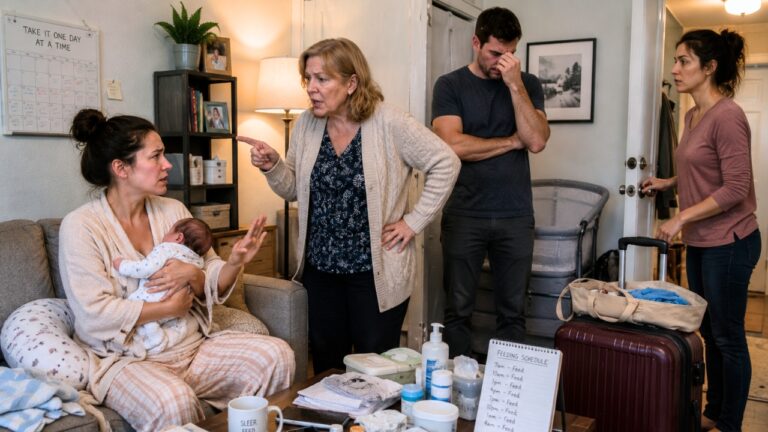
The grandparents arrived with hugs for the parents and a lot of excitement. At first, they followed the routine—shoes off, hands washed, gifts set on the table. Then the grandmother asked to hold the baby and immediately brought the baby close to her face, hovering in the way that makes new parents’ shoulders tense.
The mother reminded her, calmly, not to kiss the baby. The grandmother laughed it off and said she “wasn’t sick,” then tried to nuzzle the baby’s cheek anyway. When the father stepped in and repositioned the baby, it turned into a quick, awkward moment where everyone pretended it hadn’t happened.
After that, it kept popping up. The grandfather touched the baby’s hands after handling his phone and didn’t rewash. The grandmother took the baby back after putting food out and didn’t stop to wash again. Each time, it came with an explanation, a joke, or a complaint that the parents were acting like the baby was “made of glass.”
The parents started doing that quiet couple teamwork: one hovering, one intercepting, both trying not to escalate. But the more they corrected, the more the grandparents acted like the correction itself was the real problem.
The moment that ended it
The tipping point came after a diaper change. The mother had just finished, the baby was fussy, and she handed the baby to the father so she could wash up and reset the changing area. While she was at the sink, the grandmother reached in, asked for the baby again, and this time kissed the baby’s face before the father could react.
It wasn’t subtle, and it wasn’t an accident. It landed like a challenge, the kind that says, “I know you said no, but I’m doing it anyway.” The baby started crying, the mother turned around, and the father asked for the baby back immediately.
The grandparents got defensive fast. They argued that they had raised kids just fine, that they were being treated like strangers, and that “a little love” wouldn’t hurt. The mother pointed out that the rule had been agreed on and that the baby’s health wasn’t up for debate.
Then the grandmother doubled down and tried to make it about feelings, saying she wouldn’t be told how to act with her own grandchild. That was when the father said the visit was over.
Ending early had real-world fallout
The parents didn’t scream or threaten, but they didn’t negotiate either. The father carried the baby to the bedroom and closed the door. The mother, shaking, told the grandparents they needed to leave so the baby could settle and the parents could calm down.
The grandparents refused at first. They claimed they’d driven too far to be “kicked out,” and they lingered in the entryway, still trying to argue their case. The mother opened the front door and repeated, more firmly, that the visit was done.
The situation spilled outward in the most stressful way: neighbors could hear the raised voices through the thin walls. The grandparents finally walked out, but not before the grandfather muttered that he’d “remember this,” and the grandmother said she didn’t know when she’d be “allowed” to see the baby again.
After they left, the mother checked the baby’s temperature twice and called the pediatrician’s nurse line for guidance. The nurse confirmed what the parents already knew: it wasn’t about panic, it was about prevention. With newborns, exposure is the gamble, and people who ignore basic rules tend to ignore them again.
The grandparents started texting that evening. They wanted an apology for “how they were treated” and suggested the parents were being influenced by “online paranoia.” The father replied once, in writing, restating the rule and saying future visits would only happen if the rule was respected without debate.
The boundary became a policy, not a conversation
The next day, the parents did what tired new parents do when a conflict has teeth: they got practical. They wrote down what happened, including the repeated reminders and the final kiss. Not for revenge—just so they wouldn’t second-guess themselves later when the story got retold differently.
They also made their home setup more explicit. A small sign went up near the entryway reminding visitors to wash hands, skip kisses, and reschedule if they had symptoms. The father set their doorbell camera to save clips automatically, not because he expected another confrontation, but because he didn’t want any future scene at the front door to become a he-said-she-said.
The mother told close friends and her sibling what happened, partly for support and partly to create a paper trail of sorts. She wasn’t trying to recruit a team against the grandparents, but she didn’t want to feel isolated if the grandparents began calling relatives to complain. It’s easier to hold a boundary when you’re not also managing a family PR campaign.
When the grandparents asked for another visit the following weekend, the parents offered a short porch visit instead—masked, hands washed, no holding the baby. The grandparents took that as an insult and declined, insisting they deserved “normal” access.
People focused on documentation and predictable consequences
When the parents described the situation to others, the reactions were less about the family drama and more about pattern recognition. People pointed out that ignoring a clear baby-health rule isn’t a one-off mistake; it’s a test of whether the parents mean what they say. If the grandparents learned that pushing hard enough gets them what they want, the same dynamic would show up later with car seats, safe sleep, and food allergies.
Others emphasized keeping everything in writing. Text messages aren’t just for arguments; they’re for clarity. A short, calm message that says “Here are the rules for visiting” removes the option to pretend nobody explained anything.
There was also a practical focus on limiting the setting. Meeting outdoors, keeping visits short, and having a firm end time gives parents an exit without turning it into a fight. And if a grandparent refuses to follow basic hygiene rules, people noted, it’s not unreasonable to pause visits until the baby is older—or until the grandparent can show they’ll respect limits.
For now, the parents are stuck in an uncomfortable middle ground. They want their child to have grandparents in their life, but not at the cost of constant anxiety and boundary battles. The early-ended visit didn’t solve the bigger relationship problem; it just made it visible. And with a newborn in the house, they don’t have the luxury of pretending it will fix itself.