His Family Expected His Wife To Cook After Her C-Section — Then He Told Them To Leave
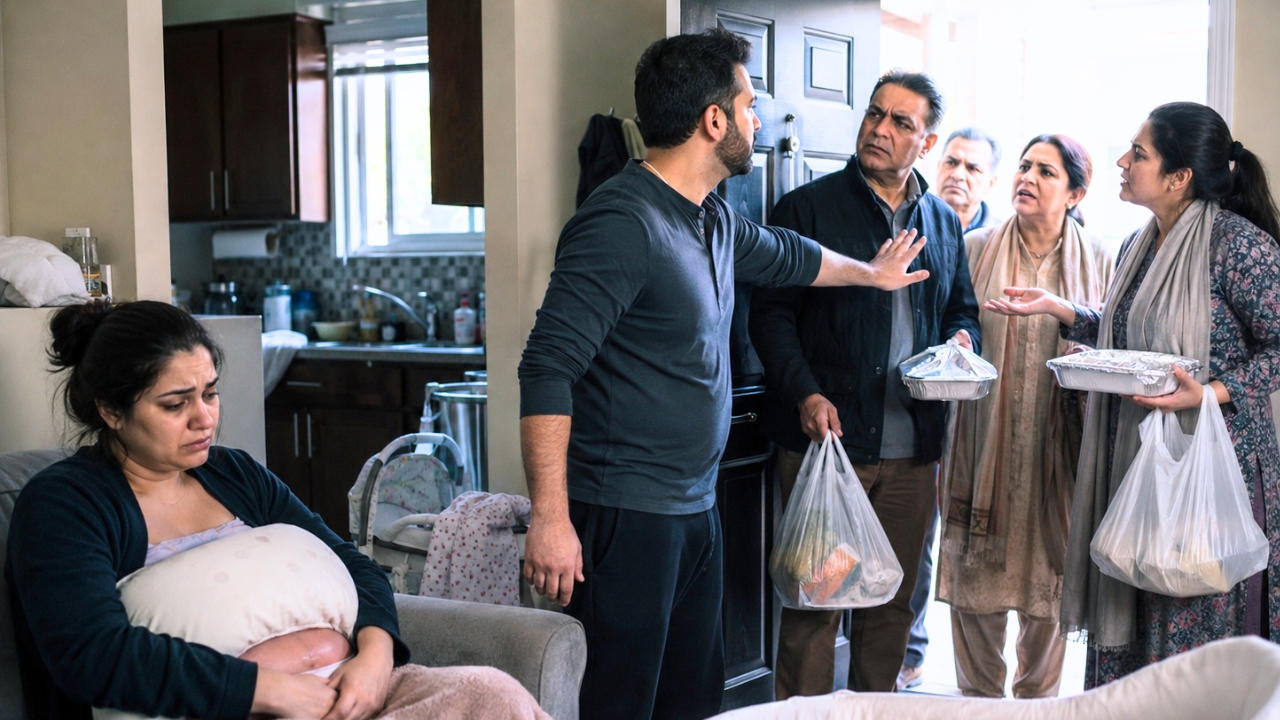
Photo credit: Thrivegirly
They’d barely been home a full day when the doorbell started going off like it was a holiday. The baby was finally asleep, the living room was dim, and his wife was on the couch with a pillow pressed to her abdomen, moving like every step had a cost.
He opened the door to his parents and two relatives carrying foil pans and grocery bags. At first it looked like help. Then they walked straight past him, started opening cabinets, and began talking about what they wanted for dinner.
“We brought ingredients” turned into a demand
His wife had delivered by C-section after a long labor and complications that left her exhausted and sore. The discharge instructions were clear: no lifting, limited stairs, keep the incision clean, watch for fever, and rest. They’d already set up a bassinet in the living room so she wouldn’t have to climb into bed every time the baby needed her.
The family’s plan, though, seemed to be that the new mom would “get back to normal” immediately. Someone asked where the big pot was. Someone else wanted to know if there was fresh rice. Another relative suggested she could sit on a chair and “supervise” while cooking.
He tried to redirect things, saying they could heat up the food they brought or order something. But the comments kept coming, framed like advice and obligation at the same time. When his wife didn’t get up, one of the relatives pointedly asked if she was going to “at least” make a quick meal since everyone had come over.
His wife tried to be polite—until she couldn’t
From the couch, she gave a small, strained smile and said she couldn’t stand for long and wasn’t supposed to be bending over the stove. She shifted to adjust the pillow, wincing in a way that made it obvious she wasn’t being dramatic. The baby stirred, and she reached for the bassinet with slow, careful movements.
Instead of backing off, the tone turned sharper. One person started talking about how women in their family had always cooked right away, and how rest was “nice” but not realistic. Another relative asked why he was “hovering” and suggested he was letting his wife “get used to being catered to.”
He watched his wife’s face go blank in the way people do when they’re trying not to cry in front of an audience. It wasn’t just rude—it was unsafe. He’d been the one changing diapers, timing medications, and making sure she didn’t overdo it, and he knew how quickly a setback could turn into an ER trip.
He drew a hard line in his own kitchen
He told everyone to stop and said they were not there to be hosted. If they wanted to help, they could drop the food, run the dishwasher, or take out the trash. Otherwise, they needed to leave so his wife could recover and the baby could sleep.
That only triggered more pushback. Someone accused him of disrespecting his parents. Another relative said it was “embarrassing” for a wife to lie down while guests were present. His mother made a comment about how she never got that kind of rest after giving birth.
That’s when he ended it. He told them to grab their bags and go, and he didn’t negotiate. When one relative tried to keep talking, he opened the front door and stood there until the message landed.
The argument didn’t end at the doorstep
They left, but not quietly. The front porch became a stage, with loud comments about ungrateful children and “modern” marriages. A neighbor across the hall cracked their door, then closed it again when the voices rose.
Within an hour, his phone started lighting up. His father texted that they’d come by to “talk like adults.” An aunt sent a long message about family duty and how his wife needed to “toughen up.” His mother called twice and left a voicemail that sounded less like concern and more like a warning.
His wife asked if she’d caused a problem. He told her she hadn’t. Then he muted the family group chat, turned the ringer off, and wrote a short message that they were not accepting visitors for the next two weeks and that any drop-offs needed to be left at the door.
They tried to come back, and he had to take it seriously
The next afternoon, his parents returned without asking. They knocked, then knocked harder. When he didn’t answer, someone rattled the doorknob and called his name loud enough that the baby startled awake.
He didn’t open the door. He checked the peephole, then used his phone to record a short clip of the knocking and the raised voices through the door. He told them, through the door, that they needed to leave and that they were upsetting the household.
After a few minutes, the noise stopped. But later, the building manager called him to ask what was going on, since a neighbor had complained about yelling in the hallway. That’s when it hit him that this wasn’t just family drama anymore. It was affecting their housing, their peace, and his wife’s recovery.
That night, he emailed the manager a calm explanation and asked for the incident to be noted in case it happened again. He also asked about hallway cameras and whether there was a standard process for reporting repeated disturbances. The manager responded that they’d keep an eye out and advised him to call building security if anyone refused to leave.
People zeroed in on boundaries, documentation, and postpartum safety
When he described what happened to a few friends and coworkers, the reactions were immediate and practical. More than one person told him to stop letting the conflict happen in person, because it put his wife in the position of defending her medical needs. They suggested sending one clear text, then not debating it further.
Others focused on documentation. Save screenshots. Keep a timeline. If anyone showed up again, record from inside, don’t open the door, and escalate through the building or local non-emergency line if it became a pattern. Someone pointed out that postpartum recovery and sleep deprivation can make people more vulnerable to anxiety and depression, and that constant stress from family pressure can be more harmful than outsiders realize.
A friend who’d had a C-section told him the blunt truth: the incision pain can spike days after you think you’re improving, and overdoing it can lead to infection or reopening. The “just cook something quick” mentality wasn’t just outdated—it was dangerous.
His wife’s doctor’s office ended up reinforcing that point during a follow-up call. They reminded her to avoid standing for long periods and not to lift anything heavier than the baby. Hearing it from a professional seemed to help her stop apologizing for resting.
By the end of the week, the house was quieter, but the tension sat there anyway—an unanswered question about what the family would do next and how long the resentment would last. He’d chosen his household, and he wasn’t wavering, even if it meant uncomfortable holidays and strained phone calls later.
For now, the plan was simple: no surprise visits, no debates at the door, and no more treating medical recovery like a personality flaw. The baby needed calm, his wife needed time, and he was done letting anyone confuse “family” with entitlement.