New Mom Asked for Two Weeks Alone After Birth — Then Her In-Laws Showed Up Anyway
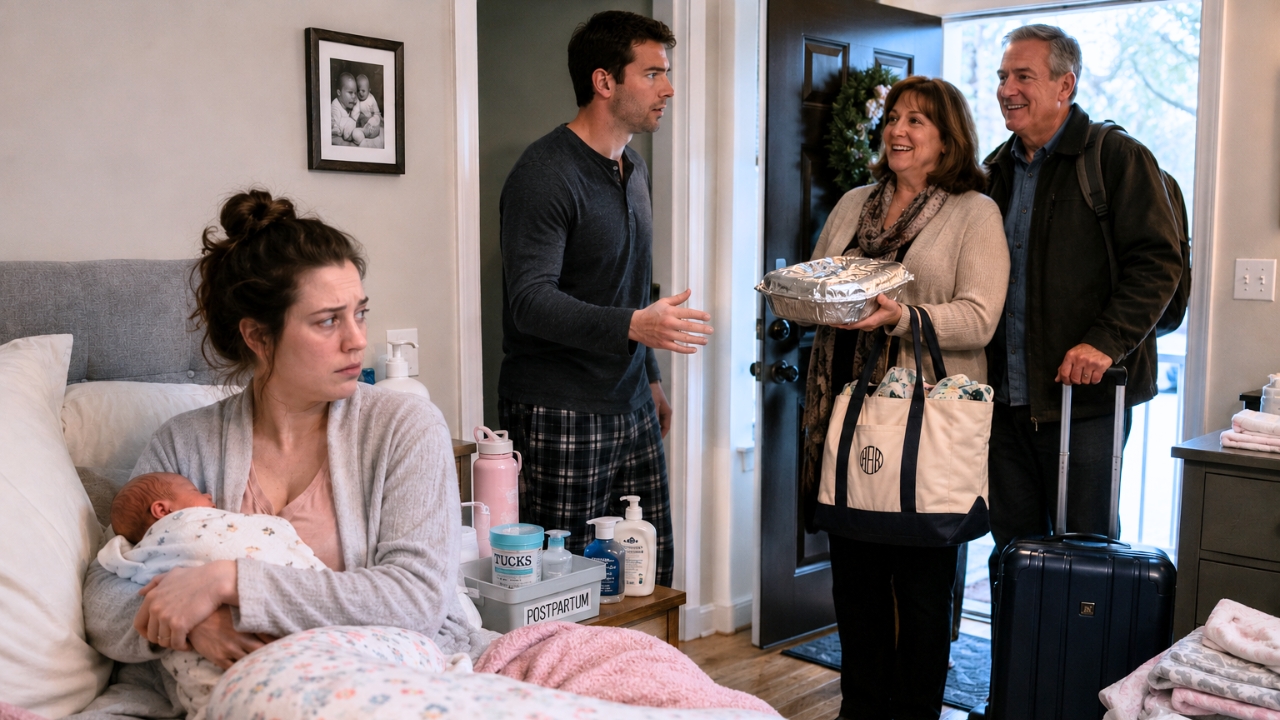
Photo credit: Thrivegirly
She thought she had done the polite, grown-up thing: set expectations early, put them in writing, and ask for a short window to recover. After a long labor and an unplanned C-section, the new mom wanted two weeks at home with just her partner and the baby—no visitors, no drop-ins, no “we’re only staying an hour.”
The plan lasted less than a week. A car pulled into the driveway mid-morning, and before she could even get herself upright, her partner’s parents were on the porch with a diaper bag and a suitcase, smiling like this had been arranged.
Two weeks of quiet was supposed to be the compromise
The couple had argued about it for months, mostly because his parents treated family events like mandatory attendance. They were the type to buy plane tickets first and ask questions later, and they had already been hinting about “helping” once the baby arrived.
She wasn’t trying to keep anyone away forever. She wanted time to manage pain, learn breastfeeding without an audience, and avoid getting sick with a newborn in the house. Her partner told his parents they’d let them know when they were ready, and he even sent a message spelling out the “two weeks, no exceptions” boundary.
After the birth, their home felt smaller and louder than she remembered. There were postpartum supplies in every bathroom, laundry constantly running, and a bassinet squeezed beside the bed. She was sleeping in fragments and tracking feedings on her phone because she couldn’t remember anything for more than five minutes at a time.
They showed up like it was a surprise party
When the doorbell camera alerted, she saw both in-laws carrying tote bags and a covered casserole dish. She messaged her partner, assuming they were dropping food and leaving. Then she noticed the suitcase.
He stepped outside, and the conversation got tense quickly. His parents pointed to the dish and said they were there to “take things off their hands.” The mother-in-law mentioned she’d already told friends at church she’d be staying “a bit” to help with nights.
Her partner came back inside looking rattled and said they were “just here for a quick visit.” That’s when she heard the suitcase wheels cross the threshold.
What made it worse wasn’t just the boundary being ignored. It was the feeling that her recovery was being treated like a scheduling issue. She was still bleeding, still swollen, and still trying to walk without wincing, and now she had to host people who were acting like guests and supervisors at the same time.
“Helping” turned into taking over
The first hour was awkward but manageable. The in-laws washed a few bottles and reorganized the kitchen without asking. Then the comments started—about the swaddle, about the thermostat, about how she should be up walking more.
By afternoon they were camped in the living room with the baby, and she found herself asking, gently, for her newborn back like she was borrowing someone else’s child. When the baby started rooting, her mother-in-law suggested a bottle so “everyone can relax,” even though the pediatrician had emphasized keeping breastfeeding consistent early on.
Her partner kept trying to smooth it over. He floated the idea of them staying at a nearby hotel instead of in the guest room, but his dad brushed it off and said it was a waste of money when they had a perfectly good bed here.
That night, after she finally got the baby down, she heard the in-laws moving things in the guest room—hangers clacking, drawers opening. She realized they weren’t visiting. They were moving in, at least temporarily, and they had no intention of leaving in a day or two.
The standoff shifted from family tension to safety and sanity
By day two of their “visit,” she was crying in the bathroom just to get a minute alone. The in-laws were up early, making noise, and inviting themselves into the bedroom to “check on the baby.” Her pain medication schedule was getting off because she couldn’t rest. She started locking the bedroom door, which only escalated the mood in the house.
Her partner tried to set firmer boundaries, but he was also exhausted and emotionally pinned between his wife and his parents. He told them again that they couldn’t stay, and his mother responded by listing everything she’d done: the casserole, the dishes, the folded laundry. The implication was clear—if they were “helping,” they earned access.
When he mentioned their two-week request, his dad turned it into a character critique, calling them ungrateful and saying “in our day” family didn’t need permission. The argument got loud enough that a neighbor texted asking if everything was okay.
That message was the moment it stopped feeling like an internal family drama. The new mom started thinking in practical terms: if this got worse, who would she call? If she asked them to leave and they refused, what was the next step? She didn’t want police at her home, but she also didn’t want to feel trapped in her own bedroom with a newborn.
They started documenting, because memories blur postpartum
She began keeping notes on her phone, not as a revenge plan, but because her days were a blur of feedings and pain. She wrote down when they arrived, what was said about staying, and each time they refused a request to give the baby back immediately.
Her partner saved the earlier text message where he’d clearly asked for no visitors for two weeks. He also sent a new message to his parents while they were in the house, reiterating that they needed to leave and giving a specific deadline. It felt strange to put it in writing when they were ten feet away, but it created a record of a clear request.
They checked the doorbell camera history, too. It showed the arrival time, the suitcase, and the moment they entered the house. The new mom’s sister offered to come pick her up and bring her to her place for a few days, but the new mom didn’t want to be the one displaced while recovering from surgery.
They also contacted the hospital’s postpartum nurse line, not to report anyone, but to ask about stress and healing. The nurse emphasized rest, limiting visitors, and protecting sleep—everything the new mom had been trying to do from the start.
People around them zeroed in on boundaries with consequences
Friends and relatives who heard about the situation had one consistent takeaway: a boundary without a consequence is just a suggestion. Several told the couple to stop arguing about fairness and start focusing on logistics—where the in-laws would sleep tonight, who would drive them to a hotel, and what would happen if they refused.
Others urged the partner to handle it without putting the recovering mother in the middle. They pointed out that “help” that increases stress isn’t help, and that postpartum recovery isn’t a time for power struggles about family hierarchy. A few mentioned changing the locks after they left if the in-laws had ever been given a spare key, and disabling any shared smart-home access.
The most practical advice was to keep everything calm and documented. No screaming matches, no physical blocking of doors, and no dramatic threats. Just a clear statement: you can visit when invited; you cannot stay here; you need to leave by a certain time.
What made the couple hesitate was the fear of blowing up the relationship permanently. They didn’t want a lifetime feud over a two-week request, but they also couldn’t ignore what it said about future boundaries—holidays, childcare, even medical decisions for the baby.
By the end of the week, the home was tense and divided into zones: the in-laws in the living room, the new mom in the bedroom, and her partner shuttling between them with a tired, apologetic look. The newborn didn’t care about the politics, only the warmth of a quiet room and familiar arms. That was the point the new mom kept returning to: if the adults couldn’t respect a short recovery period now, the next boundary would be even harder to enforce.