10 details from history that line up with the Bible
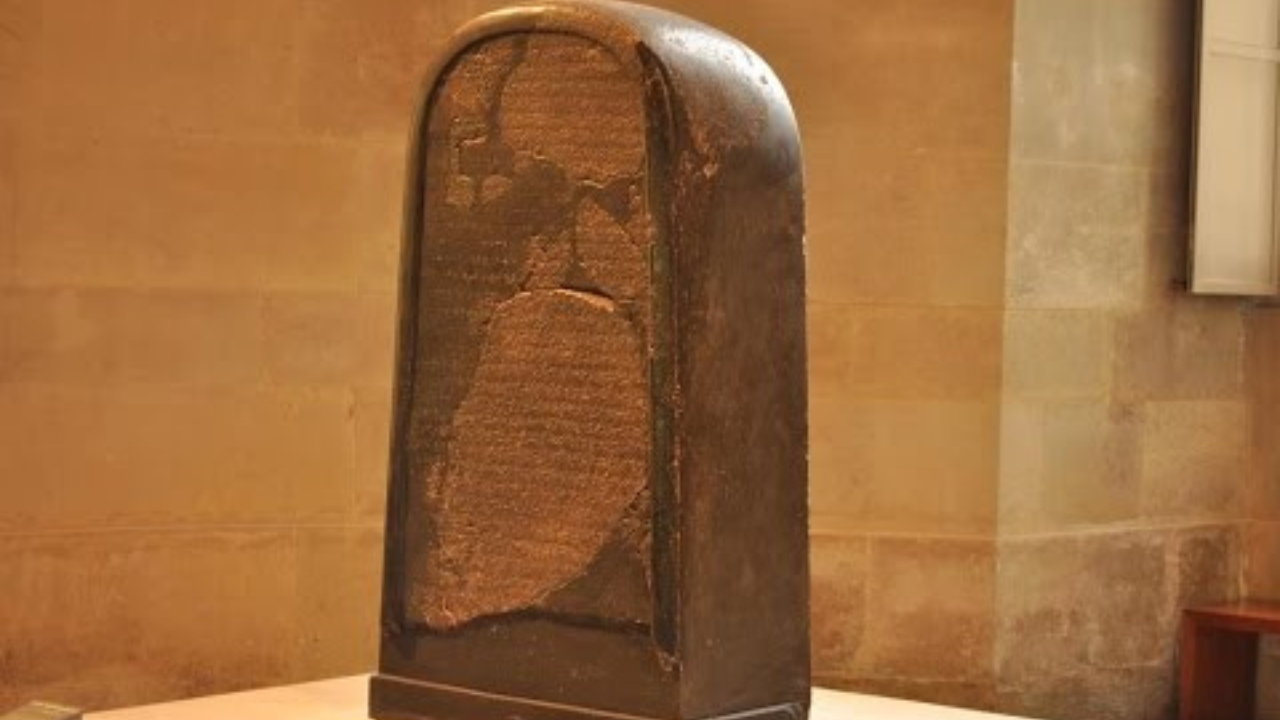
Photo credit: Matt Ryniker/Youtube
One reason the Bible feels so different from a vague spiritual book is that it keeps dropping into the real world. It names rulers, cities, titles, customs, building projects, and political tensions in ways that can actually be checked against history. That does not mean every biblical claim can be tested by archaeology, and it does not mean history can prove the Bible’s spiritual truth the way a lab test proves a chemical formula. But it does mean Scripture keeps showing itself to be rooted in the real ancient world rather than drifting above it.
That matters because small details are often where unreliable writing starts to fall apart. If the Bible repeatedly got its setting wrong, that would matter. But again and again, history lines up with the world the Bible describes. These ten details are not flashy for the sake of being flashy. They are the kind of grounded facts that make Scripture feel more concrete and trustworthy.
1. David’s dynasty was known outside the Bible
The Old Testament treats David as a real king whose family line mattered, not as a symbolic figure invented much later. The Tel Dan inscription is one of the strongest outside confirmations of that. It includes a phrase widely understood as “House of David,” and the Museum of the Bible describes it as the earliest-known extrabiblical reference to David’s royal line.
That is important because it pushes back against the idea that David only exists inside biblical storytelling. The inscription does not prove every detail about his reign, but it does show that David’s dynasty was known in the wider ancient world. That fits the Bible’s historical framework instead of weakening it.
2. Pontius Pilate was a real Roman official in Judea
The Gospels place Jesus’ trial and crucifixion under Pontius Pilate, and that is not just a literary flourish. An inscription found at Caesarea Maritima names Pilate and ties him to Roman rule in Judea. The Israel Museum identifies it as a Latin dedicatory inscription mentioning Pontius Pilate, the procurator of Judea.
This matters because it roots the passion accounts in a real public setting. Jesus’ death is not presented as a floating religious myth. It happens under a named Roman governor who shows up in the material record of the province where the Gospels say these events occurred.
3. Jerusalem really did have the kind of water system Kings describes
Second Kings 20:20 says Hezekiah made a pool and conduit to bring water into Jerusalem. The Siloam inscription, found in the tunnel associated with that water system, commemorates the dramatic moment when two excavation teams met underground. The Israel Museum describes it as a personal commemoration of the moment the two teams broke through to each other.
That is one of those details that makes the Bible feel physical. Jerusalem’s defenses were not just ideas. There was real stone, real labor, real engineering, and a real city under threat. The biblical reference to Hezekiah’s project fits that world exactly.
4. Israel was known as a people in the ancient Near East
The Merneptah Stele is famous because it contains what is widely recognized as the earliest extrabiblical reference to Israel. That means Israel was not only known inside Scripture. Egypt knew of Israel too.
That does not settle every debate about Israel’s earliest history, but it does show that the Bible is speaking about a real people group known in the wider ancient world. That lines up with the broad Old Testament picture instead of cutting against it.
5. Moabite history overlaps with the world of Kings
The Mesha Stele comes from King Mesha of Moab and records his revolt against Israel. That matters because 2 Kings 3 also describes Mesha and the conflict between Moab and Israel. The stele even refers to the house of Omri, tying it to the political world of the northern kingdom.
This is a great example of history lining up with Scripture without simply duplicating it word for word. The Bible and the stele come from different sides of the same regional world. That is exactly the kind of overlap you would expect if biblical history is anchored in real events and real neighboring kingdoms.
6. The Old Testament text was preserved far earlier than many people think
The Dead Sea Scrolls include the oldest known biblical manuscripts in existence, according to the Israel Museum. That matters because they pushed our manuscript evidence for the Hebrew Bible much closer to the time of the biblical world itself.
A strong example is the Great Isaiah Scroll, which the museum dates to around 125 BC and describes as roughly one thousand years older than the oldest later Hebrew Bible manuscripts once used for comparison. That does not mean there are no textual questions at all, but it strongly supports the idea that the Old Testament was copied with remarkable care.
7. Caiaphas belongs to the real priestly world of Jerusalem
The Gospels name Caiaphas as the high priest involved in the proceedings against Jesus. The Israel Museum highlights the ossuary of Caiaphas the priest as part of its material from the time of Jesus and early Christianity.
That matters because it helps place the Gospel narratives in the actual social and burial world of first-century Jerusalem. The priestly system in the Gospels is not just background scenery. It belongs to a real historical setting with families, offices, and customs that left traces behind.
8. The New Testament’s Roman backdrop fits what history knows
Non-Christian writers such as Tacitus refer to Christ and say He was executed under Pontius Pilate during the reign of Tiberius. That is significant because it places Jesus in the public historical memory of the Roman world, not only in Christian preaching.
This kind of detail matters because it shows the New Testament’s setting is not isolated from outside history. Jesus, His death, and the movement built around Him were visible enough to be noticed beyond Christian circles. That supports the historical frame of the Gospels and Acts.
9. First-century Jerusalem had the public spaces the Gospels mention
The Gospel of John mentions the Pool of Siloam in connection with Jesus healing a blind man. Archaeological work in the Siloam area has helped recover the real setting of that part of Jerusalem and its water system, showing that the Gospels are working with an actual cityscape rather than invented scenery.
This may sound like a small point, but small points add up. Writers who know the real city tend to mention real places in natural ways. The more you see that in the Gospels, the more they read like accounts tied to a lived-in world.
10. The Bible keeps fitting the world history uncovers
This last detail is really the cumulative one. No single artifact does everything. But when you put the pieces together — David’s dynasty, Pilate, Israel on an Egyptian stele, Moabite conflict with Israel, priestly families, Jerusalem waterworks, early biblical manuscripts, and outside references to Christ — a pattern starts to emerge. The Bible keeps sounding like it knows the world it is talking about.
That matters because reliable texts tend to survive contact with real history better than invented ones do. The Bible does not shrink under that contact. Again and again, the world around it helps make it feel more concrete, not less.
Why these details matter for believers
For Christians, articles like this should not be about showing off random facts. They should help people read Scripture with more confidence and more care. The point is not that archaeology replaces faith. It does not. The point is that the Bible is not asking us to trust a story detached from history. It is rooted in a world that keeps proving real.
That is good news for believers who want to help other believers. The Bible can be read devotionally, spiritually, and historically without falling apart. In fact, the more carefully you look at its world, the more solid it often feels.