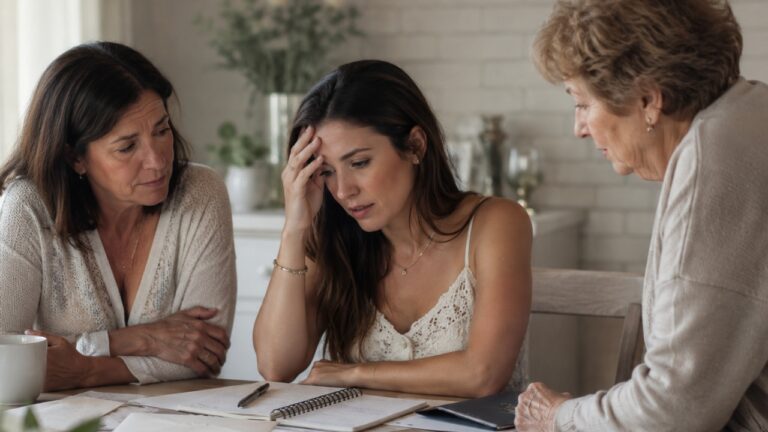
She Set a Four-Week No-Visitor Rule After Birth — Then Her Family Said She Was Cutting Them Out of the Baby’s Life
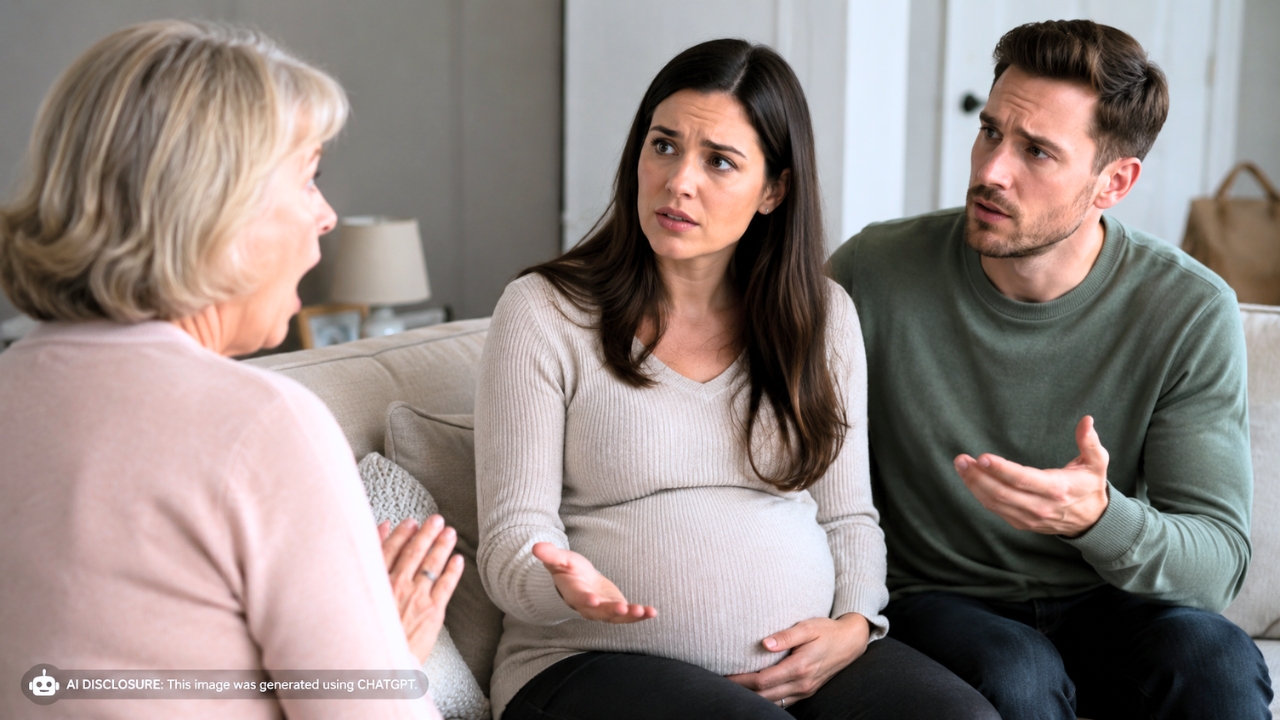
Photo credit: AI-generated image created using ChatGPT. Illustrative only.
She thought she was making a practical plan for survival: a quiet first month, no unexpected company, and enough time to recover from surgery while figuring out life with a newborn. Instead, one simple rule turned into a family showdown—complete with a dropped jaw, a husband suddenly questioning her motives, and in-laws who acted like they were being erased.
A 35-year-old pregnant woman due in December said she’s expecting a baby boy and already feels the pressure building. She’ll be delivering by C-section, her husband works nights (and some days until noon), and she’s self-employed—meaning there’s no real maternity leave waiting for her on the other side of birth. In her mind, the first few weeks weren’t about entertaining anyone. They were about healing and keeping the baby safe.
She was planning for recovery, not a family reunion
Her postpartum plan was pretty specific: the first three to four weeks at home would be visitor-free. Not because she wanted to punish anyone, but because she knew what her days would look like—long nights with a newborn, surgical recovery, and squeezing in online work part-time.
She also wasn’t relaxed about germs. She wanted to protect the baby’s immune system early on and hoped to hold off on visitors until he’d had at least some vaccines. On top of that, she knew her husband’s schedule meant she’d be doing the night shift every night, especially on the days he worked until midday.
To make it possible, her mom planned to come stay with them for two months, helping with cooking and cleaning so the new mom could focus on the baby and healing. Her mother lives in another country, and this visit would be temporary. But that detail didn’t land the way she thought it would with her husband’s family.
The rule sounded simple—until his mom’s jaw dropped
When her husband told his parents the plan, he tried to soften it: they could meet the baby at the hospital when he was born. But after they got home, there would be a three- to four-week pause with no visitors—his parents included.
That’s when everything shifted. His mom’s “jaw dropped,” and his parents said they couldn’t believe they wouldn’t be allowed to see the baby during that time. What she meant as a recovery window instantly got interpreted as rejection.
Then the pressure moved closer to home. Her husband started asking why they couldn’t see the baby and whether she had a problem with his parents. And she didn’t pretend their relationship was warm—she admitted she doesn’t have a good relationship with them. But she also felt like her reasons were being ignored in favor of a storyline where she was keeping grandparents away out of spite.
It wasn’t just about visits—it was about trust
Part of what made the situation so tense is that the in-laws weren’t offering help. In her view, her mom wasn’t coming to “visit the baby.” She was coming to cook, clean, and handle the background tasks that keep a household running when someone’s recovering from surgery. Meanwhile, the in-laws kept repeating that they wanted “to see the baby.”
And when her mother-in-law suggested they could bring the baby to her house whenever they wanted, it only highlighted the disconnect. The new mom wasn’t planning to drive a newborn around, especially not 30 minutes away. Her husband pointed that out, and his mom responded that she was reluctant to come by because her son doesn’t like it when she drops by unannounced.
Underneath all of it was a bigger issue: the couple’s history with the in-laws not respecting requests. The expectant mom explained that in the past, when they babysat the couple’s dog, they did things the couple specifically asked them not to do—letting the dog outside without a leash in an unfenced yard (and the dog wasn’t microchipped), and using a crate when the couple requested they not. It left her with the sense that they’ll do whatever they want, even when the stakes are high.
She also mentioned that they complained about wearing masks during COVID, which made her worry that any early rules—masks, no kissing—would be treated as optional. And because her husband struggles with saying “no” to his parents, she didn’t feel confident he could enforce anything if she stepped away to rest.
The “your mom can stay but we can’t visit” comparison hit a nerve
From the in-laws’ perspective, the math probably looked insulting: her mother would be there for two months, while they were being told to wait three or four weeks. The expectant mom understood why that stung, but she felt like they were ignoring the difference between support and social visiting.
She also tried to frame it long-term. Her mother would leave after two months, and then she likely wouldn’t see the baby again for a year because she lives in another country. The in-laws, on the other hand, live 30 minutes away and would have access for the rest of the child’s life.
But the emotional reaction didn’t care about the long game. It cared about those first weeks—who gets to be there, who gets to hold the baby, who gets the “firsts.” And that’s where the accusations started to creep in, the idea that keeping a quiet postpartum home meant “cutting them out.”
People pushed her to think in compromises, not absolutes
In an edit, the mom-to-be said she appreciated the kind suggestions she received on the original post and admitted she was open to adjusting the plan since she still had two months before delivery.
Some suggestions included letting her husband “host” his parents while she napped. But she didn’t think that would work, given the pattern of her in-laws ignoring instructions—and the reality that she’d likely need to be present to enforce health rules like masking and no kissing.
She also clarified a practical point: her mom wouldn’t be out running errands daily because she doesn’t have an American driver’s license, so she wouldn’t be constantly “bringing in germs” the way some people assumed.
Her updated plan still kept the circle small
By the time she posted her update, she was thinking less in terms of a hard “no visitors” wall and more in terms of controlled access. She liked the idea of short visits once a week, partly because she didn’t want her baby arriving into an even more polarized family situation.
But she also didn’t let go of what she needed. She noted that C-section recovery can take at least six weeks, and she liked the idea of protecting the baby until the two-month shots. So she started considering a longer window—six to eight weeks—where only the in-laws could come by once a week, with no big extended family parade.
It wasn’t the original plan, and it wasn’t what the in-laws had demanded either. It was a version that tried to acknowledge the emotional stakes without ignoring the very real physical reality: she’s the one having surgery, feeding the baby overnight, and still working.
In the end, the hardest part wasn’t coming up with a postpartum rule. It was realizing how quickly a recovery plan can get treated like a personal attack—and how much of new parenthood is learning that “What works for our house” will always disappoint someone who expected a vote.