New Parents Let Grandma Visit Once — Then Her Comments Made Them Change the Rules Before the Next Visit
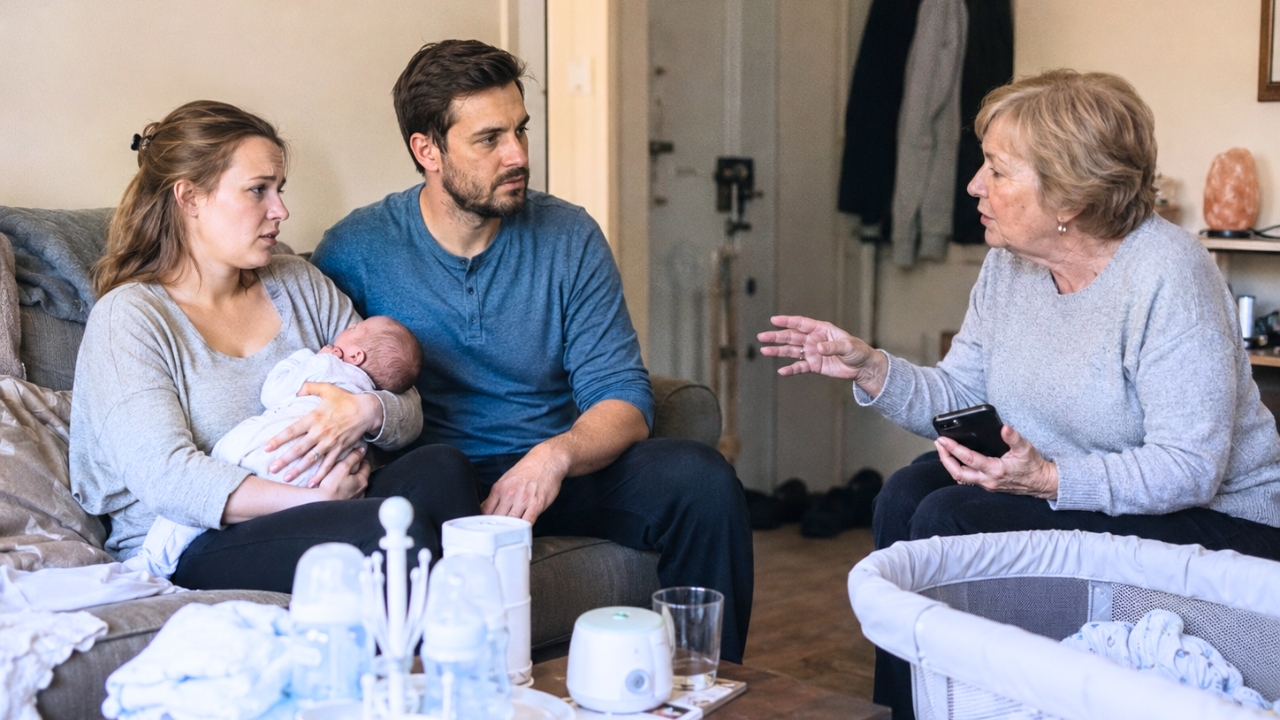
Photo credit: Thrivegirly
They planned it like a small victory lap: two exhausted new parents, a quiet house, and a first grandparent visit that was supposed to feel supportive instead of stressful. The baby was barely a few weeks old, the laundry was never-ending, and both parents were still learning how to sleep in short bursts. Letting Grandma come by for an afternoon felt like a reasonable step back toward normal life.
It didn’t take long for the mood to change. The visit wasn’t loud or dramatic, but the comments started stacking up—little critiques delivered with a smile, advice that sounded more like judgment, and repeated hints that the parents were doing it wrong. By the time Grandma left, the new parents weren’t just tired. They were rattled.
The “help” came with a running commentary
From the moment she walked in, Grandma treated the apartment like it was an inspection. She pointed out the bottles drying on the counter, the stack of burp cloths on the couch, and the white-noise machine humming near the bassinet. She kept asking why the baby wasn’t wearing socks and why the parents were “relying on gadgets.”
When the baby fussed, she reached in quickly, undoing a swaddle the parents had just secured. She made a show of rocking the baby “the right way,” then commented on how the baby seemed “too used to being held.” It was all framed as experience, but it landed like criticism.
The mother tried to brush it off. The father tried to redirect to safer topics. But the comments shifted from the baby to the home, then to the parents themselves—how the place should be cleaner, how the mother should be resting instead of “hovering,” how the father should be at work more instead of taking leave.
The moment that changed the tone
What stuck wasn’t one single remark. It was the way Grandma kept going even after being asked to stop.
At one point, the mother stepped into the bedroom to pump. Grandma followed her down the hall, talking through the door about how “formula wouldn’t hurt” and how she knew mothers who “didn’t make it such a production.” The mother came back out with red eyes, trying to act like everything was fine.
Then came the photo issue. Grandma pulled out her phone and started taking pictures—of the baby, of the nursery corner, of the mother holding the baby in a messy T-shirt. The parents asked her not to post anything online and to keep photos private. Grandma waved it off and said family should be able to share excitement.
The father saw her thumb hovering over a social app screen, and the conversation went from tense to sharp. Grandma insisted she was allowed to show her friends. The father said the baby’s privacy wasn’t up for debate.
They realized she’d already been talking
After Grandma left, the parents tried to reset. They fed the baby, cleaned up, and told themselves it was just a rough first visit.
Then the messages started coming in. A cousin asked if the baby was “having trouble latching.” An aunt sent advice for postpartum depression “just in case.” A family friend offered a used crib because she’d heard the parents were “struggling.” None of those people had talked to the parents directly.
It didn’t take much to connect the dots. Grandma had been narrating the visit to other relatives, and not in a flattering way. The parents felt exposed—like their most vulnerable weeks had become a family group chat topic.
Worse, one relative mentioned a specific detail from inside the home: the location of the bassinet and a comment about the smoke detector chirping. That meant Grandma wasn’t just venting. She was describing the inside of their place like a report.
The new rules weren’t about punishment—they were about control
The parents didn’t want a blowup, but they also didn’t want to repeat the experience. They wrote down what had actually happened while it was fresh: the photos, the repeated criticisms, the boundary pushing, and the way private details traveled through the family afterward.
Before scheduling another visit, they laid out a new set of conditions. Visits would be shorter. There would be no drop-ins. Phones would stay in a bag or pocket, and no pictures without asking each time. If the baby was sleeping, nobody would be waking the baby “to play.” If a parent said no, the answer would stay no.
They also made one rule that felt harsh but necessary: if Grandma started criticizing or arguing about parenting choices, the visit would end immediately. Not after another warning. Not after a debate. Ended.
To avoid a he-said-she-said later, the father sent the rules in a calm text message, framed as what the baby needed right now. The mother didn’t want to be the “bad guy,” but she agreed that having it in writing mattered.
The next call turned into a negotiation
Grandma didn’t take it well. She called, offended that she was being “managed” like a stranger. She said she raised kids without these “rules” and that she was only trying to help.
The parents kept their tone steady and repeated the same point: help is only helpful if it respects the parents. Grandma tried to bargain—suggesting she could keep taking pictures but “just not post them,” or that she should be allowed to bring a friend because “babies need to be social.”
That raised the parents’ concern even higher. It sounded like Grandma still saw their baby as a public family project rather than a child with two parents making decisions.
When the father said visits would happen only when both parents were home, Grandma accused him of controlling the situation. The mother heard that and realized the pattern wasn’t going to improve through gentle hints.
People focused on receipts, privacy, and keeping the door closed
When the parents talked to friends about it, the advice wasn’t dramatic—it was practical. Keep everything in writing. Don’t explain endlessly. Don’t argue about each rule. Just state expectations and stick to them.
Several people emphasized the photo problem. Once pictures are shared, they’re hard to pull back. If Grandma had already shown the baby’s face to a wide circle, the parents couldn’t undo it, but they could stop it from continuing. A few suggested putting a small sign by the entryway as a reminder, not as a jab.
Others focused on the “drop-in” risk. If Grandma had a key, change the locks. If she didn’t, don’t hand one out. If the building had a front desk or call box, ask management not to buzz her up without permission. The goal wasn’t to punish a grandmother. It was to prevent surprise confrontations when the baby was sleeping and the parents were at their most drained.
One friend suggested a compromise: meeting in a neutral place like a park for a short visit, so leaving would be easier. Another suggested limiting the flow of information to Grandma, since details about feeding and sleep had already traveled through the family too quickly.
The parents didn’t want to turn their child into a battleground. But they also didn’t want to spend the next year bracing for every visit, wondering which private moment would become gossip.
In the end, they didn’t cancel the idea of Grandma seeing the baby again. They just stopped treating access like an automatic right. The next visit—if it happens—will be on their terms, with clear boundaries and a quicker exit plan. And for two people already running on fumes, that small shift back into control felt less like a power move and more like basic protection.