New Mom Asked for Two Days Alone After Birth — Then Her Mother-in-Law Showed Up With a Suitcase
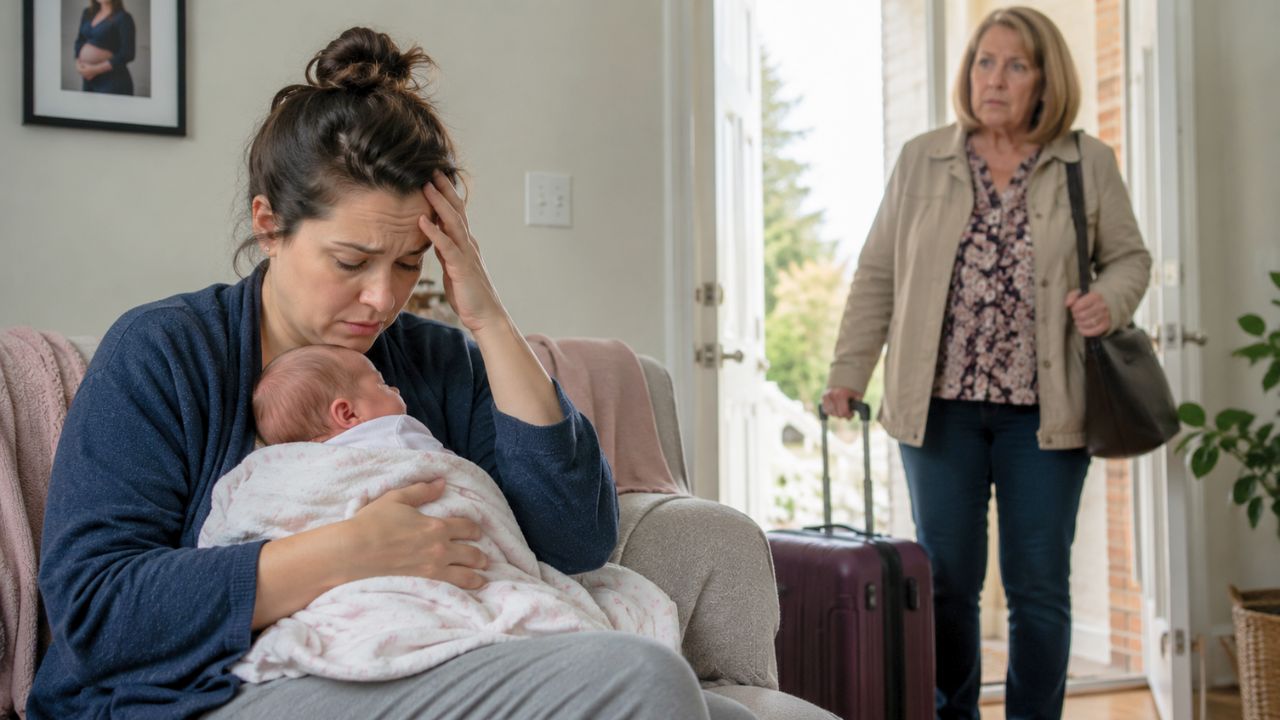
Photo credit: Thrivegirly.com
The first 48 hours at home were supposed to be quiet. The new mom had just gotten discharged after a long delivery, sore, sleep-deprived, and trying to learn her baby’s tiny rhythms without an audience. She and her husband had told both sides of the family the same thing: give them two days alone to recover, bond, and figure out feeding before visitors started rotating in.
So when the doorbell rang mid-afternoon on day one, it already felt wrong. The baby had finally settled after a crying stretch, and the new mom had barely managed a shower. Her husband opened the door expecting a delivery.
Instead, his mother was standing there with a suitcase and a tote bag, smiling like she was checking into a hotel.
Two days of space turned into an unexpected arrival
The couple had been clear during the last weeks of pregnancy. They weren’t banning anyone, they just wanted time to stabilize after birth, especially because the new mom had been told to monitor her blood pressure and rest as much as possible. They planned to invite family on day three, with short visits and no overnight stays.
The mother-in-law didn’t treat it like a request. She stepped inside, set the suitcase down near the entryway, and said she was there to help because new parents never know what they need. When the husband reminded her about the two-day plan, she brushed it off and walked toward the kitchen like she’d already decided the discussion was over.
The new mom, still in postpartum leggings and a nursing bra under a robe, felt her stomach drop. It wasn’t just the surprise. It was the message: their boundary had been heard, and then ignored.
The suitcase changed the stakes from “visit” to “move-in”
Once the suitcase was in the hallway, the dynamic shifted. A short pop-in can be managed. An overnight bag means someone is expecting to stay, and now the couple had to either accept it or directly kick her out.
The mother-in-law started opening cabinets, commenting on the clutter, and asking where the baby’s things were. She suggested rearranging the changing table and told the new mom she should go lie down while she took over. That might have sounded supportive in another context, but it came with an edge—like the new mom was being replaced in her own home.
Then came the first real flashpoint. The mother-in-law reached for the baby when the newborn started fussing, and the new mom instinctively tightened her hold. She said she was trying to keep the baby on a feeding schedule and didn’t want a lot of passing around. The mother-in-law responded by saying newborns “need to get used to people,” and moved closer anyway.
The husband stepped between them and asked his mom to sit down. That’s when she pointed at the suitcase and said she’d be sleeping on the couch, because she wasn’t leaving her son “to struggle” while his wife “overreacted.”
Exhaustion, recovery, and a clash over control
The new mom was dealing with more than feelings. She had stitches, a medication schedule, and a follow-up appointment already booked because the hospital had flagged a few postpartum warning signs. She needed calm. She needed naps. She needed privacy to figure out feeding without commentary.
Instead, she found herself negotiating while her baby cried in the background. The mother-in-law offered to cook, but insisted on bringing food that didn’t fit the new mom’s dietary restrictions. She offered to “clean,” but started moving items into different drawers. Every “helpful” action turned into a small takeover.
The husband tried to soften it at first, suggesting a short visit and then heading home to rest. His mother kept reframing it as concern, then guilt. She implied the new mom was keeping her grandchild away. She suggested the husband was being controlled. The more tired everyone got, the sharper it became.
The new mom finally said she needed the house back and asked the mother-in-law to leave. The mother-in-law refused, claiming she’d been invited because she was “family” and because her son needed her. At that point the couple wasn’t arguing about manners. They were arguing about who had authority in their home.
The standoff spilled into the building and forced a paper trail
This wasn’t happening in a big suburban house with spare rooms. The couple lived in a two-bedroom apartment with thin walls and close neighbors. Voices carried. When the mother-in-law raised her voice, it echoed into the hallway.
A neighbor knocked to ask if everything was okay. The husband stepped out and said they were handling a family disagreement. The neighbor looked past him, saw the suitcase, and quietly suggested they call building security if it escalated.
The couple didn’t want a scene, but they also didn’t want someone effectively camping in their living room while the new mom was recovering. The husband texted his father to come pick his mother up. The reply wasn’t reassuring. His father said she’d driven herself and didn’t see why she couldn’t stay “to help.”
With the mother-in-law still refusing to leave, the husband called the non-emergency line for guidance. They weren’t trying to get anyone arrested. They wanted to know what to do when a relative won’t exit a residence after being told to go.
When an officer arrived, the tone changed. The mother-in-law suddenly became calmer and insisted she was only there for support. The husband explained that she wasn’t on the lease, she wasn’t invited to stay, and she was refusing to leave after being asked multiple times. The officer told her she needed to go, and that if she returned without permission it could turn into a trespassing issue.
She left with the suitcase, but not quietly. She made sure the neighbor in the hallway could hear her complaint about being “thrown out” after “everything she did.” The new mom locked the door and sat on the floor crying once the building went quiet again.
Commenters focused on boundaries, documentation, and preventing repeats
People who heard about the situation zeroed in on the suitcase as the tell. Showing up with overnight gear wasn’t a misunderstanding; it was a plan. The advice wasn’t about winning an argument, but about stopping the pattern from becoming a routine every time the couple set a limit.
The most practical suggestions were about reducing openings for another surprise visit. Some urged the couple to keep doors locked, not answer unexpected knocks, and communicate only in writing when setting rules. Others recommended installing a doorbell camera, especially if the mother-in-law had a history of dropping by unannounced or trying to push her way in.
There was also a lot of talk about the lease. If the couple lived in a building with management or security, people suggested notifying them that an uninvited person might try to gain access. If the mother-in-law had a key from a previous visit, commenters said to change the locks immediately or ask the landlord to rekey, even if it meant paying a fee.
And for the new mom’s immediate wellbeing, people emphasized postpartum health. High stress, lack of sleep, and constant conflict are a bad mix after delivery. Several pointed out that the husband needed to be the primary enforcer so his wife didn’t have to spend recovery time defending her space.
By the next morning, the couple had their two days back, but it didn’t feel as peaceful as they’d imagined. The new mom was still on edge every time she heard footsteps in the hallway, and the husband had missed calls from relatives who’d been given a very different version of events. The baby, meanwhile, didn’t care about any of it—just the next feeding, the next nap, and the steady arms holding them.
The boundary had been set, tested, and enforced, but the tension wasn’t gone. Now the couple had to decide what visits would look like going forward, and whether “help” from family was worth the cost when it arrived with a suitcase and a refusal to leave.