New Mom Asked for One Quiet Week After Birth — Then Her Family Treated It Like a Personal Attack
Three days after coming home from the hospital, the new mom thought she was making a reasonable request: a single week with no visitors, no drop-ins, and no surprise “help.” She and her partner were exhausted, she was sore and learning to breastfeed, and the baby was still on that around-the-clock schedule that turns time into a blur.
So they sent a group text to both sides of the family. It was polite, specific, and framed as temporary: one quiet week to recover, then short scheduled visits. Within an hour, the tone of the responses shifted from supportive to offended, and the couple realized they weren’t negotiating a calendar anymore.
A simple boundary turned into a family debate
The message wasn’t complicated. They thanked everyone for the excitement, said they’d share photos, and asked relatives to wait seven days before visiting. They also asked people not to post the baby online and not to show up unannounced, since they were trying to keep the home calm and reduce illness risk.
Her mother replied first, pushing for “just a quick stop.” His sister followed with a long note about how relatives “deserve” to meet the baby. Then came the calls—one after another—each framed as concern but landing like pressure. When the new mom didn’t pick up, her phone filled with voicemails suggesting she was being controlled, ungrateful, or “keeping the baby from family.”
It got weirdly personal fast. The boundary was treated like a judgment of everyone’s intentions, even though it was one week and applied to all sides. By that evening, the new mom’s partner was answering texts with the same sentence over and over: “We’ll reach out next weekend to schedule.”
The first unannounced visit changed the tone
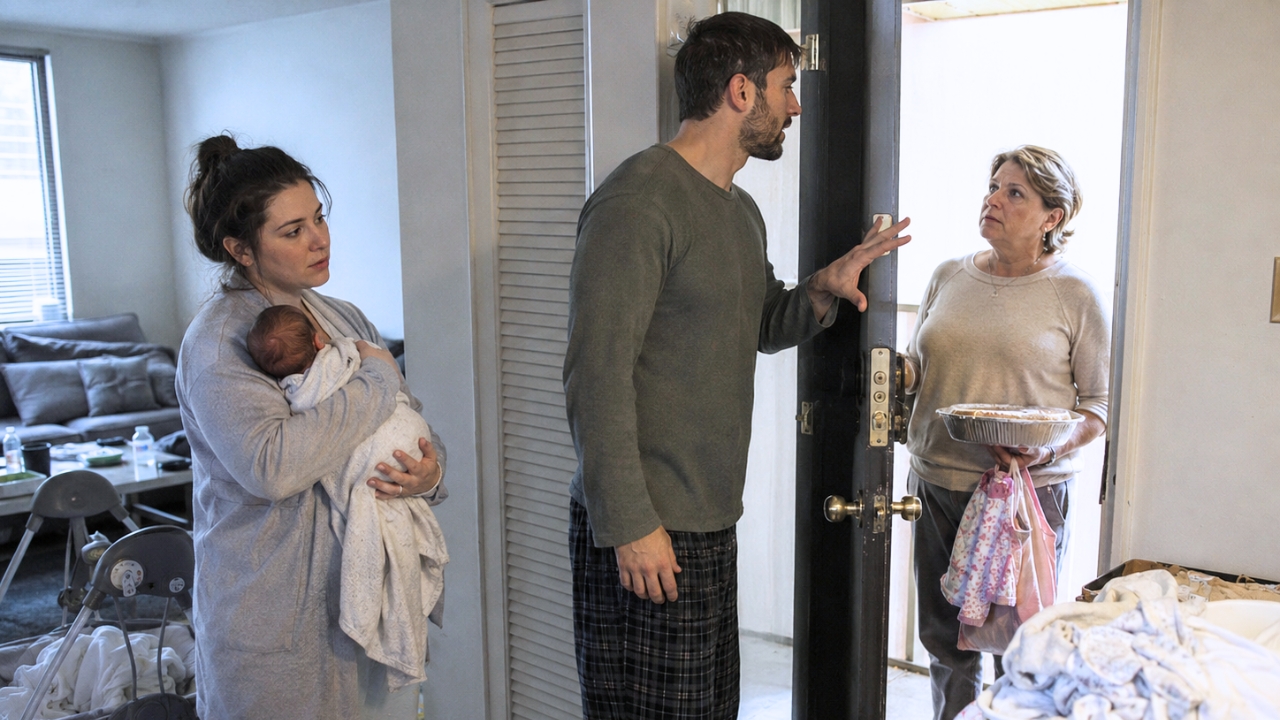
Two days later, the doorbell camera caught his mother on the front porch holding a casserole dish and a bag of baby clothes. She knocked, rang again, then tried the doorknob. When no one answered, she stood there for several minutes, looking into the front window.
The new mom was in the bedroom attempting to settle the baby and didn’t want the confrontation. Her partner checked the feed, told his mom through the intercom that they weren’t having visitors, and asked her to leave the food on the porch. She refused, saying she needed to “see the baby with her own eyes” and wouldn’t leave until they opened the door.
Neighbors noticed the standoff. One later texted the couple asking if everything was okay because someone was outside “arguing with the door.” The partner eventually stepped onto the porch with the baby still inside, repeated the boundary, and took the food. His mom left without screaming, but she drove off slowly, then circled back once before leaving the area.
By that night, the couple’s phones were lit up with family members relaying her version of the story: that she’d been “turned away” and “humiliated.” The new mom started to realize the week of quiet was becoming a test of loyalty.
The pressure moved from texts to logistics
When the couple stopped responding, the family found other routes. One aunt messaged the new mom’s workplace email with congratulations and a request to “pass along a quick call.” A cousin asked the building’s front desk if there were package deliveries for the baby, then tried to use that as a reason to come up.
The worst moment came when the new mom’s sister, who had a spare key from pet-sitting months earlier, tried to let herself in “just to drop something off.” The deadbolt stopped her, but she started pounding on the door and calling the new mom’s name through the hallway. The baby startled awake, and the new mom burst into tears.
After that, the partner asked for the spare key back in writing. The sister refused, saying she wasn’t “giving in to paranoia.” The couple called their landlord to ask about rekeying the lock, and learned it would cost money unless there was a documented security concern. The landlord also warned them that repeated hallway disturbances could lead to complaints from other tenants.
They paid to have the lock changed anyway. It wasn’t just about the key; it was about proving to themselves they could protect the space they were trying to build.
The situation became bigger than a family spat
Once the locks changed, the conflict shifted again. The family interpreted it as escalation, not self-protection. Messages came in accusing the couple of “keeping score” and treating relatives like strangers. His mother said she would do a welfare check if they didn’t “confirm the baby is fine,” implying the new mom was unstable.
That threat forced the couple into a new level of planning. They saved screenshots, kept a timeline of events, and wrote a short message they could send to anyone: the baby was healthy, the parents were okay, and they were asking for privacy until a specific date. They also asked the building manager what would happen if someone refused to leave common areas.
When another relative showed up without notice—this time his sister—she waited outside the door and started knocking every few minutes. The partner told her through the door that she needed to leave. She didn’t, and a neighbor finally called building security after hearing the repeated knocking and raised voices in the hallway.
Security documented the incident and asked the visitor to leave. No one was arrested, but the couple now had a written record that it wasn’t just “family drama.” It was becoming a safety and housing issue.
Commenters focused on proof, not persuasion
When the new mom described the situation online, most people weren’t debating whether a week was “too much.” They were talking about practical steps: keep everything in writing, don’t argue on the doorstep, and assume the next escalation could involve authorities or the landlord.
Some suggested putting a clear message in one place—one text or email to the whole family—stating the boundary, the date it ends, and what happens if someone breaks it again. Others recommended notifying the non-emergency line preemptively, especially if a welfare check threat had been made, so officers wouldn’t walk into a confusing mess without context.
A lot of people also emphasized controlling access: change locks, retrieve spare keys, and make sure the front desk or building staff knows not to buzz anyone up without the tenant’s approval. Several pointed out that if relatives were willing to show up uninvited within days of birth, they might do it again during later milestones.
Underneath the advice was a shared theme: the couple didn’t need to win an argument. They needed to reduce points of entry—physical and emotional—until life stabilized.
The week ended, but the underlying problem didn’t
When the seventh day finally arrived, the new mom felt no relief. The family was already demanding make-up time, longer visits, and an apology for “shutting everyone out.” The couple offered short scheduled meet-and-greets with clear start and end times, and asked that anyone who had shown up uninvited agree not to do it again.
Some relatives accepted. Others refused, insisting the parents had no right to set conditions. The partner’s mother said she would not “make an appointment to see her grandchild,” which meant she wouldn’t be seeing the baby at all for now.
The new mom and her partner were left in that uncomfortable middle space: they had protected the first week, but it cost them peace with people they’d expected to celebrate with. They kept the camera notifications on, stayed in touch with building staff, and focused on the baby’s routine, even as their phones continued to buzz with family members treating a basic boundary like a betrayal.