Mom Says Her In-Laws Want a Full Month in Her Home After She Gives Birth
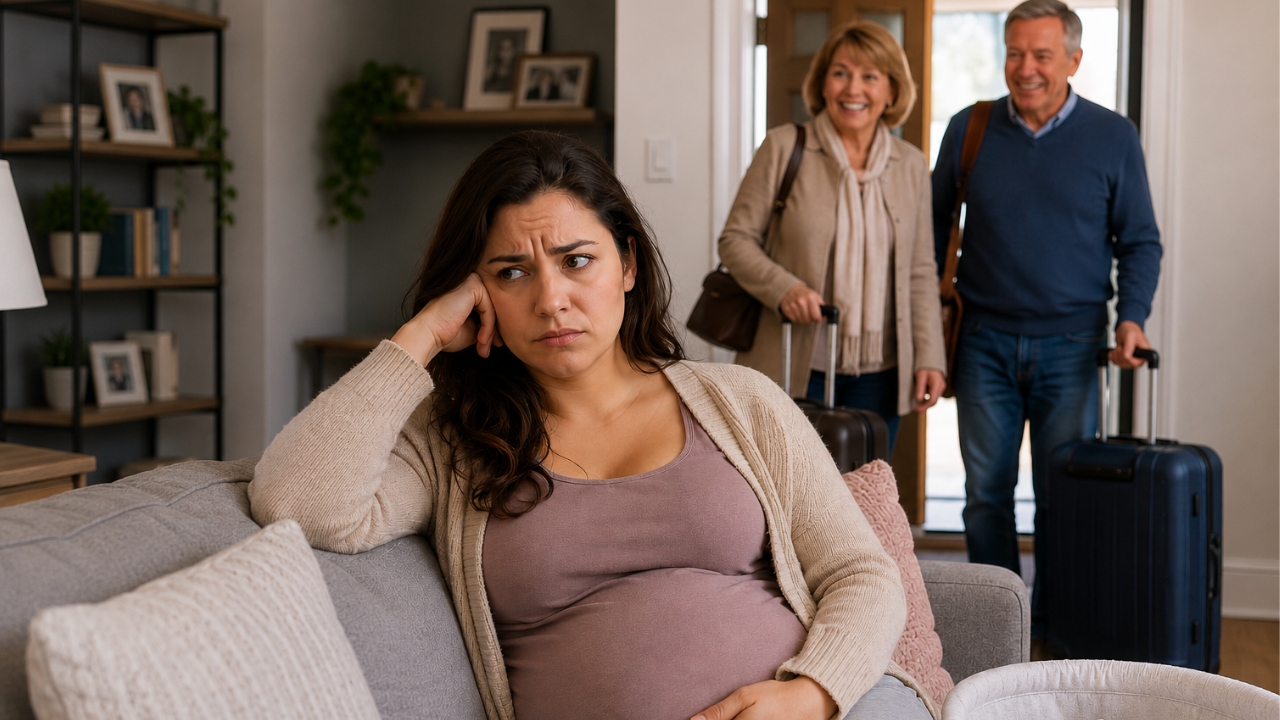
Photo credit: Thrivegirly
A pregnant woman said she is dreading the idea of her in-laws staying in her home for a full month after she gives birth, even though her husband thinks the visit would be a normal way for his parents to bond with the baby.
The woman shared the situation on Reddit, explaining that she was expecting her first child and already thinking carefully about what postpartum recovery would look like. She knew she would be healing, adjusting to life with a newborn, possibly breastfeeding, and trying to learn a new rhythm as a mother.
Her in-laws, however, wanted to come stay with them for an entire month after the baby arrived.
To the poster, that sounded overwhelming. A short visit might have been manageable. A month inside her home, during one of the most vulnerable seasons of her life, felt like too much.
She said the request was especially hard because her in-laws did not live nearby. If they came, it would not be a quick afternoon visit or a simple dinner. They would be staying in the house, sharing the space, and likely expecting time with the baby while she was still recovering.
The poster did not want to seem unkind. She understood that her husband’s parents were excited to meet their grandchild. She also understood that because they lived far away, a longer visit may have seemed practical to them.
But she could not shake the anxiety of having houseguests immediately after giving birth.
She brought the situation to Reddit in a post titled “AITA for not wanting my in-laws to stay with us for a whole month after I give birth?” and asked whether she was wrong for pushing back: https://www.reddit.com/r/AITAH/comments/1otxcw3/aita_for_not_wanting_my_inlaws_to_stay_with_us/
The heart of the conflict was not whether grandparents should meet the baby. It was whether meeting the baby meant moving into the parents’ home for several weeks while the mother was still physically and emotionally recovering.
For the poster, postpartum did not sound like a time to host. She imagined bleeding, leaking, feeding the baby at odd hours, trying to rest when possible, and dealing with the ordinary mess and vulnerability that come with having a newborn. Having in-laws in the home through all of that felt intrusive, even if they meant well.
Her husband seemed to see the request through a different lens. His parents wanted to bond with the baby, and he may have felt guilty telling them no after they had likely waited months for the birth. He may have also imagined that extra adults in the house could be helpful.
But the poster seemed unsure whether their visit would actually feel like help. That is often the dividing line in postpartum family visits. Someone who cooks, cleans, runs errands, holds the baby only when asked, and gives the mother space can make the early weeks easier. Someone who expects to be entertained, wants constant baby time, or treats the recovering mother like an obstacle can make those weeks much harder.
A month is also a long time for any houseguest. Even close relatives can feel like too much after a few days when a household is already sleep-deprived and adjusting. For a new mother, the idea of being unable to fully relax in her own home may feel especially heavy.
The conflict also raised the question of whose comfort mattered most. The in-laws wanted access and bonding time. The husband wanted his parents included. The poster wanted space to heal and learn how to be a mother without feeling watched or crowded.
Those desires were not equal in urgency. The baby would still be there after a few weeks. The grandparents could still visit later. But the mother would only get one immediate postpartum recovery period, and once it was filled with stress, she could not get that time back.
That seemed to be what she was trying to protect.
Commenters overwhelmingly told the poster she was not wrong for refusing a month-long postpartum stay.
Many said a full month was far too long, especially right after a first birth. They pointed out that even helpful relatives can feel overwhelming in the early newborn period, and unhelpful guests can quickly become a source of resentment.
Several commenters said the in-laws should stay in a hotel or rental if they wanted to visit. That would let them meet the baby while still giving the parents space, privacy, and the ability to end visits when the mother needed rest.
Others focused on the husband’s role. They said if he wanted his parents to visit for that long, he needed to understand he was not the one recovering from childbirth. Commenters argued that the person giving birth should have the final say over who stays in the home during recovery.
A repeated suggestion was to set clear visiting hours. Instead of open-ended access, the couple could decide on short visits during certain times of day, with no expectation that the mother would host, cook, clean, or entertain anyone.
Some commenters also warned that a long visit right after birth can create lasting damage if boundaries are not respected. A mother who feels crowded, judged, or pressured during those weeks may remember it for years.
A few people said grandparents are understandably excited and may not realize how intense postpartum recovery can be. But even then, commenters said excitement does not override the mother’s need for privacy.
The strongest advice was to stop framing the boundary as rejection. The poster was not keeping the baby from the grandparents. She was saying no to a month-long stay in her home immediately after giving birth.
By the end of the discussion, Reddit’s message was clear: postpartum is not the time to prove hospitality. It is the time to protect the mother, the baby, and the new family’s peace.