MIL Told the Postpartum Mom She Was Holding the Baby Wrong — Then the New Dad Asked Her to Leave
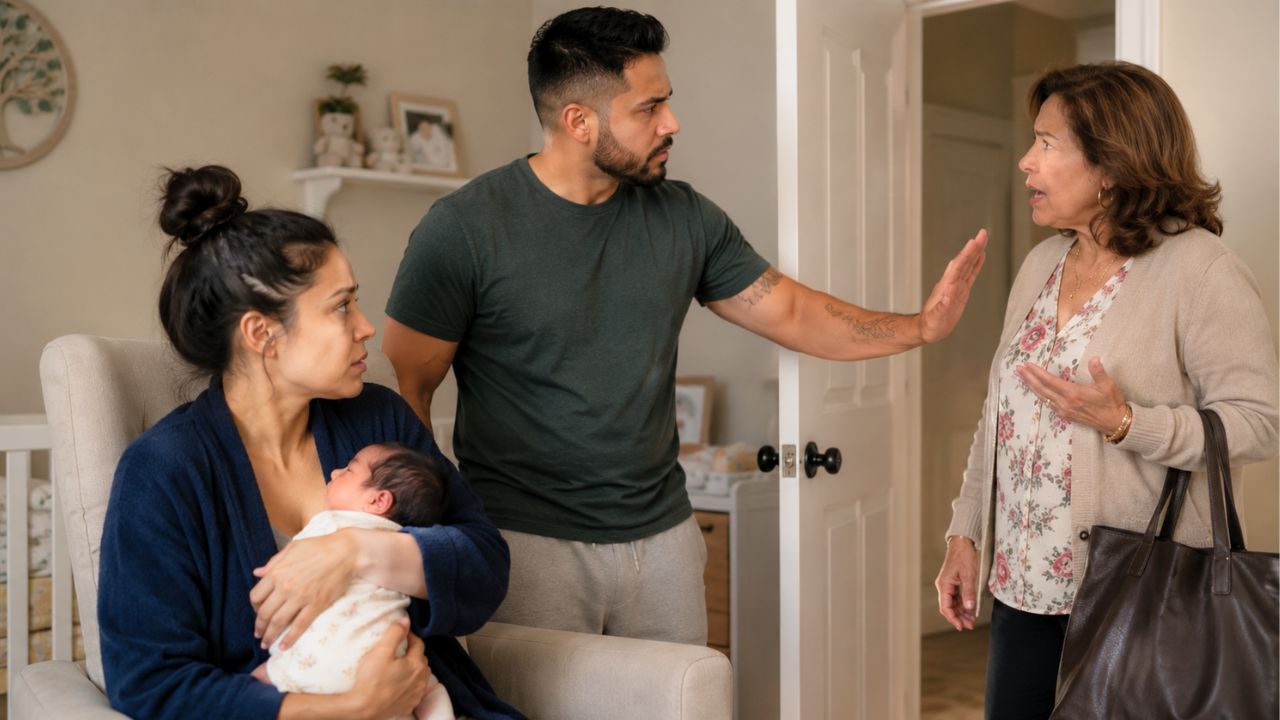
Three days after giving birth, the new mom was settled into the couch with a heating pad, a water bottle, and the baby finally calm after a long morning of cluster feeding. Her partner had just managed to get the swaddle right when his mother walked in, washed her hands, and immediately angled herself over the baby like an instructor arriving late to a lesson.
Within minutes, the quiet turned tense. The older woman insisted the baby’s head wasn’t supported correctly and reached in to reposition the infant, even though the mother was already using the hold recommended by the hospital nurse. The baby startled, let out a sharp cry, and the postpartum mom’s shoulders tightened as if she’d been bracing for exactly this moment.
A “helpful” visit quickly turned into a power struggle
The grandmother’s visit had been pitched as a practical stop: drop off a casserole, fold some laundry, let the parents nap. Instead, she treated the living room like a training session, hovering while the mother tried to feed and insisting on taking the baby “so you can finally rest.”
The mom, still sore and exhausted, asked for space and tried to keep things polite. She explained that the pediatrician had warned them to avoid jostling the baby’s head and that she was following what they’d been shown. That didn’t slow the comments down; if anything, it seemed to invite more correction.
The dad stood in the doorway listening, jaw clenched, as his mother criticized everything from the swaddle to the burp technique. When she reached toward the baby again without asking, he stepped in and told her to stop grabbing. The room went still, the kind of quiet that makes the baby’s breathing sound loud.
The moment that made the dad draw a hard line
The breaking point came when the grandmother insisted the mother was holding the baby “wrong” and tried to demonstrate by prying the infant from her arms. The mom’s face went hot and wet at the same time—tears she didn’t want, panic she couldn’t hide. She tightened her hold, not to keep the baby away out of spite, but out of pure instinct.
That was when the dad moved between them and told his mother the visit was over. He didn’t debate technique. He didn’t negotiate a “few more minutes.” He grabbed her purse from the chair, opened the front door, and told her to leave and come back only when invited.
The grandmother protested, calling it disrespectful and saying she was only trying to prevent the baby from being hurt. The dad stayed calm and repeated himself, then walked her to the porch. A neighbor watering plants across the walkway glanced over, catching the body language even if they couldn’t hear every word.
Family dynamics spilled into texts, logistics, and money
Once she was gone, the mom shook with adrenaline and guilt, which only made her angrier. The dad locked the door, turned off the porch light even though it was still daytime, and pulled the curtains like they were trying to keep the whole world out.
But they couldn’t just pretend it didn’t happen. The grandmother immediately started sending messages about “unsafe handling” and demanded proof the baby was okay. She also texted the dad’s siblings, framing the situation as her being thrown out for “trying to help.”
The practical fallout came fast. The grandmother had offered to cover a month of groceries “to help with the new baby,” and now she hinted that support would be reconsidered if she was being “shut out.” The dad and mom had already budgeted around that promise, and suddenly the math of diapers, formula backup, and unpaid leave got tighter.
They also realized she had a house key from when she used to water their plants during trips. That night, the dad drove to a hardware store for new locks, then installed a doorbell camera he’d been putting off buying. It wasn’t about being dramatic; it was about being able to breathe without listening for footsteps on the porch.
What happened next made the boundary feel necessary
The next afternoon, the grandmother showed up unannounced with a bag of baby clothes and knocked like it was an emergency. The dad didn’t open the door. He spoke through it, told her the baby and mom were resting, and said they’d set a time later in the week if things calmed down.
She stayed on the porch longer than expected, then tried the old key. When it didn’t work, she knocked again, harder, and called the dad’s phone repeatedly. The doorbell camera recorded the whole thing, including her pacing and peering toward the front window.
That recording changed the couple’s tone from “maybe we can smooth this over” to “we need to protect our home.” The dad sent a short text laying out rules: no drop-ins, no taking the baby without asking, no criticism during feeding or soothing, and any visit ends the moment the mom asks for space. He also told her the key no longer worked and that attempts to enter would be treated as a serious boundary violation.
For the mom, the bigger issue wasn’t technique; it was trust. She was still healing, still learning her baby’s cues, and still dealing with postpartum swings that made a normal comment land like a punch. Having someone physically reach in and override her wasn’t just annoying—it felt like being erased during the most vulnerable week of her life.
Commenters focused on documentation and the postpartum reality
People looking at situations like this tend to zero in on two things: safety and proof. Several pointed out that if a relative is claiming the baby is being handled unsafely, the parents should keep the pediatrician’s guidance in writing and document what they’ve been taught by nurses, just to shut down weaponized “concern.”
Others emphasized security steps that don’t require a shouting match: changing locks, installing cameras, and keeping communication in text messages rather than phone calls. Written messages reduce the chances of later denials and help keep the conversation on clear rules instead of emotional accusations.
A number of reactions also centered on the mom’s postpartum state. They stressed that visitors should be screened, time-limited, and there to support the parents—not to audition for control. Some suggested that if the grandmother wanted to help, she could sign up for tasks like meals, laundry, or errands, and leave baby-handling to the parents unless explicitly invited.
There was also a practical reminder that if someone tries to force entry or refuses to leave, it’s okay to call non-emergency authorities and create a paper trail. Not to “get someone in trouble,” but to make it clear the home is private and boundaries are not optional.
The relationship may be salvageable, but the rules are different now
In the days that followed, the dad’s siblings tried to mediate, floating compromises like supervised visits or a family meeting. The dad didn’t reject the idea of reconciliation, but he was firm that any conversation had to start with an acknowledgment of what happened: the mother was undermined, the baby was grabbed at, and the parents’ home was treated like a place the grandmother could control.
The mom focused on recovery and stayed off group chats, letting her partner handle the noise. They scheduled an early pediatrician appointment partly for reassurance and partly to remind themselves they weren’t making reckless choices. The doctor’s calm confirmation—that the baby looked healthy and the hold they’d been using was fine—didn’t fix the family tension, but it restored some confidence inside the house.
For now, the door stays locked, the camera stays on, and visits are on pause. The couple isn’t trying to punish anyone; they’re trying to protect a fragile routine while a newborn settles in and a mother heals. Whatever comes next with the grandmother, the message inside the home is clear: parenting decisions belong to the parents, and “help” stops being help the moment it turns into control.