MIL Kept Showing Up Unannounced and Ignoring Every Rule — Then She Was Banned From Seeing the Baby Until She Could Follow Them
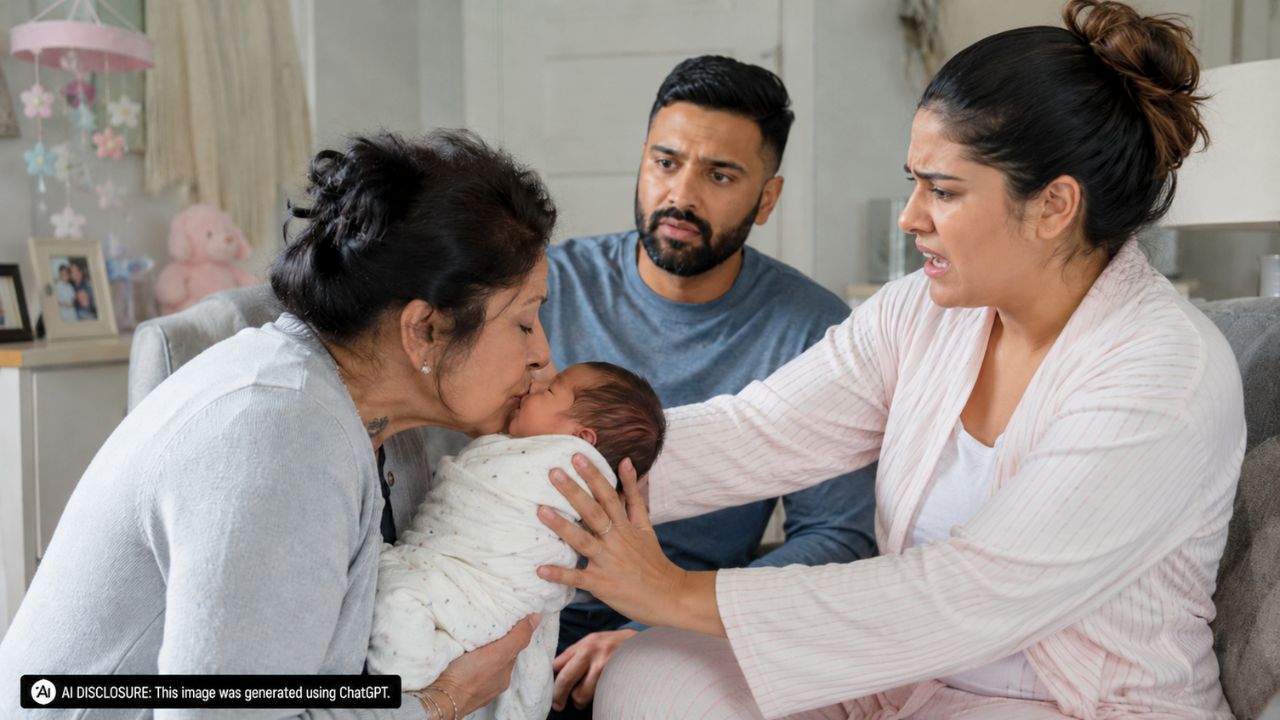
Photo credit: AI-generated image created using ChatGPT. Illustrative only.
Six weeks after a scary delivery and an already exhausting recovery, a new mom thought she was doing everything she could to keep her newborn safe. The rules weren’t dramatic. Wash your hands. Don’t kiss the baby’s face. If you smoke, change your top first. Simple, clear, and meant to protect a tiny baby who’d just arrived early after an emergency birth.
And then her mother-in-law came over, leaned in, and kissed the baby’s face five times.
The birth was traumatic, and the rules weren’t up for debate
The mom, 29, said her pregnancy came with health issues that turned urgent fast. Her blood pressure spiked, the baby’s heartbeat slowed down, and she ended up delivering early with a forceps delivery and an emergency episiotomy—“cut vagina to ass,” as she bluntly put it. The baby was born healthy, but the experience left both parents rattled.
She and her partner, 28, were also living with her parents, trying to get through those early weeks in survival mode. With everything that had happened, their expectations for visitors were basic hygiene and common sense—especially with illness risks in the background. Even without a pandemic, they said, those rules would still stand.
She barely visited… then broke the biggest rule immediately
What stung early on was that the mother-in-law didn’t exactly act eager to be involved. Over the first six weeks, she visited only twice. The mom said her partner’s mom had the time, the means, and the opportunity to come by more often, but kept making excuses.
So when she did show up for that second visit, it wasn’t just “grandma stopping by.” It carried weight. It was supposed to be one of the few moments of support and connection in a brand-new, fragile season.
Instead, she kissed the baby’s face repeatedly—five times—despite being told not to. The mom didn’t freeze or smile through it. She stood up, picked up her baby, and told her mother-in-law to leave.
Then she cleaned her baby’s face and saw lipstick marks still there. In her mind, it wasn’t only about lipstick. It was about germs, smoke residue, and the sense that her baby’s safety was being treated like a cute suggestion.
When confronted, MIL doubled down and went for the mom’s jugular
After the visit ended abruptly, the partner spoke to his mom. That’s when things got even uglier. Instead of apologizing, the mother-in-law shouted that “its natural to kiss a babies face” and insisted, “its my grandson so I can do what I want.”
No apology. No acknowledgment that she’d been asked not to. Just entitlement.
And then she pivoted into something that hit the mom right where it hurt: her identity as a new parent doing her best. The mother-in-law claimed the mom had put the baby in “more danger” by taking public transport with him and her friends.
The mom explained what actually happened. Four days after giving birth, she needed to go to a midwife check-up. She couldn’t walk the distance—she still had stitches and was in a lot of pain. Her partner was supposed to go with her but had a first aid course he couldn’t miss, even though he was on paternity leave.
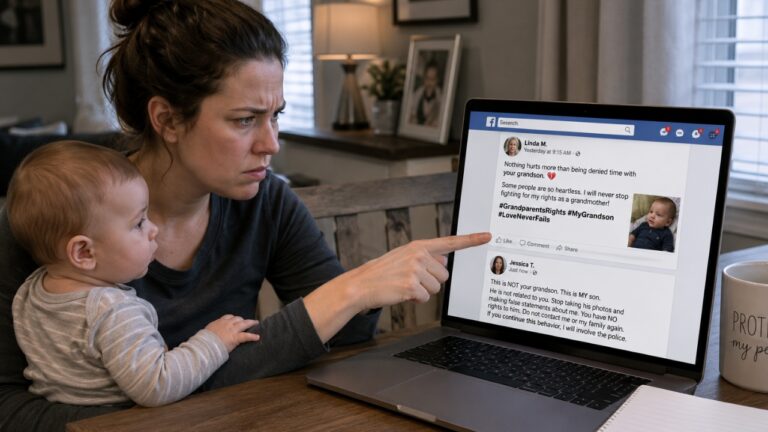
A friend offered to ride the bus with her to help with the pram. The mom posted a photo of her friend pushing the pram and thanked her for helping a new mom. The mother-in-law saw it on Facebook and used it as ammunition.
For the mom, that accusation wasn’t a side comment. It was a line in the sand. She could handle someone being annoying. She couldn’t handle being painted as reckless after everything she’d just gone through to bring her baby safely into the world.
The real turning point was her partner choosing “no access”
This wasn’t one of those situations where the new mom single-handedly decided to shut everyone out and the partner just went along. She made it clear the final call came from him.
They talked for days and landed on a firm consequence: the mother-in-law wouldn’t see the baby until Covid was gone or there were hardly any cases. The reasoning was simple—if she couldn’t follow “simple basic rules,” they couldn’t trust her around their newborn.
The mom even offered a compromise. She suggested the mother-in-law could see the baby but not hold him. In other words: supervised access, limited contact, less risk.
Her partner wouldn’t go for it. He didn’t want his mom seeing the baby at all. And his reason wasn’t petty—it was rooted in trauma and fear. He told his partner that waiting outside the theatre not knowing if she and the baby were okay “almost killed” him. In his mind, if they could prevent even a small chance of their son getting sick, that’s what they were going to do.
So the ban wasn’t framed as punishment for being annoying. It was framed as, “If you won’t respect what we say, you don’t get access.” Full stop.
Why this wasn’t really about one kiss, but the attitude behind it
It’s easy for someone on the outside to reduce this to “a grandma kissed her grandbaby.” But that’s not what made the situation explode. The kiss was the action. The bigger issue was the mother-in-law’s response when confronted.
She didn’t say, “I’m sorry, I got carried away.” She didn’t say, “I didn’t realize you were serious.” She went straight to: it’s natural, it’s my grandson, I can do what I want.
That kind of mindset turns every future interaction into a gamble. If she feels ownership over the baby, then every rule becomes optional. If she thinks she outranks the parents, then “no kissing” becomes “I’ll do it when you’re not looking.” And if she’s willing to publicly frame the mom as unsafe based on a single photo, then the relationship isn’t just tense—it’s adversarial.
The mom laid it out clearly in her post: she was done with the idea that someone could break the rules, refuse to apologize, and then flip it around and accuse her of putting her baby in danger. You can read her full version of events in the original post.
The consequence was blunt, and the family had to sit with it
By the end, the couple’s stance was clear: no visits until the risk level dropped significantly, because the mother-in-law had already shown she wouldn’t follow the basics. The mom asked if they were wrong for it, but the way she told the story made one thing obvious—this wasn’t an impulsive punishment. It was a decision shaped by a frightening birth, a vulnerable postpartum period, and a relative who treated “please don’t” like a personal attack.
And maybe the hardest part is this: the couple didn’t just lose a pleasant grandma visit. They lost the possibility of easy family moments, at least for now. But when someone says “I can do what I want” about your newborn, it forces a choice. In this case, the parents chose safety and control over keeping the peace—and they’re living with the fallout.