MIL Had Already Told Everyone She’d Be at the Birth — Then She Was Met at the Hospital With the News the Room Was Closed

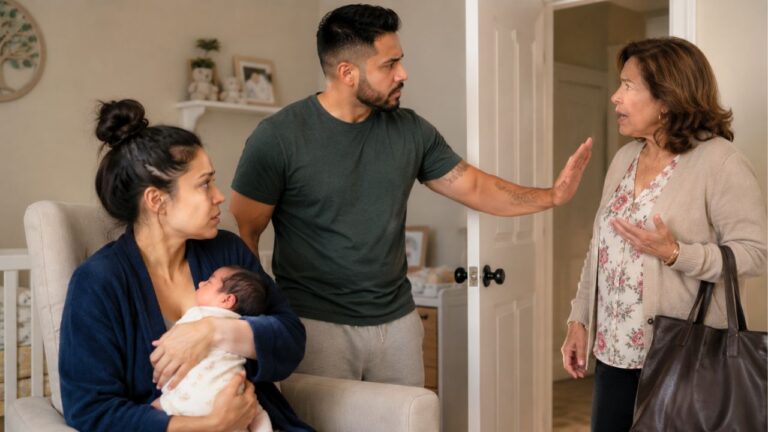
Photo credit: AI-generated image created using ChatGPT. Illustrative only.
By the time she was deep in pregnancy, this mom-to-be felt like she was carrying more than a baby. She was carrying years of side-eye from her boyfriend’s mother, plus a brand-new fight over who deserved a front-row seat on the most vulnerable day of her life.
In the original post, the 25-year-old explains that her pregnancy wasn’t planned, but she and her boyfriend, Adrian, were happy and ready to welcome their child. Her own family was supportive. His family mostly was too—except for the one person who seemed determined to make everything harder: his mom.
The problem started long before the baby
She says the trouble with her future MIL didn’t begin with pregnancy announcements or delivery-room debates. It started back when she and Adrian first got together in their early 20s, with MIL making it clear she had an issue with her.
When the couple decided to move in together at 23 and 24, MIL reportedly pushed back hard, acting like she “refused to let her baby go.” The poster says it took a lot of convincing before MIL finally claimed she was okay with it.
But when the couple shared they were expecting, things didn’t soften. If anything, they got worse.
Then the pregnancy news flipped a switch
Instead of excitement, the poster says her MIL reacted with anger—especially toward her. One detail in the story lands like a punch: she says MIL even suggested they “drop the baby,” largely because the couple isn’t married.
It’s hard to come back from a comment like that. And for the expectant mom, it shaped how she thought about the birth itself: who she would feel safe with, who would actually support her, and who might turn the delivery room into a power play.
Because to her, this wasn’t a social event. It was a medical moment, and she wanted it surrounded by people who had shown up for her.
The delivery-room guest list became a loyalty test
A few weeks before her due date, she and Adrian started talking about who would be in the delivery room. Her preference was clear: Adrian, her mom, her sister, and Adrian’s sister.
That last choice is what set Adrian off. He was angry that his mother wasn’t on the list, but his sister was. The poster tried to explain it plainly: his sister had been supportive and helpful through the pregnancy, while his mom had been critical, unsupportive, and had even suggested ending the pregnancy.
Adrian didn’t hear it as “my birth, my comfort.” He heard it as rejection. And then he made it a standoff, telling her that if his mom wasn’t in the room, he wouldn’t be either.
For the woman giving birth, that wasn’t just a threat. It was a preview of what labor could look like if she caved: a moment where her pain and fear took second place to keeping his mom happy.
So she closed the room—on purpose
Then reality stepped in with paperwork. The hospital asked her to submit the names of who would be allowed in the delivery room, and she says they would not allow anyone who wasn’t on that list.
She made a decision that shocked Adrian: she didn’t put his mother’s name down. But she also didn’t put his name down either.
When Adrian demanded to know why, she gave a reason that cut right to the point. If he was truly willing to skip the birth of his child just because his mother couldn’t be present, she took that as proof he wasn’t interested in being there for her in the way she needed.
It wasn’t subtle. It was a consequence.
Three weeks out, the pressure campaign got intense
With her due date about three weeks away, the argument didn’t die down. Adrian stayed angry, and she says he kept begging her to call the hospital and change the names.
She admitted she was considering it—because, despite everything, she didn’t want him to miss the birth. She wanted that moment. She wanted to cherish it. But she also didn’t want to walk into labor feeling like she’d been forced into a deal she never agreed to.
And behind the scenes, there was another twist that made the whole thing feel even uglier.
Her sister-in-law told her something that changed the framing of the fight: MIL apparently had no interest in being in the room at all. According to SIL, MIL only pushed the issue because it was driving a wedge between the couple—and she was “just trying to do her best to make Adrian leave” the pregnant woman.
If that’s true, then the delivery room wasn’t the prize. The argument was.
Her reason for wanting support wasn’t “extra”—it was personal
One detail the poster added makes it clear why she was so firm about wanting the people who felt safest to her. She explained that when she was 16, she experienced an unplanned pregnancy and had a miscarriage.
That history made the idea of giving birth without support feel terrifying, not dramatic. She wasn’t creating a crowd for attention. She was building a small circle of people who could steady her when things got overwhelming.
And as the situation evolved, she updated that circle. She said her SIL and her sister were now out of the delivery room plans because they knew the whole story and didn’t want to add more drama for her. At that point, she wrote, it would be only her mom and Adrian—if he chose to be there.
Which is a quiet but pointed shift: after all the arguing, she didn’t expand the guest list. She simplified it.
Now the real question hanging in the air isn’t just whether MIL gets access. It’s whether Adrian can show up as a partner, not as his mother’s representative. Because once someone turns childbirth into a bargaining chip, it changes how safe “support” feels—and it’s hard to unfeel that when you’re the one on the hospital bed.