Grandparents Wanted the First Overnight Before Any Track Record Was Built — Then the Parents Said That Timeline Was Theirs to Set
Photo credit: AI-generated image created using ChatGPT. Illustrative only.
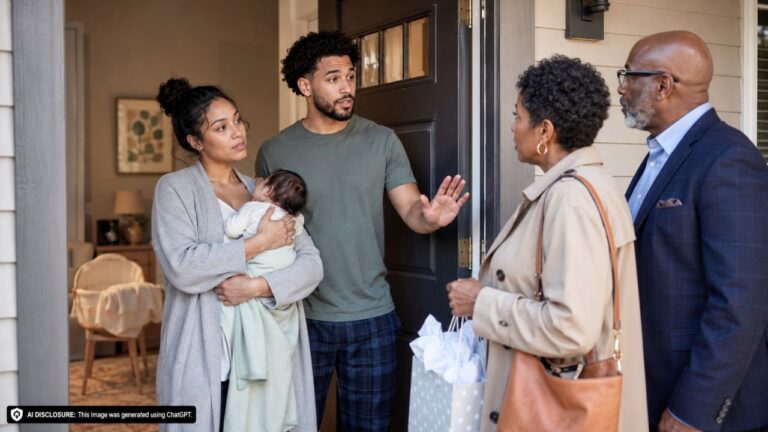
A single mom with a toddler thought she was keeping things pretty simple: she makes the rules, and the adults around her follow them. But when her son’s grandmother started pushing for an overnight visit—an hour away, no less—it stopped feeling like a sweet grandparent request and started feeling like a power struggle.
In the original post, the mom explains that she’s raising her two-year-old son, “G,” mostly on her own. She has sole physical custody, and G’s father has supervised visitation once a week. He wasn’t involved during the pregnancy and isn’t very involved now. His mother, though—grandma “R”—is deeply involved. Sometimes too involved.
She’s doing it “out of love,” but it still lands wrong
The mom describes herself as overprotective and hyper independent, and she doesn’t pretend that’s accidental. She doesn’t trust many people alone with her child, and the way she tells it, R hasn’t exactly earned trust.
R can be “overwhelming,” and the mom says she tries to brush it off because she knows R loves her grandson. But love isn’t the same thing as listening, and the mom’s biggest frustration is that R acts like rules are optional—especially when she thinks she won’t get caught.
The first red flag started with kissing—and didn’t stop there
Early on, the mom had a rule many parents recognize immediately: no one kisses the baby until he’s a year old. It wasn’t about being uptight or dramatic. She was worried about viruses that can be dangerous for infants.
And then her fear became real. When G was nine months old, he got RSV and ended up in the hospital for four days on oxygen. For her, that wasn’t just a scary moment; it was proof that she wasn’t being unreasonable.
But even before that, she says R kept trying to “sneak kisses” when she wasn’t looking. One time, the mom caught it on the baby monitor and was furious. It wasn’t just about germs—it was about the feeling that R was willing to break a rule as long as she could do it quietly.
To the mom, that set the tone: if R thought she knew better, she’d do what she wanted and deal with the fallout later.
A simple “no” turned into a moment her son won’t forget
The most recent blowup wasn’t about anything huge. It was about going outside.
R came over to visit, and G wanted to go play outside. The mom told him no, it was time to get ready for dinner, and they could go out after they ate. Normal parenting stuff—holding a boundary, setting a plan, trying to avoid a pre-dinner meltdown.
Then R picked G up. He said “outside,” and the mom repeated what she’d already said. That should’ve been the end of it.
Instead, R responded, “Oh we’ll just go out for a minute.” The mom asked her not to, because she knew her child well enough to predict exactly what would happen. If he went outside briefly and then had to come back in, dinner would become a fight.
R walked toward the door anyway. The mom says she got louder and firmer: “R, I said NO.” And R still took him outside for a couple minutes.
When they came back in, dinner went exactly how the mom expected. G screamed about going outside and wouldn’t eat. And now the bigger issue wasn’t the missed bites of dinner—it was the message that got delivered right in front of her son: mom’s “no” doesn’t really mean no if grandma decides otherwise.
Then came the overnight push—and the mom wasn’t budging
After a pattern like that, the mom says she can’t shake the feeling that R won’t follow her rules when she’s not around. Which is why the repeated request for an overnight visit feels so loaded.
R “begs” to have G stay the night at her house, which is an hour away. But for the mom, it’s not just about distance. It’s the combination of being far away, overnight, with someone who has already shown she’ll ignore a direct instruction even when the mom is standing right there.
R insists “It’s time.” The mom’s answer is blunt: “its time when i say its time.” She’s clear that it’s not about hating her child’s grandmother. It’s about trust, and the fact that she doesn’t have it.
And she’s also clear on something else: no amount of begging changes who gets to decide. In her mind, the timeline for first sleepovers isn’t something grandparents get to claim. It belongs to the parent actually responsible for the child.
Why this felt bigger than one sleepover request
On paper, an overnight at grandma’s can sound like a normal milestone. Plenty of families do it. Plenty of kids love it.
But in this situation, it’s hard to separate the request from the history. The mom isn’t describing a one-off misunderstanding. She’s describing a recurring habit of pushing past her “no,” whether it’s sneaking kisses with a baby or overriding a dinner-time decision right in front of a toddler.
And because G’s father is only seeing him through supervised visitation, R’s involvement carries extra weight. She’s not just a fun relative who pops by. She’s part of a complicated co-parenting situation where the mom is already carrying the bulk of responsibility—and likely the bulk of worry too.
There’s also something very specific happening in the background: R isn’t asking, accepting the answer, and moving on. She’s pushing. She’s framing it like a countdown has expired and the mom is behind schedule. That kind of pressure can make any parent dig their heels in, even if they might’ve been open to the idea later on.
The question she couldn’t shake: is saying “not yet” unfair?
The mom ends up asking if she’s wrong for refusing to allow the overnight. It’s a relatable question, because she’s not saying “never.” She’s saying she doesn’t trust R to respect her parenting choices, and she’s not comfortable with her toddler being an hour away overnight.
What makes it messy is that R is involved and clearly wants time with her grandson, and the mom doesn’t want to paint her as a villain. But she also can’t ignore what she’s already seen: the rule-breaking, the undermining, the way “NO” turned into “we’ll just do it anyway.”
For now, the mom’s stance is firm. If there’s going to be a first overnight, it won’t be because someone demanded it before they proved they could handle smaller instructions. It’ll be because the parent felt ready—and because the person asking showed they could respect a simple “no” without treating it like a challenge.