Dad Skips the Hospital and the Wedding — Then Asks His Son to Drop Everything After a Heart Attack

Photo credit: HappyTime19/Shutterstock.com
A man said his father spent his entire childhood using the same excuse.
Work came first because work paid the bills.
That was the line whenever he missed important moments, skipped family time, or showed up late and distracted. The house was nice. There was money. There was even a heated indoor pool and a housekeeper. But there was not much of his father.
According to the Reddit post, the man said his father was a workaholic when he was growing up. The family did not lack material comfort, but they did lack his time and attention. His father kept saying somebody had to pay the bills, even though the man later pointed out there were plenty of places his dad could have cut back if he actually wanted to be home more.
The absence showed up during the moments that mattered most.
When the man was 16, he was hospitalized after being hit by a car. His father came the first night, then did not come back until he was released. When his older sister got married, their father only showed up for the ceremony and reception. He missed everything else, then still managed to cause problems. At one point, his sister reportedly had to wait for him to finish a business call before he walked her down the aisle.
Those memories stuck.
The man grew up deciding he would not repeat that pattern with his own family. He uses his paid time off. He goes to his kids’ sporting events. He spends time with his wife. He makes sure his children understand they are not competing with his job for attention.
Then his father had a heart attack.
He survived and was recovering, but he was alone. The man’s mother had already left the marriage and moved to Portugal after years of dealing with the same behavior. His father had a large house and a private nurse, so this was not a situation where he had no care. Still, he wanted his son to come visit.
The son could have gone. But going would mean using paid time off he usually saved for his wife and kids.
So he told his father he would come if his father paid him for the salary he would lose by taking time away from work. He said if his father wanted him to give up that time, he could cover the cost.
His father was furious.
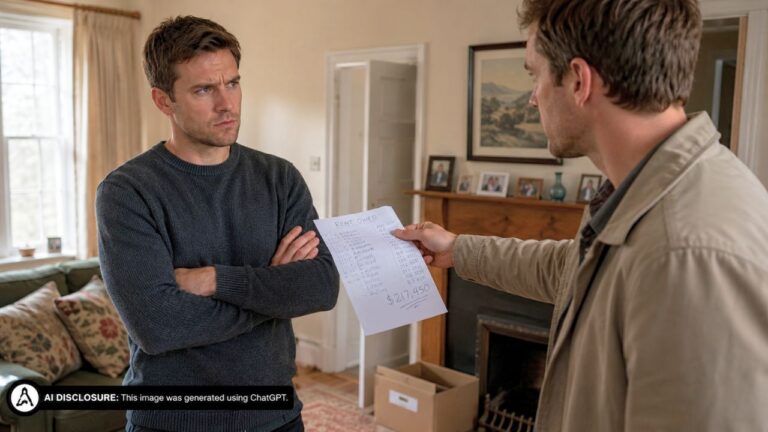
He called his son money-grubbing and said that was not how he raised him. The son pushed back hard and said it was exactly how he was raised. His father had spent decades teaching him that work mattered more than showing up for family. He brought up the hospital. He brought up the wedding. He brought up why his mother left.
His father hung up.
That was where the man started questioning himself. Part of him knew the request sounded cold. Asking your own father to pay you to visit after a heart attack is not exactly warm and fuzzy. But from his side, it was not really about the money. It was about making his father hear his own logic coming back at him.
For years, his father had chosen work over his family and framed it as responsibility. Now the son was choosing his own family over his father and using the same practical language. If someone had to pay the bills, then someone had to pay for the time.
The emotional weight of the situation was heavier than the money itself. The son was not broke. In comments, he said he had more money than his father. He was not trying to squeeze cash out of a sick man. He was trying to protect the time he had promised himself would belong to his wife and kids.
Commenters pushed him to think about what he actually wanted.
Some told him he was right to draw the line. Others said he sounded bitter, even if he had reason to be. A few asked whether he wanted a relationship with his father at all or whether he only wanted to punish him.
That seemed to land.
Two months later, the man posted an update. He went to see his father after all.
Not for his father, he said. For himself.
He decided he did not want to treat his dad the way his dad had treated him and his sister. He took the time, made the visit, and found the whole thing oddly empty. His father was old, physically weakened by the heart attack, and emotionally worn down. He thanked his son for coming. The son said it was nothing.
There was no big reconciliation. No screaming match. No dramatic apology. Just a polite, clinical visit between two men who shared blood but not much closeness.
His father asked why he had not brought his wife and kids. The son said they were working or in school. When his father tried to get him to stay longer, he said he had to work.
That line may have been the quietest full-circle moment in the whole story.
The son had made the effort. He had taken time off. He had shown up in a way his father often did not. But he was not willing to make his father the center of his life now. Any deeper relationship would have to come from the father making an effort too.
By the end, the son seemed at peace with what he learned. He still had his sister, his mother, his wife, and his children. His father was not important to him in any meaningful way because his father had never built that kind of relationship.
He might let the kids visit in the summer if they want to.
But he is not rearranging his life around a man who spent years teaching him that showing up was optional.
Commenters were split at first, mostly because the request sounded harsh on its face. Some thought asking a recovering father to cover lost wages seemed petty, especially when the son admitted money was not the issue.
But many others understood the point he was making. They said his father had taught him, over and over, that work and money mattered more than family. Now he was angry because his son had absorbed that lesson and used it back on him.
A lot of commenters focused on the daughter’s wedding and the hospital stay. Those details made it harder for people to excuse the father as a man who was simply working hard for his family. To them, there is a difference between providing and being absent by choice.
After the update, many commenters thought the son handled it well. He went because it helped him close the loop, not because his father had earned it. He was polite, clear, and honest with himself about what the relationship was. The strongest reaction was that the visit gave him something useful: not a repaired bond, but peace.