Bride Says Her Future MIL Pushed Her to Wear a 90s Wedding Dress — Then Said She Didn’t Want Major Alterations
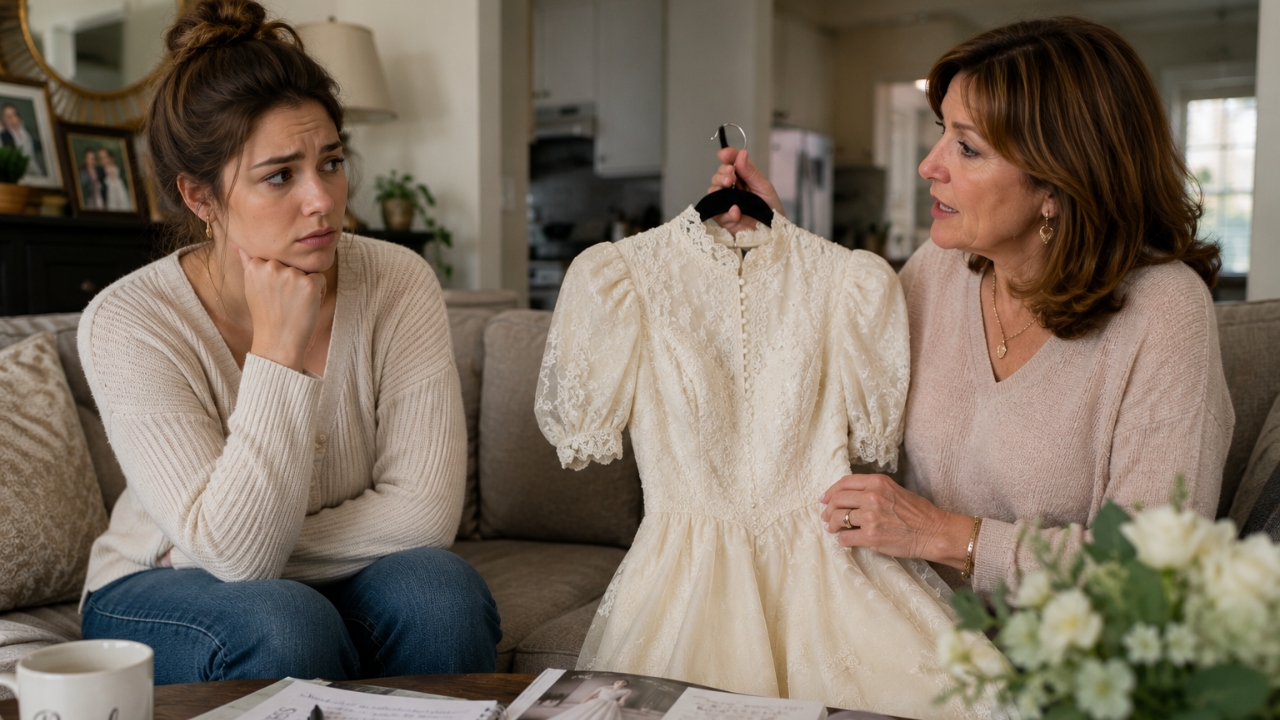
Photo credit: Thrivegirly
A 23-year-old bride says she had barely finished celebrating her engagement before her future mother-in-law started talking about the wedding dress she wanted her to wear.
She explained in a Reddit post that she had recently gotten engaged to her 21-year-old fiancé, and the wedding was set for the following summer. They had only started light planning when her future MIL began bringing up one very specific idea.
She wanted the bride to wear her old wedding dress.
The timing was not subtle. According to the bride, the same day she and her fiancé got engaged, they were celebrating with drinks at a local bar. Her future MIL kept mentioning that she had never had a daughter to wear her dress. Then she suggested that because she did not have daughters, the bride could wear it.
The bride laughed the comment off at first.
In her mind, there was no way the woman was serious. It seemed like one of those emotional, sentimental comments someone makes in the excitement of an engagement. Maybe she was reminiscing. Maybe she was thinking about how quickly her son had grown up. Maybe she was just floating the idea out loud.
But then the idea did not go away.
The bride said her future MIL had gotten married in her 30s in the late 1990s, and the dress reflected that era. It had puffed sleeves and a collar, and the bride was blunt that it was not her style or taste at all.
That is already reason enough not to wear it.
Wedding dresses are personal. Some brides want simple and sleek. Some want lace. Some want sparkle. Some want a big gown, a fitted gown, sleeves, straps, no straps, vintage, modern, traditional, or something completely different. Wearing a dress just because someone else attached meaning to it can turn one of the most personal choices of the day into an obligation.
There was also the fit issue.
The bride said her future MIL had been quite overweight at the time she married, so the dress would need to be taken in a lot to fit the bride. But her future MIL had also made clear she did not want drastic alterations made to it.
That made the request even harder to manage. If the dress did not fit and could not be significantly altered, then how exactly was the bride supposed to wear it? She would be stuck trying to honor someone else’s sentimental attachment while also wearing a gown that did not fit her body, style, or vision.
Still, the bride tried to include her future MIL in the normal dress-shopping process.
She set a date to shop for her own wedding dress and invited the future MIL to come. The MIL could not attend because of other family conflicts. But even though she could not go shopping, she kept texting the bride and insisting that she try on the old dress before looking for one of her own.
That was where the bride got stuck.
She had not responded yet because she did not know how to say no without hurting her future MIL’s feelings. She knew the dress had emotional value to the older woman. She understood why a mother with no daughters might have imagined passing down her gown one day. But that dream was not the bride’s dream.
And that matters.
A wedding can involve family traditions, heirlooms, and sentimental gestures. But those things work best when the bride or groom wants them. When they are pushed, they stop feeling meaningful and start feeling like emotional pressure.
The bride asked if she would be wrong to plainly say she was not going to wear it.
From the outside, her hesitation made sense. Saying “I don’t want your dress” can feel harsh, especially when the person offering it thinks they are giving something precious. But the alternative would be worse: trying it on, letting the MIL believe there was a chance, then fighting the same battle later after everyone was more attached to the idea.
It was better to be honest early.
The bride did not need to insult the dress. She did not need to explain that puffed sleeves and a collar were not the look she wanted. She did not need to mention the size difference in a way that would make everyone uncomfortable. She simply needed to say she appreciated the offer, but she wanted to choose her own wedding dress.
That is not cruel. That is normal.
The post did not include an update saying how the MIL reacted. But the conflict was already clear. The future MIL had turned her own old dress into a symbol of inclusion, motherhood, and sentiment. The bride saw it as a dress she did not like, that would not fit, and that she did not want to build her wedding look around.
Both could be true.
But only one of them was the bride.
Commenters overwhelmingly told her she was not wrong. Many said every bride has the right to choose her own wedding dress, especially when she already has a style in mind.
Several people suggested keeping the response polite but firm. A common recommendation was to say something like she appreciated the offer, but she had always dreamed of choosing her own dress.
A lot of commenters warned her not to try the dress on if she already knew she did not want it. They said trying it on might give the MIL false hope or make the older woman think the bride could still be persuaded.
Others suggested offering a softer compromise, like borrowing jewelry or another small item as her “something old” or “something borrowed.” That way, the MIL could still feel included without controlling the dress.
Several commenters also said the fiancé needed to help set boundaries early because if his mother was this involved in the dress, she might try to control other wedding details too.
The strongest advice was simple: the future MIL got to choose her own wedding dress. Now the bride gets to choose hers.