His Parents Demanded Last-Minute Additions to the Guest List — Then the Couple Printed the Final Version and Stopped Taking Calls

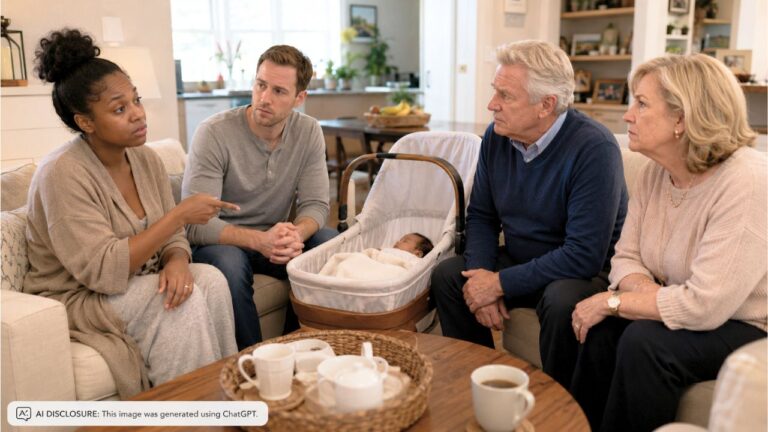
Photo credit: AI-generated image created using ChatGPT. Illustrative only.
Wedding planning was supposed to be the easy part: a small church ceremony, a meal afterward, and a guest list short enough that every name actually meant something. Instead, a 25-year-old bride-to-be found herself fielding insults, threats, and public call-outs from her own parents after she refused to pad the invite list with people she barely talks to.
She and her fiancé, 31, are set to marry in fall 2026, and they intentionally planned an intimate event—about 25 to 30 people total. But once her mom started challenging who “deserved” a spot, the conversation stopped being about logistics and turned into a power struggle over who gets to claim the day.
A small wedding, built around the people who actually show up
The couple’s plan was straightforward: a church ceremony followed by a meal, kept tight and personal. On the bride’s side, that meant her parents, her brother, her grandmother, and two of her dad’s childhood friends who have always felt like family. She also had a small bridal party—three close women—and was even considering asking a close male friend to stand with her as a “bridesman.”
The reason for the smaller circle wasn’t just budget; it was history. She described a rocky relationship with her parents going back years, including comments that had left her feeling unsafe and unstable—like threats to make her homeless. After she moved out and built a home with her fiancé, their relationship improved, enough that she started hoping for a calmer chapter and even pictured her dad walking her down the aisle.
Her fiancé, meanwhile, kept his distance from her parents because of the things they’d said and done in the past. Still, the couple was trying to keep the peace while building a wedding day that felt like them.
The first objection: one bridesmaid her mother didn’t approve of
The spark came from a choice the bride thought would be uncontroversial. She asked a close friend—someone she met at work in her early 20s and has stayed close with ever since—to be a bridesmaid. This friend wasn’t a recent addition to her life; she’d been a consistent source of support and was even “the reason we met,” meaning she played a role in connecting the bride with her future husband.
Her mother objected anyway. The complaint wasn’t about cost or capacity—it was personal. Her mom argued the bride didn’t know this friend “deeply enough,” dismissing years of closeness and support. To the bride, it felt less like a genuine concern and more like an attempt to control who stood beside her on one of the biggest days of her life.
From there, it didn’t cool down. It expanded.
Then came the push to invite strangers—so her parents could have “their side”
After the bridesmaid argument, her parents shifted from criticizing the bridal party to demanding additions to the guest list. The bride said they pushed for “a list” of people she doesn’t speak to and hasn’t had meaningful contact with in years. The reason, as she understood it, was simple: optics.
They wanted more people there who belonged to them—more faces on “their side” of the room—regardless of whether those guests had any real relationship with the couple getting married. For a wedding capped at 25–30 attendees, every extra name changes the entire feel of the event. It also forces the couple to cut someone they actually want there, or expand a wedding they intentionally planned to keep small.
The bride refused. She and her fiancé were paying for the wedding themselves, and she believed the final say should be theirs. Her thinking was direct: if these people “add nothing to our wedding day” and don’t exist in the couple’s everyday life, they don’t belong on the most personal guest list they’ll ever make.
The escalation got personal fast—and it didn’t stay private
Once she held the line, her parents’ response turned aggressive. She said they called her “pathetic,” and threatened to invite the unwanted guests “behind my back” specifically to upset her on the wedding day. They didn’t keep the fight confined to family conversations, either.
According to the bride, her parents publicly posted online that she and her fiancé are “awful” and that they would not attend. Her dad went further, calling the wedding a “sham.” It was the kind of language that doesn’t just sting—it sends a message that the parents are willing to blow up the relationship if they can’t control the event.
That pressure also landed in a family dynamic where the bride already felt she had to manage volatility. In an edit to the original post, she added that her grandmother is low-contact or no-contact with her parents, and her younger brother still lives with them and is keeping his head down. In other words, this wasn’t an isolated disagreement. It was part of a pattern other relatives already navigate by creating distance.
People urged her to lock the plan—and stop negotiating through threats
In her update, the bride explained that she’d previously tried distance: at one point she didn’t speak to her parents for eight months while still living in their home, coming back late, leaving early, eating out often, and spending a lot of time at her fiancé’s parents’ house. Right before she moved out, her parents had a tearful conversation with apologies, and she let herself believe things could change.
But the wedding guest-list standoff made it clear that the “better” relationship may have depended on low exposure and low stakes. Now that there was a major life event, her parents returned to demands and retaliation. The line she wrote after that shift was blunt: “Now I see they will never change and this is just who they are.”
In the discussion around her story, the practical focus was less about debating etiquette and more about preventing a wedding-day ambush. When someone threatens to invite people behind your back, you stop treating it like a family squabble and start treating it like a planning and security issue: controlling invitations, communicating directly with the venue and any coordinator, and making it clear only the couple can add names.
Just as important was the theme of refusing to bargain with public shaming. Once relatives move the argument online and use humiliation as leverage, many readers tend to see it as a sign that normal “talk it out” strategies won’t work. The goal becomes protecting the event and protecting your peace.
She made the call: uninvited, blocked, and done taking calls
The biggest change came after the pressure campaign. The bride updated that, as of “yesterday evening,” her parents are no longer invited to the wedding. She also told them not to contact her again and blocked their numbers.
It’s a hard pivot from the version of the day she’d imagined—especially the hope of having her dad walk her down the aisle. But with threats to sabotage the guest list and posts calling the couple “awful,” she decided it was safer to stop negotiating entirely.
For now, the wedding plan returns to its original purpose: a small ceremony built around people who actually support the marriage, not people added to satisfy a scorekeeping exercise. She said she may update again later, perhaps after the wedding. Until then, the boundary is the plan—final, printed, and no longer up for debate.