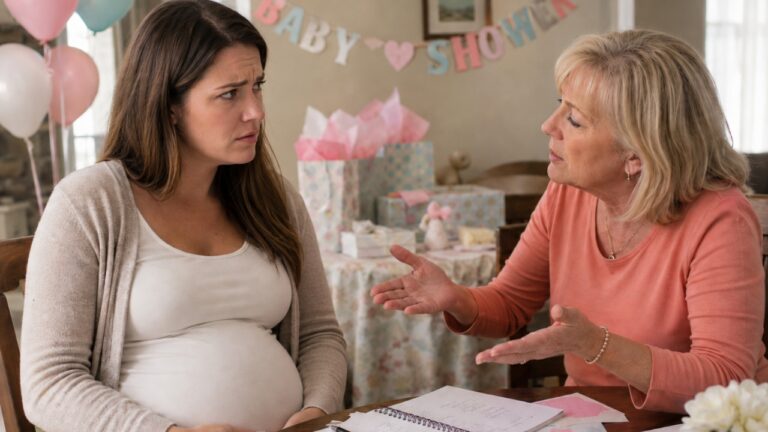
She Limited Grandparents’ Unsupervised Time With Her Kids — Then They Said She Was Treating Them Like Strangers

Photo credit: AI-generated image created using ChatGPT. Illustrative only.
It started the way so many family blowups do: not with a huge announcement, but with a small parenting preference that turned into a power play. A mom of two boys, 7 and 2, thought she and her husband had found a workable rhythm with her parents—until one smug comment made it crystal clear what was really happening when the kids were left alone with Grandma and Grandpa.
In the original post, the mom explained that she’d been dealing with pushback since her oldest was born. Nothing extreme, she said—just normal stuff like limiting screen time, keeping an eye on diet, and not wanting the kids watching violent TV. Even breastfeeding earned her eye rolls, like it was some crunchy phase her parents couldn’t wait for her to outgrow.
The problem started before the big blowup
For years, the grandparents didn’t just disagree with her choices—they commented on them. Often. The mom said they “never pass up on an opportunity to criticise,” and the tone wasn’t helpful or curious. It was the kind of criticism that feels like a judgment of you as a person, not a debate about cookies.
Still, she and her husband tried to keep things moving. They’re not big on confrontation, and she described them as “go along to get along” people, the type who will swallow irritation to keep the peace at birthdays and holidays.
And on paper, the arrangement sounded generous and pretty normal. The grandparents watched the older child one afternoon a week. Sometimes the kids would spend a Saturday there, and there were occasional sleepovers during holidays. The parents even tried to allow some grandparent-style indulgence—more sweets than at home, with some limits still in place.
The issue was that her parents didn’t just enjoy being the “fun” grandparents. They pushed. Every time they were given a little wiggle room, they wanted more. And the mom and dad were left trying to balance keeping the relationship friendly while feeling increasingly disrespected.
A lunchtime comment turned it into a control issue
The incident that changed everything happened during lunch at the mom’s house. The grandparents brought up the topic of food, and the couple mentioned one specific rule: they didn’t want their 2-year-old having chocolate yet. The child could have an age-appropriate cookie, but no pure chocolate or candy bars.
It wasn’t delivered as an attack—just a simple statement of what they were comfortable with. But the grandfather’s response wasn’t a disagreement or even an eye roll. It was a flex.
Because the husband had to leave for an appointment, the grandfather told him, “be quiet and eat your food, because in 5min you have to go.” Then, according to the mom, he followed it up with the real message: “And when you are not around, I can do whatever I want with your kids, your rules don’t count if you are not there.”
The mom said he looked smug while laughing—like he’d landed the winning point in an argument they didn’t know they were playing. And while she didn’t respond in the moment because she was on the phone for work, she saw and heard it happen when she walked into the room.
When she tried to address it, the fight exploded
Afterward, she tried to talk to her father calmly. The message she wanted to get across wasn’t complicated: they’re still the parents, and the grandparents need to respect their wishes at least in principle. She also wanted her father to understand how disrespectful it was to speak to her husband like that in their home.
But the conversation didn’t stay calm for long. Her father blew up, she blew up, and it turned into a full-on fight—exactly what she’d hoped to avoid.
Underneath the chocolate question was a deeper issue she’s been dealing with for years: her parents still treating her like a child. She’s 40, but she said they act like their “parental authority” over her somehow extends to the grandchildren too.
And that’s where it stopped being about a snack. The way he phrased it—“your rules don’t count if you are not there”—wasn’t a misunderstanding. It was a statement of intent. He was openly saying he planned to ignore them the moment they weren’t watching.
The new rule: less alone time, more supervised visits
So the parents made a decision that immediately changed the family routine. If the grandparents couldn’t respect them as parents—and if they were going to undermine them “alll the time,” as she put it—then the kids wouldn’t be spending much unsupervised time with them anymore.
That meant no more structural childcare. No more regular taking-care-of-them schedule. And for now, no more sleepovers.
It wasn’t a total cutoff. The mom emphasized that they’d still visit on weekends and the grandparents could still see the kids. The difference was that it would happen with the parents present, at least until the grandparents changed their attitude.
To the mom and her husband, it was the only consequence that matched what had been said out loud at that lunch table. If someone is telling you they’ll ignore your rules as soon as you leave the room, you stop leaving the room.
The grandparents said they were being “blackmailed” and treated like outsiders
The reaction was immediate, and it wasn’t reflective. Instead of acknowledging the comment or apologizing for the disrespect, the grandparents accused the couple of “blackmailing them and hurting them.”
That framing flipped the story so the grandparents were the victims and the parents were the villains. In their view, access to the grandchildren should continue the same way it always had, even if they openly disagreed with how the kids were raised.
But for the mom, the insult wasn’t just the chocolate. It was the tone, the laughter, the “do whatever I want” attitude—and the way her husband was spoken to like a disobedient kid who needed to be managed until he left.
And once that’s the dynamic, it’s hard to unsee it. Every previous moment of rule-pushing suddenly looks less like “grandparents being grandparents” and more like a quiet contest to prove they’re in charge.
Now the family is stuck in that uncomfortable place where everyone knows what was said, everyone knows what it meant, and the old schedule can’t come back unless someone backs down. The parents are offering time together—just not time alone. The grandparents want the unsupervised access, without the respect that would make it possible.
For this mom and dad, the line they drew wasn’t about being controlling. It was about refusing to hand over their kids to someone who already told them, with a grin, that their parenting “doesn’t count” when they’re not around.