Her In-Laws Assumed They’d Be Called the Moment Labor Started — Then She Waited Three Days to Pick Up the Phone

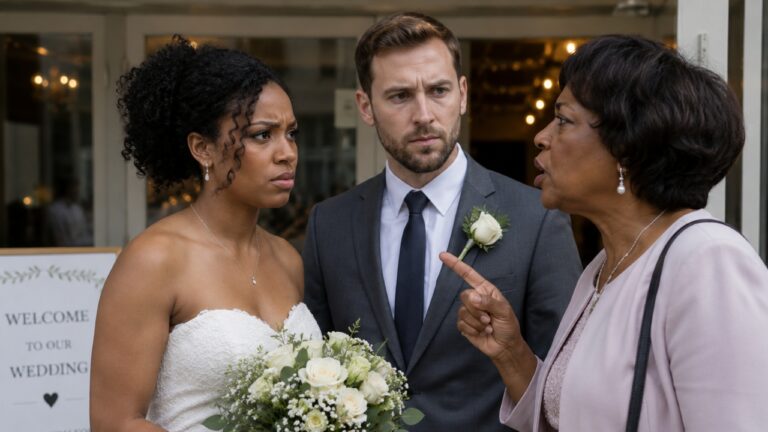
Photo credit: AI-generated image created using ChatGPT. Illustrative only.
She isn’t due until December, and she’s already thinking about who gets access to her baby, when, and under what conditions. That might sound like overplanning—until you realize both sets of grandparents have already floated the idea of showing up at the hospital for the birth. For a first-time mom who describes herself as skittish and aloof because of past trauma, that kind of expectation doesn’t feel like excitement. It feels like pressure.
And once her living situation changed, the pressure got even harder to untangle. Because the one rule she thought would keep everyone at a safe distance suddenly didn’t make sense anymore.
The plan was simple… until it wasn’t
The mom-to-be, 27, and her husband, 26, originally agreed on what felt like a straightforward postpartum plan: no visitors for a full month. Not because she wanted to punish anyone, but because she was worried about illness and wanted time to recover and settle in with their first baby.
Then reality stepped in. For financial reasons, the couple is moving into her parents’ home in September and plans to stay there while her husband finishes school—anywhere from one to two years.
All of a sudden, a “no one sees the baby for a month” rule stopped being a rule and started being a logistical joke. If they’re living under her parents’ roof, her parents won’t just “visit.” They’ll be there. Every day.
When her parents became the exception, the in-laws became the issue
Once she accepted that her parents would be around by default, she started adjusting the plan in real time. Maybe her mom could still help, but not get close to the baby’s face. Maybe handwashing and keeping some space could be enough.
But that’s where the fairness question hit. If her parents get daily contact and support time because they live together, can she still tell her in-laws they have to wait one full month?
She admitted it might be unfair, and she wasn’t trying to be cruel. She just didn’t feel comfortable, and comfort matters a lot when you’re newly postpartum, exhausted, and vulnerable. At the same time, she could already see the blowback coming—especially because she believes her in-laws already dislike her due to a language barrier and her personality, which she describes as guarded.
That detail mattered. This wasn’t just about germs. It was also about how safe she feels around people who, in her mind, don’t really like her.
The hospital question put her on the spot
The looming issue wasn’t only the first month at home. It was the birth itself.
Both sets of parents had said they wanted to be at the hospital when the baby is born. And her mother-in-law had already started asking about the hospital plan.
Even without anyone raising their voice, that kind of question can feel like a demand: “Tell me what role I get.” For someone who’s still figuring out her own postpartum needs, being asked to outline the schedule in advance can feel like being backed into a corner.
She didn’t want to upset her in-laws. But she also didn’t want to agree to something just to keep the peace, especially when she knows she tends to come off distant and anxious. If the relationship is already strained, being honest about limits can feel risky.
So she asked a very specific question: would she be wrong to allow her parents to see the newborn while keeping the in-laws on a longer waiting period?
You can read her full description of the dilemma in the original post.
The real fear wasn’t just sickness—it was losing control
On paper, the argument is about illness prevention, and that’s a reasonable concern with a newborn. But underneath it is something more relatable: she wants control over the first days of motherhood.
When family members talk like they’ll be “at the hospital,” it can sound like they see the baby’s birth as a family event. For the person giving birth, it’s a medical event. It’s also an intimate, messy, emotional moment where privacy matters.
Add in the fact that she’s moving into her parents’ home, and you can see why she’s trying to grab onto at least one piece of structure. If her parents are going to be around constantly, she may feel like she needs one clear line somewhere else, just so everything doesn’t become a free-for-all.
But she also seems aware that drawing that line only for one set of grandparents could create a second problem: resentment. It’s not hard to imagine the in-laws interpreting it as favoritism, or even as proof that she doesn’t want them involved.
And if they already assume she doesn’t like them—or they don’t like her—that kind of policy could be the spark.
She realized she might be overdoing it
After reading feedback, she came back with an update that shifted the whole tone. She acknowledged she might be consuming too much social media and letting extreme “rules” influence her expectations.
She still liked the idea of a month of quiet, but she admitted it wasn’t realistic—especially while not having her own place. Instead, she decided she’d ask everyone to wash their hands and take precautions while still being allowed to see the baby.
It’s a very different approach from “no one for 30 days.” It’s also a choice that might keep the peace with her in-laws before a bigger fight even starts.
And, quietly, it suggests something else: she doesn’t actually want a dramatic standoff. She wants a plan that protects her baby and protects her sanity without turning the postpartum period into a scoreboard.
What’s still hanging in the air
Even with that update, the toughest part may still be ahead: the hospital expectations.
Handwashing rules solve the “meeting the baby” question, but they don’t automatically solve who gets notified when labor starts, who shows up at the hospital, and whether she’ll feel obligated to entertain visitors while she’s recovering. That’s where a lot of new parents get blindsided—because relatives can treat the birth like an invitation that was already assumed.
And with a language barrier and a shaky relationship, “We’ll let you know when we’re ready” can be misread as coldness or rejection, even when it’s simply a woman trying to have her medical moment without an audience.
For now, she’s trying to steer toward something workable: precautions instead of isolation, and fewer hard lines that single out one set of grandparents. But the core issue remains the same one so many expecting parents run into—everyone is excited, and she’s the one who has to decide where excitement ends and entitlement begins.