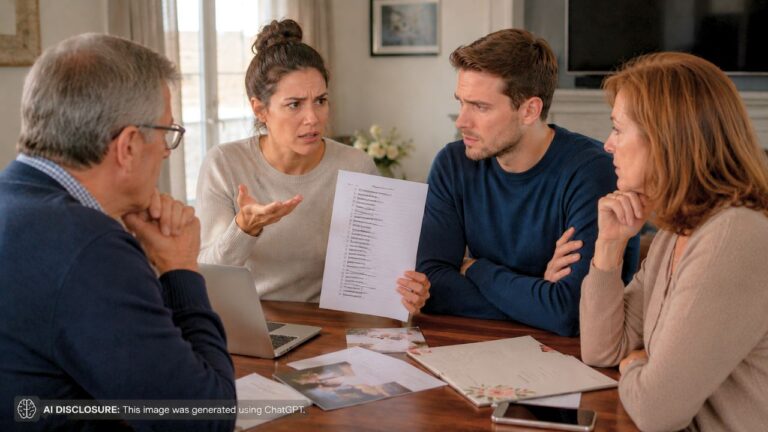
MIL Wrote Out a Weekly Visit Schedule and Presented It as Already Decided — Then the Mom Tossed It and Set Her Own Calendar
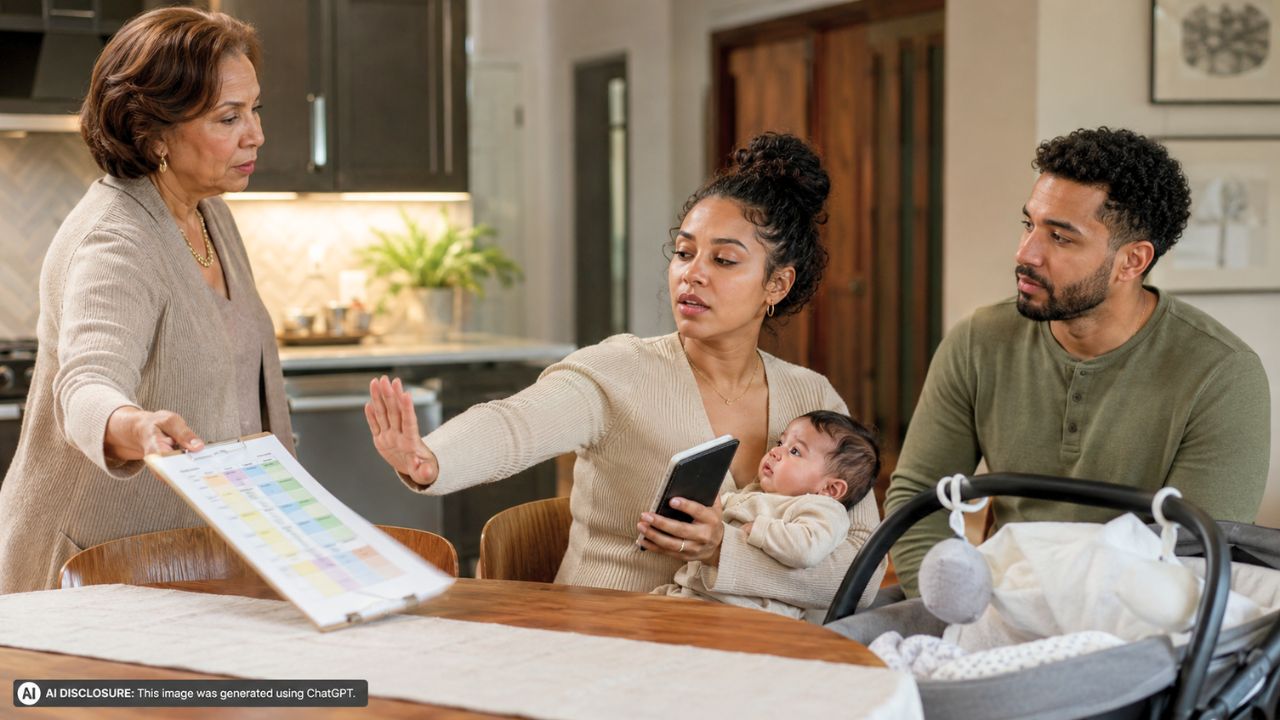
Photo credit: AI-generated image created using ChatGPT. Illustrative only.
At 37 weeks pregnant, she thought the next few days would be about nesting, doctor appointments, and getting through the final stretch. Instead, a dinner with her mother-in-law turned into a showdown over who gets to “schedule” time with a baby who hasn’t even arrived yet.
The expecting mom described feeling like her husband’s mother had been treating the pregnancy as a personal event—one where the grandmother’s excitement slowly hardened into assumptions, and then into demands. The breaking point came when the mother-in-law declared she’d be taking the baby every Friday, starting immediately.
It started with announcements she wasn’t supposed to make
Early on, the couple tried to set a simple boundary: don’t tell anyone about the pregnancy until they’re ready. The mom-to-be said that boundary lasted seconds. As soon as the news was shared, her mother-in-law reportedly grabbed her phone and started messaging family anyway.
Then it spread further. The mother-in-law is a hairdresser, and the expecting mom said she told “every single one” of her clients she was going to be a grandma. To the pregnant woman, it felt less like a proud slip and more like a pattern—MIL placing herself at the center of the story and setting the tone in public before the parents could.
A full nursery worth of plans—at someone else’s house
As the pregnancy progressed, the grandmother-to-be reportedly began stocking her own home for the baby, thrifting “literally one of everything” without checking in with the parents. That kind of preparation can read as helpful in the right context. Here, it came across as presumptive—like a second household was being built around access to the child, not occasional babysitting.
The mom-to-be also said her mother-in-law threw herself a “grandma shower,” attended by people MIL knew through work, including “old ladies” she cuts hair for at a convalescent home. What rattled the expecting mom wasn’t just the party. It was what MIL presented afterward as a done deal: she planned to bring the baby to the convalescent home and let the residents take turns holding her while MIL worked.
No request. No conversation about health precautions. Just a plan relayed as if the parents were already on board.
Delivery room expectations and a date loaded with grief
The mother-in-law also expected to be in the delivery room—something the mom-to-be said is “not happening,” adding she might not even want guests at the hospital at all. By that point, it wasn’t one overstep. It was multiple, covering privacy, medical space, and what the grandmother assumed she was entitled to from day one.
There’s a deeper emotional layer too. The husband’s brother died when they were young adults, leaving MIL with one living child. The expecting mom said the grandchild pressure has been “HUGE,” especially with her husband now “the last of his family name” until their daughter is born. Adding to the weight: their baby is due on the late brother’s birthday.
In her own words, the mom-to-be worried her mother-in-law might be trying to use the baby to fill a void left by the loss—something she recognized as “psychoanalysis stemming from my rage,” but couldn’t shake.
The weekly-visit decree that set off the blowup
The standoff came at dinner, when the couple tried to dial back expectations. The mother-in-law didn’t just ask for frequent visits. She picked a day and presented it like a permanent arrangement: she was taking the baby every Friday. Not when the parents needed childcare. Not occasionally. Every week.
When the husband suggested “maybe when we’re both back to work,” MIL reportedly refused to budge. According to the post, she insisted it would start right away, and if she wasn’t taking the baby, she’d sleep over at their house. When the husband asked what if they wanted a Friday with their own daughter, MIL’s answer was blunt: “No. Fridays are my day with my granddaughter.”
That’s when the pregnant mom snapped and shot back, “are you going to file for joint custody too? You don’t get to choose.” She later said she felt bad for the rudeness, but couldn’t believe someone could declare a standing schedule with a newborn like it was already approved.
In the headline version of events, it came down to this: MIL acted like the calendar was already written. The parents weren’t having it.
What people focused on: boundaries, access, and the word “entitled”
In responses to the original post, the dominant theme was that a grandparent doesn’t get to assign themselves custody-style time, especially “right away” during postpartum recovery. Many zeroed in on how the mother-in-law framed her demands as rights—“my day”—instead of requests.
A practical point that kept coming up was how quickly “help” can turn into expectations that are hard to unwind. A weekly set day, especially from birth, would mean the grandmother’s routines and social plans start shaping the baby’s life before the parents even find their footing. People also reacted strongly to the convalescent home plan, seeing it as a major health and safety concern for a newborn, and as another example of MIL offering the baby’s access to others without consent.
Others focused on the delivery room assumption as a warning sign: if MIL believes she belongs in the most private medical moment, she may also believe she has a vote in parenting decisions. Several pointed out that boundaries are easiest to enforce before the baby arrives—because once sleep deprivation hits, it’s harder to argue a point you never wanted to debate in the first place.
The husband stepped in—now the real test is consistency
After the blowup, the expecting mom added an update that changed the temperature of the story. She said she left the table, and her husband stayed and addressed his mother directly. He told MIL she needed to “erase any expectation and entitlement” because they weren’t committing to plans or accommodating other people’s schedules once their daughter arrives.
According to the update, MIL pushed back at first but ultimately agreed and was “much better for the rest of dinner.” The couple’s plan is to keep reinforcing boundaries, and if MIL oversteps again, they’ll take “more dramatic measures.”
That’s the tightrope they’re walking now. A grandmother grieving one child and desperate for closeness to the next generation may not respond well to vague hints or partial compromises. And two exhausted new parents can’t afford weekly battles over access.
For the mom who posted, the immediate victory wasn’t winning an argument. It was refusing to let someone else pre-write her family’s schedule—and making it clear that being excited doesn’t automatically grant a standing appointment with someone else’s baby.