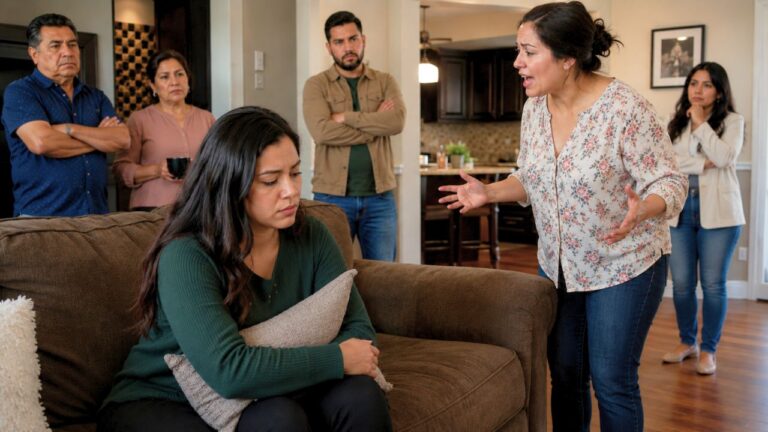
Family Treated the Newborn Like a Pass-Around Toy — Then the Mom Made a Rule She Should Have Set Before They Arrived
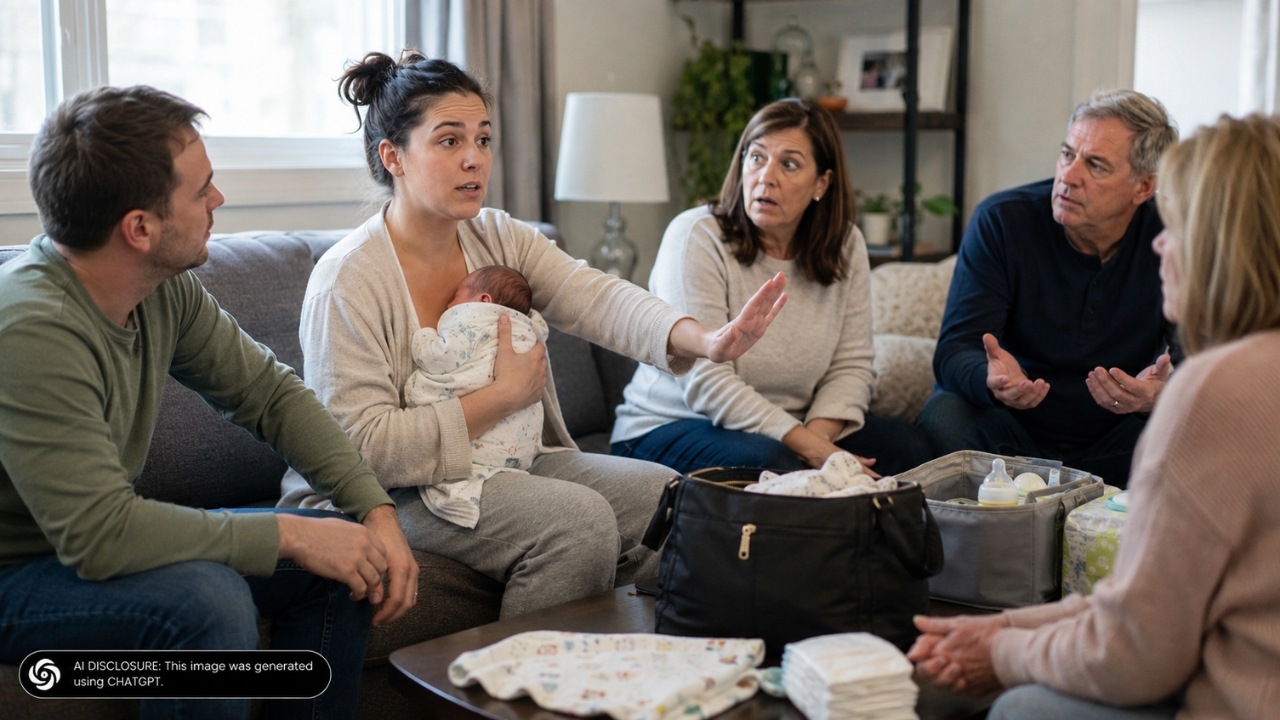
Photo credit: AI-generated image created using CHATGPT. Illustrative only.
The early days after having a baby are already a blur. Now add a major surgery, limited mobility, and a steady stream of relatives showing up with the same offer: “We’re here to help.” Except the “help” mostly meant one thing—taking the newborn out of Mom’s arms and settling in for a visit.
That was the reality for one new mom recovering from a crash C-section, who said she didn’t actually need someone to babysit her baby while she ran around cleaning. She couldn’t run around cleaning even if she wanted to. What she needed was space, rest, and time to heal. But what she got was a parade of well-meaning people who seemed more interested in baby cuddles than supporting her.
Recovery wasn’t cozy—it was crash C-section reality
In the original post, the mom explained that her recovery came with strict limitations. She couldn’t get down on the ground, unload the dishwasher, push a vacuum, carry laundry, or even walk the family’s large-breed dog. She was healing from an incision and doing her best to move carefully.
But she also made it clear she wasn’t falling apart emotionally or physically in the ways people seemed to assume. She could cuddle and feed her baby. She could get up briefly for diaper changes. And she was lucky: the baby slept fine in his bassinet, which meant she could still manage showers and sleep in those first days.
So when people offered to “help” by holding the baby, it didn’t land as some sweet relief. It felt like extra work.
When “help” really meant “let me hold the baby”
The mom said she understood that for many parents, having someone else hold the baby can be genuinely useful. It can give you time to clean, eat, or simply breathe without feeling touched out. If that’s your situation, great.
Hers was the opposite. The baby was basically the only thing she could comfortably do while recovering. Having visitors come over, take the baby, and sit there meant she was stuck watching them. She described herself basically staring at them, waiting for them to leave, because she couldn’t exactly hop up and keep busy.
And the logistics made everything more awkward. If she needed to feed the baby, she’d have to hobble away for privacy. Clothes hurt her incision, so she’d have to cover up or shift around for comfort. On top of that, she was working on skin-to-skin contact because of supply issues, which is hard to do when your newborn is being treated like a communal cuddle object.
To make it sting more, most of these eager “helpers” were her in-laws. She noted that while they’d had a good relationship before, it became obvious fast that they weren’t really there for her. They were there for the baby.
She paused the visits, and the “helpers” got offended
At first, she didn’t go around assigning chores or demanding anyone do her laundry. She also didn’t expect family to suddenly become a postpartum support team. In fact, she was fine solving the practical stuff herself.
She hired out the things that would actually make the household run: cleaning, food, grocery delivery, dog daycare. She even gave a shoutout to one exception—an amazing sister-in-law who offered to exercise and give attention to their dog, which was one of the few tasks the new mom truly couldn’t do.
The issue wasn’t that relatives failed some test. It was that they kept trying to rebrand visiting as helping, and then used that label to push past her limits on how often people could come over. She said some family members were under the illusion they could visit frequently, bypassing her stated boundaries, because they were “helping.”
Eventually she got tired of fielding requests and made it plain: holding the baby wasn’t helpful to her right then. In her situation, people who wanted to hold the baby were visitors, not helpers, and she wanted to pause visits for a bit.
That was the moment the mood shifted. Instead of understanding, some of her partner’s family started making passive-aggressive, hurt comments about how they “weren’t allowed” to come “help” more in the early days.
Her partner wanted a softer excuse, but she wanted honesty
Her partner saw the fallout and suggested maybe she could’ve handled it differently. Maybe she could’ve made up another reason to avoid visits without “bursting their little bubbles.” In other words: keep the peace, let them think they’re helping, and move on.
But that solution made her feel even more annoyed. The idea of people coming over, being a hindrance, and then patting themselves on the back on the way out for “helping” irritated her. She wasn’t trying to be cruel—she was just exhausted by the performance of it all.
And there’s something uniquely frustrating about postpartum dynamics where the person recovering is expected to manage everyone else’s feelings, even when they’re the one with the incision and the hormone crash and the tiny human attached to them.
So she chose clarity over comfort. She told the truth: this isn’t actually helping me. And if you’re only here to hold the baby, then it’s a social visit, not support.
People voted “not the bad guy,” and the pattern was hard to ignore
The post was labeled “Not the A-hole,” and the general reaction was that her point was fair: calling something “help” doesn’t make it helpful. If the new mom is recovering from surgery and her baby is the one thing she can comfortably do, then insisting on holding the baby isn’t a gift—it’s taking the most meaningful part of her day and making it inconvenient.
She also clarified in an edit that she didn’t necessarily want or expect anyone to do chores. Hiring it out worked well for her. What she wanted was fewer visitors in her space while she was healing, especially visitors who were mostly focused on baby time.
But her relatives tried to get around the limit by labeling themselves as helpers, and then acted like their earlier visits had been a big contribution. She didn’t accuse them of being evil. She just wanted them to stop asking and stop pretending it was for her benefit.
The lingering pouty comments—about not being “allowed” over more—only reinforced her suspicion that what they really meant was they weren’t given the access they wanted to her newborn.
Months later, the rules changed—but the memory didn’t
Now that the baby is a few months old, she’s relaxed the schedule. She said she lets them come visit whenever they please, which is often. And now, in a very different season, it actually can be helpful—because she can do chores while someone else holds the baby.
But the earlier dynamic hasn’t fully gone away, because the comments haven’t stopped. Even with open access now, some family members still seem stuck on the idea that they were wronged during the newborn phase.
And that’s what makes this whole story feel so familiar: it wasn’t really about one visit or one comment. It was about who postpartum time is supposed to serve. For her, it was recovery and bonding. For them, it sounded like it was baby time—and they wanted it on demand.
She got through those first weeks by doing what she had to do: protecting her healing, outsourcing what she could, and refusing to treat constant baby-holding visits as some heroic act of service. The baby is older now, the house is busier, and the door is open. But she’s probably not forgetting who showed up for her, and who showed up for the baby.