His Family Mocked the Baby’s Name — Then the Parents Stopped Sharing Milestones With Them

By the time their baby was two weeks old, the couple had already learned which relatives would treat parenthood like a spectator sport. They’d sent a simple group text with a photo, the name, and a little heart emoji, hoping it would be a calm moment after a long delivery and a stressful first night home.
Instead, the replies turned into a running joke. Someone sent a laughing reaction. Another relative posted a meme comparing the name to a cartoon character. A third asked, more than once, if they were “serious” and suggested a nickname that sounded nothing like it.
The parents didn’t expect everyone to love their choice, but they weren’t prepared for the pile-on. And they definitely didn’t expect it to spill out of the family chat and into real life, where it started to affect their home, their routines, and who they felt safe inviting around their newborn.
It started with “just teasing,” then turned into a group habit
The name the parents picked wasn’t offensive or intentionally provocative. It was uncommon, tied to a grandparent’s heritage, and spelled the way it appeared in an old family record. The couple practiced saying it out loud for months, wrote it on the nursery wall, and put it on the birth announcement they mailed to close relatives.
The first jokes came from the husband’s side, mostly from an aunt and a cousin who tended to run every family gathering like a comedy set. They kept pronouncing it wrong on purpose, then correcting themselves dramatically. In the group chat, they started calling the baby by a different name entirely, like it was a nickname they had invented.
When the parents didn’t laugh along, the tone shifted. The relatives framed it as the couple being too sensitive, and others chimed in with “it’s not that deep” messages. The mother, running on almost no sleep and dealing with postpartum recovery, stopped responding.
The first milestone they skipped sharing was the one that hurt the most
A week later, the baby had her first pediatric appointment with a clean bill of health after a brief scare about weight gain. The parents took a picture of the tiny hospital bracelet and the baby’s clenched fist, then hovered over the send button.
They didn’t send it. The last time they posted a photo, the same relatives had commented on the name again, using baby-talk versions of it and adding laughing emojis. The mother didn’t want to read that while she was still counting ounces and timing feedings.
They told themselves they’d share the next one instead. But when the first “real” smile happened, and when the baby slept longer than two hours at a stretch, the couple kept those moments to themselves. They started sending updates only to a small list: two close friends, the mother’s sister, and one cousin who had defended them early on.
The tension moved from phones to the front door
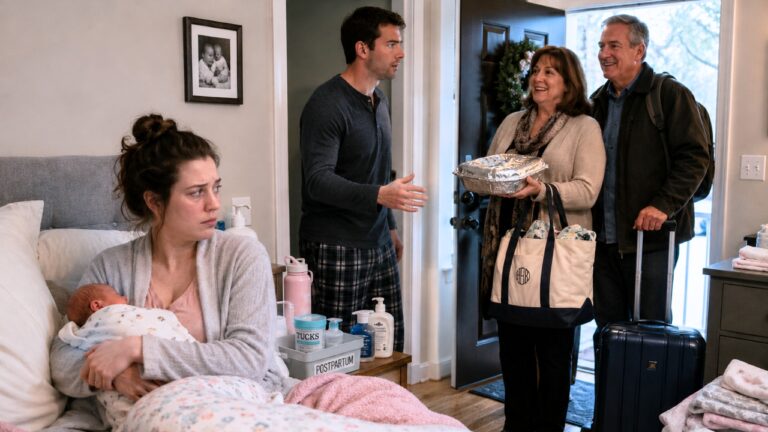
The real escalation happened when the husband’s mother asked to stop by with a casserole and “see the baby for a few minutes.” The couple agreed, but they made it clear they weren’t up for a crowd. The mother-in-law arrived with the aunt in the passenger seat and the cousin close behind in a second car.
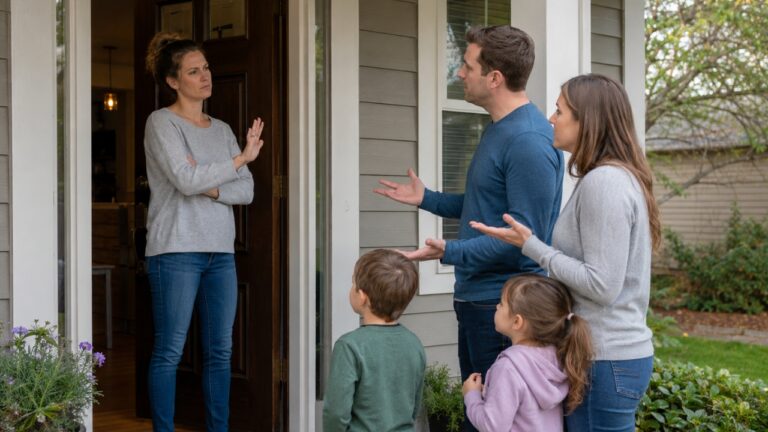
The couple didn’t slam the door, but they didn’t pretend it was fine, either. They held the baby in the living room and kept the visit short. The aunt made a comment about the name right away, then tried to coax a reaction by asking if they’d “picked a middle name yet that people can actually say.”
After they left, the mother found a small wooden name plaque—one she’d ordered with the baby’s name burned into it—tilted and scratched where it hung in the hallway. It could have been an accident during the shuffle of coats and bags, but it didn’t feel like one. The next day, a package with the baby’s name on it arrived from a handmade shop, and the box had been opened and re-taped before it was on their porch.
That was the moment the couple stopped assuming it would blow over on its own.
The parents began documenting, and the family doubled down
The husband installed a doorbell camera and a cheap interior camera pointed at the entryway, more for peace of mind than anything else. They also switched their delivery instructions to require photo confirmation and moved anything with the baby’s name on it—mail, keepsake items, even the framed announcement—away from the front hall.
Within a week, the mother-in-law was asking why she’d been removed from the shared photo album. The aunt started sending messages about how “grandparents have rights,” which felt less like a statement and more like a threat. The cousin tried to stir things up by posting a vague status about people “punishing family over a harmless joke.”
The couple responded once, calmly, saying they weren’t debating the name and they were taking a break from updates until they could trust relatives to be respectful. That message got screenshotted and forwarded around, and soon the husband was getting calls from his siblings asking why he was “causing drama” during what should be a happy time.
Meanwhile, the doorbell camera picked up the aunt returning to the porch one afternoon when the couple wasn’t home. She didn’t break anything, but she stood close to the window, peering in, then placed a small card under the doormat addressed to the baby—using the mocking nickname instead of the real name.
Commenters focused on boundaries that could hold up under pressure
People who heard about the situation urged the couple to stop treating it like a name debate and start treating it like a boundary problem. The advice wasn’t about winning an argument; it was about reducing access to the baby and to the parents’ time and energy.
Some suggested moving family communication to one channel where everything stayed in writing, and muting or leaving group chats that had become hostile. Others recommended telling relatives, once and only once, what would happen if the name jokes continued: no visits, no photos, no updates, and no exceptions.
There was also a heavy emphasis on documentation. Save screenshots. Keep a simple log of unwanted visits and messages. If anyone showed up repeatedly after being told not to, some pointed out that a non-emergency police call for a trespass warning can be a practical step, especially when a newborn is involved and the parents are exhausted.
A few people pushed back on the “grandparents’ rights” talk, noting that those claims are usually limited and fact-specific, and that the casual way it was being thrown around sounded more like intimidation than a realistic plan. The common theme was to keep everything boring, consistent, and provable.
The hardest part was grieving the support they thought they’d have
The couple expected help with meals, maybe an extra set of hands so the mother could shower without rushing. Instead, they found themselves managing cameras, locked privacy settings, and relatives who treated a newborn like a prop in a family power struggle.
They didn’t cut everyone off completely. They still answered the mother-in-law’s calls sometimes, but they stopped doing spontaneous visits. Updates became rare and plain, with no photos attached. When the baby hit a major milestone, the parents celebrated quietly with the people who hadn’t made it conditional on being entertained.
The name remained the same on the birth certificate, on the pediatrician’s paperwork, and on the tiny label maker tags stuck to bottle lids in the kitchen. The relatives could either learn it or live without the inside moments. For now, the parents chose the calmer option—even if it meant accepting that the family they imagined on day one wasn’t the family they actually had.