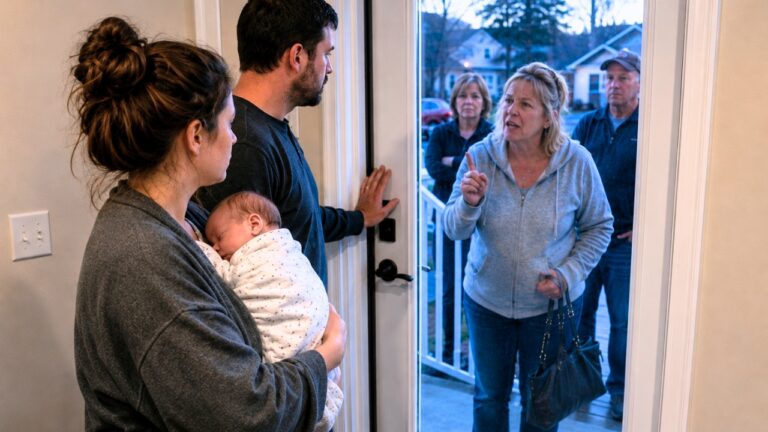
Grandparents Kept Dropping By “Just to Check In” — Then the Parents Stopped Answering the Door
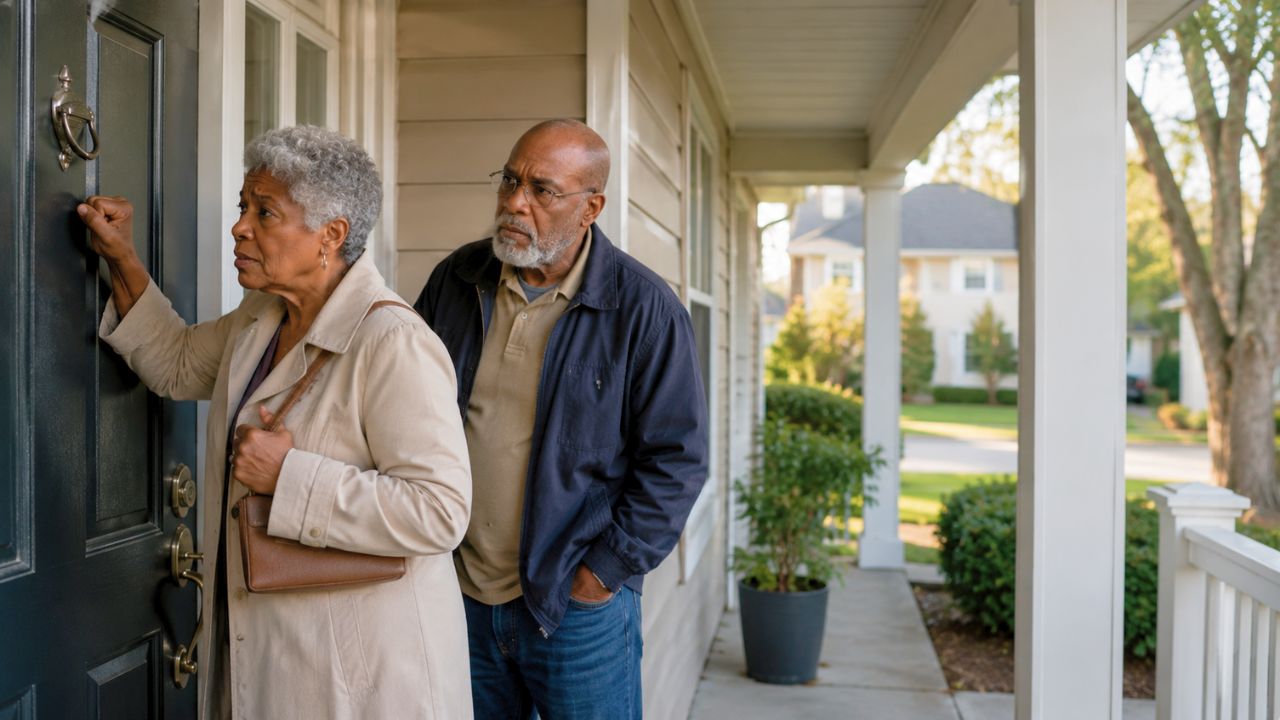
At first, it sounded almost sweet: a quick knock in the early evening, a familiar face on the porch, a bag of oranges or a stray piece of mail they “thought might be important.” The grandparents lived fifteen minutes away and said they just wanted to make sure everyone was okay. The parents—both working, both exhausted, both trying to keep a toddler on a routine—took it as concern.
Then the drop-ins became the routine.
It started as check-ins and turned into a schedule
The grandparents began showing up two, sometimes three times a week. If no one answered immediately, they’d knock again. They’d peer through the sidelights next to the door. They’d circle to the driveway to see if the family car was there, then return to the front porch and try again.
The parents tried gentle hints first. They suggested texting before coming by. They explained bedtime was a mess, that the baby was finally sleeping, that the dog went wild at the door. The response was always the same: they were only stopping by for a minute.
But “a minute” turned into letting themselves into the backyard to “check the gate,” or walking around the side of the house to “see if the package was still there.” Once, they let themselves into the garage when it was left cracked open, calling out like they owned the place.
The parents stopped answering, and the knocking got louder
When the parents realized they were rearranging their lives around surprise visits, they made a different choice: they stopped opening the door. If the grandparents hadn’t called first, they wouldn’t be let in. The idea wasn’t to punish anyone; it was to create a boundary that couldn’t be negotiated on the front steps.
The grandparents didn’t take the hint. The knocks turned into full-handed pounding, then ringing the bell repeatedly. If no one answered, they’d stay on the porch for ten or fifteen minutes, calling and leaving messages that swung between worry and frustration.
The tone shifted from “just making sure you’re alive” to “why are you ignoring us?”
It didn’t help that the grandparents had their own story in their heads. They told a neighbor they were concerned something was wrong inside. They asked if anyone had seen the family that day. They mentioned the parents “weren’t acting like themselves,” which made the whole situation feel bigger than a simple disagreement.
A camera filled in details the family didn’t see in real time
After one visit where the bell was pressed so many times it woke the toddler, the parents installed a doorbell camera. They weren’t trying to catch anyone doing something illegal. They wanted a record of how often it was happening and what it looked like from the outside.
What they got was uncomfortable. The footage showed the grandparents arriving without warning, sometimes within an hour of the parents getting home from work. It showed them trying the doorknob once. It showed them stepping off the porch and looking through windows from an angle the parents didn’t realize was visible from the walkway.
One clip showed them tapping on the glass with a knuckle. Another showed them walking to the side yard and trying the gate latch.
To the parents, it no longer felt like over-involvement. It felt like surveillance.
The neighbors noticed, and the situation spilled out into the street
In a close-together subdivision, porch behavior becomes public fast. A neighbor saw the grandparents on the walkway late one evening and asked if everything was okay. The grandparents answered with a worried explanation about not being able to reach their adult child.
The next weekend, someone knocked on the parents’ door midafternoon—not the grandparents, but a neighbor checking in. That’s when the parents realized the story had already started traveling: the idea that something might be wrong in the home because the family wasn’t opening up.
It became a practical problem, not just an emotional one. The parents didn’t want to be the house on the block associated with repeated porch confrontations. They also didn’t want a “wellness check” initiated by someone who didn’t like being told no.
So they did something that felt extreme but necessary: they put the boundary in writing. A short message went out, calm and direct, saying visits had to be scheduled and that unannounced drop-ins wouldn’t be answered.
The escalation turned into paperwork and a safety plan
The message didn’t end the behavior. The grandparents arrived the next week anyway. When the door stayed shut, they left an envelope wedged under the mat with a handwritten note about family respect and “how hurtful this is.”
After that, the parents started documenting everything: timestamps from the camera, screenshots of missed calls, and notes about the child being woken up. They also changed small things around the house. The side gate got a new latch. The garage door opener was moved. The “spare key” that had existed for years was quietly replaced with a new lock.
The hardest part was deciding what to do if the grandparents tried to force a confrontation. The parents weren’t looking for a family feud, but they also didn’t want a porch standoff turning into someone trying to push past the door.
They talked through scenarios: if the grandparents refused to leave, if they kept trying windows, if they called for help claiming an emergency. The goal was to stay calm and predictable—don’t open the door, speak through the camera, and if it got tense, call for assistance rather than argue on the front steps.
At least once, after repeated pounding and refusal to leave the porch, the parents did make a call to have someone come out and document the situation. No one wanted it to reach that point, but having an incident number and an outside record mattered.
People focused on boundaries that could be enforced, not debated
Others who heard about the situation zeroed in on the same theme: a boundary that depends on the other person’s cooperation isn’t a boundary. The practical advice was to keep everything consistent and boring—no long explanations, no back-and-forth on the porch, no opening the door to “just talk for a minute.”
A lot of attention went to the camera footage and written communication. If the grandparents ever tried to frame the silence as something suspicious, documentation would show a pattern of repeated uninvited visits and attempts to access parts of the property.
Some urged the parents to involve a third party, like a counselor or mediator, before things hardened into permanent estrangement. Others argued that mediation only works when both sides accept the premise that the household gets to control its own front door.
Nearly everyone agreed on one thing: if the grandparents were truly worried about safety, they should be willing to call first, accept an answer, and respect the response.
By the time the parents stopped answering altogether, it wasn’t about being “too busy” or “too tired.” It was about reclaiming a basic sense of privacy and control in their own home. The porch visits didn’t end overnight, but they became less frequent when they stopped producing any access, any argument, any reaction.
The tension, though, lingered in a quieter way—family birthdays coming up, holidays on the calendar, and the lingering question of whether the grandparents would ever treat an invitation as something required, not optional. For now, the door stayed closed unless there was a text first, and the camera stayed on, not out of spite, but because the parents had learned how quickly “just checking in” can become something else.