MIL Told Her Son His Wife Was Selfish for Setting Limits — Then He Showed Her the Door
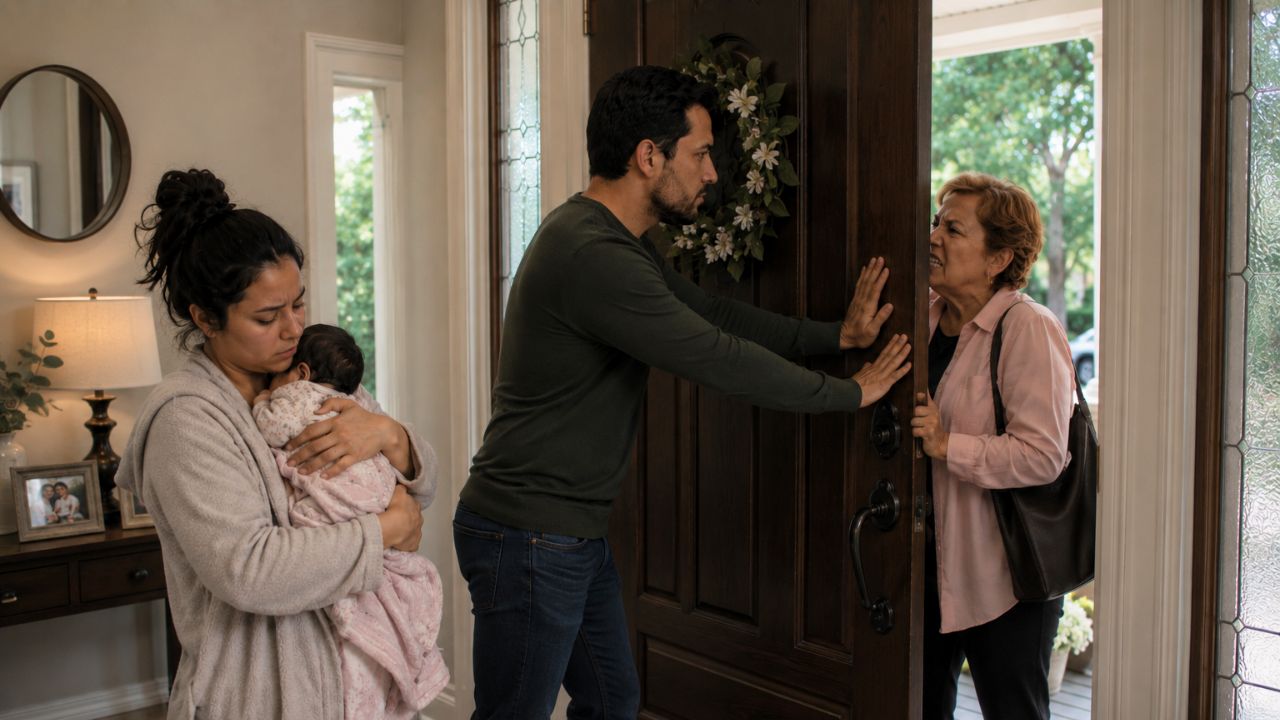
By the time the second unexpected “drop-in” happened in a single week, Jenna stopped pretending it was just bad timing. She and her husband, Mark, had a toddler who’d finally started sleeping through the night, and Jenna had just returned to work on a reduced schedule. The last thing they could handle was Mark’s mother treating their small duplex like a waiting room.
It wasn’t one big blowup at first. It was a slow drip of boundary crossings that left Jenna tense in her own home and Mark caught in the middle. The problem was that every time Jenna tried to set a simple limit, his mom turned it into a character flaw.
It started with “help” that didn’t feel like help
Mark’s mother, Diane, lived about 20 minutes away and had been excited about becoming a grandmother. In the early months, the visits were frequent but mostly welcome: bringing casseroles, folding baby laundry, holding the baby so Jenna could shower. Over time, Diane’s “support” shifted into management.
She’d rearrange kitchen cabinets, comment on Jenna’s grocery choices, and argue about nap schedules. When Jenna would gently say she’d rather keep things as they were, Diane would laugh it off and keep going. Mark would apologize afterward, but he’d also ask Jenna to “let it slide” to avoid drama.
The turning point came when Diane began letting herself in. Mark had given her a spare key during the newborn stage in case of emergencies, and the key quietly became permission. Jenna would come out of the shower to find Diane in the living room. One afternoon, Jenna walked downstairs to see Diane rifling through a stack of mail on the counter.
A simple boundary turned into a family argument
Jenna tried to solve it like an adult: she told Diane they needed visits to be scheduled, and she wanted the spare key back. She framed it around the baby’s routine and her own work calls. No accusations, no yelling—just a request that their home feel private again.
Diane didn’t take it as a logistical change. She took it personally. The next day she called Mark and told him his wife was being selfish, ungrateful, and controlling. She also told him Jenna was “keeping the baby from family,” even though Jenna had never suggested cutting anyone off.
Mark initially tried to mediate, calling it a misunderstanding. But Diane doubled down and started looping in other relatives with vague complaints about being “pushed out.” Jenna began getting chilly texts from an aunt she barely knew, asking why she was making things difficult. It stopped being a two-person issue and became a pressure campaign.
The pressure escalated into a problem the neighbors could see
After Mark told his mom they were serious about scheduled visits, Diane showed up anyway. She parked in their narrow shared driveway and stood on the porch for several minutes, knocking, then ringing the bell repeatedly. Jenna didn’t answer because the baby had just gone down, and she was on a work call with headphones on.
Diane didn’t leave. She walked around to the side gate and tried it. The gate latch was loose, and it clacked loudly against the post. A neighbor later mentioned they’d heard the banging and looked out their window.
When Mark got home, Diane was still in the driveway, waiting. She launched into the same argument, calling Jenna selfish and saying a “good mother” would be grateful for a grandmother who wanted to be involved. Mark tried to keep his voice low because of the neighbors and the baby, but Diane raised hers.
That night, Jenna and Mark installed a basic doorbell camera and a keypad lock, and Mark asked for the spare key back again. Diane refused, insisting it was “for emergencies,” and suggested Jenna was the real problem. Mark didn’t argue further. He went into the kitchen, opened a drawer, and took the spare key from Diane’s key ring himself.
He finally made the limit physical, not just verbal
The next weekend, Diane arrived unannounced with bags of groceries and a new high chair she said she’d found online. Jenna didn’t want to fight on the porch, so she stayed inside with the baby while Mark stepped out to talk. Diane tried to push past him as if it were routine.
That was the moment Mark stopped negotiating. He told her she couldn’t come in without being invited and that she needed to leave. Diane tried to argue, and Mark repeated it, then physically blocked the doorway. The doorbell camera captured Diane’s attempts to wedge her foot forward and her refusal to step back.
When she wouldn’t go, Mark told her he’d call for help if he had to. Diane backed off, but not before slamming the storm door hard enough that the closer snapped and the door bounced. The noise drew the neighbor again, who stepped outside and asked if everything was okay.
Mark told the neighbor they had it handled, then walked Diane to her car and watched her pull away. After that, he sent a short message: they would be taking a break from visits for a while, and any future time together would be scheduled. He also told her that showing up unannounced again would lead to a call to authorities for trespassing.
The consequences were immediate—and expensive
The broken storm door closer turned into an unexpected bill, and the couple’s landlord wasn’t thrilled. Mark documented the damage with photos and saved the doorbell footage. He paid for the repair quickly so it wouldn’t become a lease issue, but he also kept the receipt.
Diane didn’t apologize. Instead, she called Mark’s father—divorced from Diane for years—and complained that Jenna had “turned Mark against his own mother.” She told relatives Mark was being manipulated and that Jenna was using the baby as leverage. Mark’s phone started lighting up with messages asking him to “make peace.”
Jenna’s stress seeped into daily life. She began double-checking locks, closing blinds earlier, and keeping her phone nearby during the day. Mark, meanwhile, started realizing how much emotional labor Jenna had been carrying. The boundary talk wasn’t new; it was just the first time he’d enforced it without wavering.
Most people focused on proof, safety, and keeping it boring
When Mark talked to a few friends and coworkers about what happened, the advice was practical. Keep every message. Don’t argue in person. Put everything in writing and keep it calm.
Several people urged them to notify the landlord that an extended family member had been causing disturbances, mainly to prevent Diane from spinning a story later. Others suggested changing routines and making sure daycare or any babysitters had a clear “no pickup” list, just in case Diane tried to insert herself there.
The biggest emphasis was on documentation without escalation. Doorbell footage, timestamps, receipts for damage, and clear texts outlining the rules. Not because they wanted to punish Diane, but because boundaries without follow-through tend to dissolve, especially when other relatives get involved.
There was also a lot of talk about the spare key mistake. People pointed out that “emergency access” can be handled with a lockbox code that can be changed, or a trusted neighbor, rather than a permanent key in someone else’s pocket.
For now, Mark and Jenna are sticking to their reset: no surprise visits, no entry without invitation, and no discussions about Jenna’s character as a condition for seeing the baby. Diane can either show up as a respectful grandparent or not show up at all. The tension hasn’t evaporated, but the home is quiet again—and for a couple running on toddler schedules and work deadlines, that quiet has started to feel like the first real progress.