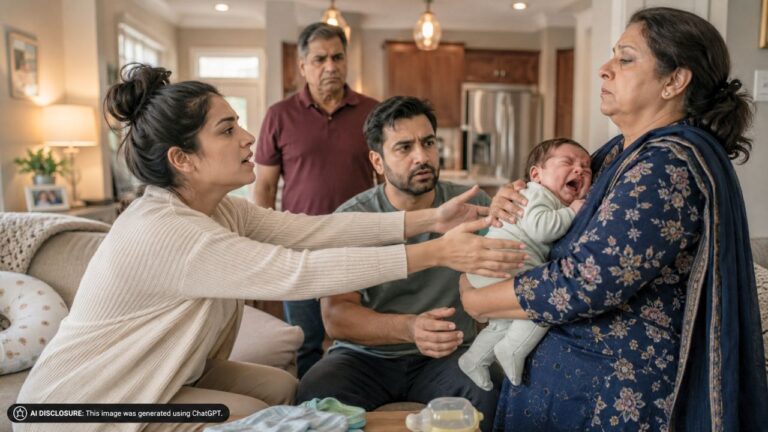
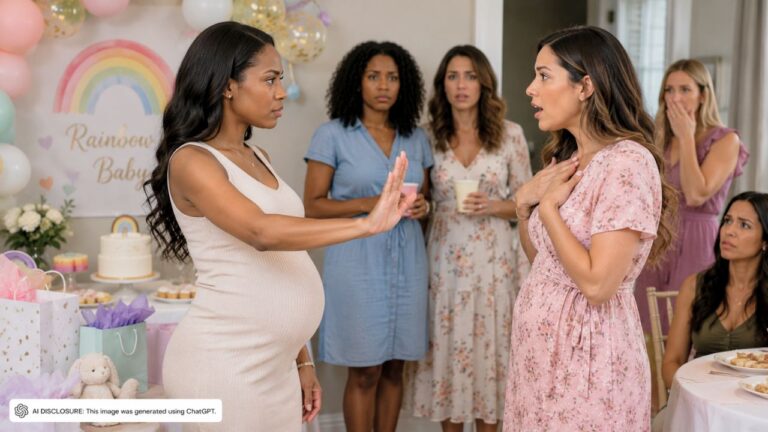
Grandma Tried To Make the Baby Shower About Herself — Then the Mom-To-Be Canceled the Surprise

Photo credit: Thrivegirly
The mom-to-be thought she was walking into a low-key family lunch. She’d been told her husband’s side wanted to “drop off something for the nursery,” and she agreed mostly to keep the peace. By the time she pulled into her sister-in-law’s driveway and saw a rented balloon arch half-deflated against the garage, she realized someone had planned a whole event without her.
Inside, the living room had been staged like a photo set. A backdrop with the baby’s name was propped behind a gift table, and a folding chair with a satin sash sat centered in front of it. The chair wasn’t for her, though. It was placed under a banner that celebrated the grandmother, with her name spelled out in glitter letters.
It started as “help,” then turned into a takeover
The grandmother had been pushing for a big baby shower for weeks, telling relatives she wanted to “do something special.” The pregnant woman had already planned a small co-ed shower at a community center with her friends and close family, mostly because she’d been dealing with blood pressure issues and wanted an event she could control.
The grandmother didn’t like that plan. She kept insisting that a “real shower” needed to be hosted by the mother’s family and that her side would feel left out. When the mom-to-be didn’t budge, the grandmother began calling other relatives directly, pitching a separate “surprise” shower.
By the time the mom-to-be arrived, the guest list had grown into a room full of her husband’s extended family, people she barely knew, plus several of the grandmother’s friends. The grandmother made a big entrance, held court, and positioned herself front and center like she was the guest of honor.
The mom-to-be realized the “surprise” came with strings
What bothered the mom-to-be wasn’t just the deception. It was the way the grandmother framed everything as her accomplishment, introducing herself as the one “bringing the baby into the family” and directing people toward photo ops that didn’t include the actual parents.
Then came the money angle. A relative quietly mentioned they’d been told to bring gift cards because the grandmother planned to “handle the purchases” so everything matched her taste. Someone else said they’d been asked to send cash to the grandmother ahead of time because she was “fronting the costs” for decorations and food.
The mom-to-be stepped into the kitchen to breathe and found a clipboard on the counter. It listed who had contributed money, with notes next to names—some marked “paid,” others marked “remind.” She also saw printed return labels addressed to the grandmother’s house, set beside a stack of gift receipts.
In that moment, the mom-to-be didn’t feel celebrated. She felt managed.
The cancellation wasn’t just emotional — it was logistical
She tried to keep her voice down, but her husband could tell something was wrong. They walked outside, and she told him she wasn’t staying. She wasn’t comfortable with a party she hadn’t agreed to, and she didn’t want gifts funneled through someone else’s home.
Her husband hesitated at first, worried about making a scene, but the mom-to-be was already feeling lightheaded. She texted her friend, who was helping coordinate the shower she actually wanted, and asked her to keep the community center booking firm and not hand over any vendor details to his family.
Then she did the practical thing that made it real: she canceled the “surprise” on the spot. She thanked the guests for coming, said she wasn’t feeling well, and told them they’d be contacted about a different shower date if they still wanted to attend. It wasn’t dramatic, but it was final.
Some guests looked embarrassed, like they hadn’t known what they were walking into. Others looked irritated, as if she’d violated a script they’d already agreed to follow. The grandmother, meanwhile, went stiff and silent, then began telling people the mom-to-be was being ungrateful.
The grandmother escalated after losing control of the room
After the couple left, the grandmother didn’t just complain. She started calling relatives and re-framing what happened, saying the mom-to-be “stormed out” and “ruined” a party everyone had paid for. Within hours, the mom-to-be’s phone filled with messages urging her to apologize and reimburse the grandmother for the decorations.
The bill the grandmother sent wasn’t small. It included charges for a custom backdrop, a balloon setup, catered food, and party favors—things the mom-to-be never requested. It also included a “service fee” for the grandmother’s time and gas, which was the moment the husband finally stopped trying to smooth things over.
Things got tenser when the couple realized the grandmother had access to their home. Months earlier, she’d been given a spare key for emergencies. The mom-to-be remembered the return labels she’d seen and started worrying that gifts might mysteriously “go missing” or be unwrapped and re-labeled as coming from the grandmother.
They changed the locks that weekend and installed a doorbell camera. The husband texted his mother that they’d handle their own baby items and that any future plans needed to go through both parents. It was written politely, but it drew a hard line.
Commenters focused on receipts, boundaries, and the gift trail
People who heard about the situation tended to focus less on the awkward party and more on the paper trail. The big advice was to keep everything in writing: screenshots of the money request, the invoice, and any messages that suggested gifts were being collected through the grandmother.
Others pointed out that “surprise” events are only cute when they’re truly for the person being surprised. Once money starts changing hands and the guest of honor didn’t consent, it becomes a control tactic. Several people urged the mom-to-be to contact anyone who had sent cash and make sure those relatives understood they weren’t required to pay for anything.
A few also suggested practical damage control: send a short message to the guest list thanking them and clarifying where the registry actually is, and let people know not to send gifts to third-party addresses. Some recommended a P.O. box for the remainder of the pregnancy to prevent packages being intercepted.
And nearly everyone agreed on one point: take the spare key back early, not after a boundary is crossed again.
The baby shower became a test of what happens after the baby arrives
The couple still held the shower they originally planned, with fewer people and a calmer setup. They kept it co-ed, started on time, and skipped the staged photo backdrop. The mom-to-be looked relieved, but the tension didn’t disappear.
The grandmother didn’t attend. She sent a large gift to the couple’s house anyway, with a card addressed to herself as “the most excited one.” The husband stored it in a closet and said they’d open it later, which was his version of not feeding the attention cycle.
By the end of the month, the couple had quietly updated their hospital visitor plan, set rules for social media posts, and agreed that any childcare help would come with clear expectations. The mom-to-be wasn’t trying to punish anyone. She was trying to protect the fragile, stressful time before delivery from turning into a family power struggle.
The party itself was over in a couple of hours. The fallout, though, had the shape of a much longer conflict—one that wasn’t really about balloons or cake, but about who gets to be the main character once the baby arrives.