New Mom Asked for Privacy After Birth — Then Her Mother Posted a Photo From the Hospital Room
She’d been clear for months: no photos, no posts, no announcements until she and her partner said so. The pregnancy had been complicated, and by the time she went into labor, she wanted one thing more than anything—quiet. She told the nurses the same thing when she checked in, and she reminded her family again in the group text: she would share when she was ready.
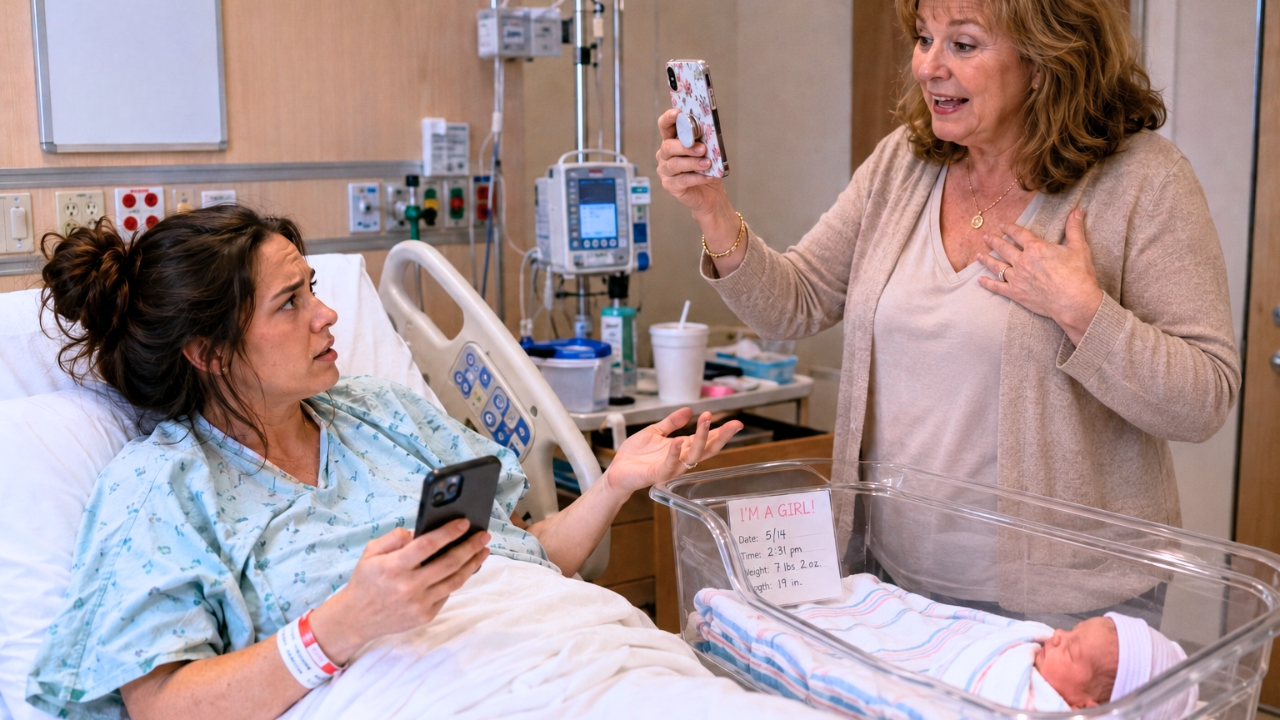
Then, less than a day after giving birth, she saw a notification on her phone while she was still in a hospital bed. Her mother had uploaded a picture taken in the room. It showed the new mom looking exhausted, hair matted, hospital bracelet visible, the bassinet in the corner. The caption was celebratory and sentimental, but the photo landed like a violation.
She set boundaries before the baby arrived
The new mom had started drawing hard lines halfway through the pregnancy, after a few small incidents made her uneasy. Her mother had a habit of sharing family updates widely, even when asked not to. There were the baby shower details that showed up on social media before invitations were finished, and a post about a doctor’s appointment that included the clinic’s name.
So she did what a lot of people do when they’re trying to avoid conflict: she made the rules simple and repeatable. No hospital visitors until invited. No posting any photos of her, the baby, the baby’s name, or any medical details. If her mother wanted to tell close relatives, she could do it by phone, not online.
Her partner backed her up, partly because he’d seen how stressed she got after every over-share. They agreed that labor and the first hours after birth would be private. They wanted to bond, to rest, and to avoid feeling like their most vulnerable moments were being broadcast.
The hospital photo wasn’t an accident
According to the new mom, her mother came to the hospital after being told not to, insisting she “just wanted to drop something off.” A nurse let her in when she said she was immediate family, and she walked into the room with a tote bag of snacks, a blanket, and a phone already in her hand.
The new mom said she didn’t want pictures, and her mother put the phone down. But as the visit went on, she kept angling for a shot anyway—one with the baby’s blanket, one with the tiny hospital cap, one with the newborn’s face turned away “so it doesn’t count.”
Later, when the new mom dozed off, her mother took a quick photo. It captured the scene she’d explicitly asked to keep private: her face, the hospital room, and enough identifying details that people in their orbit could tell where she was. Within minutes, the picture was on social media, and relatives she hadn’t spoken to in years were commenting and sharing.
The consequences hit fast
It wasn’t just the principle. The new mom had a real safety concern: an estranged family member on her mother’s side had tried to reinsert themselves during the pregnancy, and she’d chosen not to share her due date for a reason. The hospital name wasn’t tagged, but the wristband and the distinctive wall signage were visible enough that someone familiar with the facility could recognize it.
Her phone started buzzing with messages asking for updates, requesting more photos, and asking when they could come. Some people assumed the social post meant visiting was welcome. Her partner ended up stepping into the hallway to intercept a distant cousin who showed up with balloons and a phone, ready to document the moment.
Inside the room, the new mom confronted her mother, who brushed it off as excitement and pride. The mother offered to “make it private,” but the image had already been screenshotted. Even if the post was deleted, the new mom couldn’t claw the moment back. She described the feeling as suddenly being watched, right when she was trying to recover physically and emotionally.
She tightened the hospital’s access and put the staff on alert
Once she realized visitors might keep coming, she asked the nurse’s station how to lock down her room. The hospital could mark her as a restricted patient, limiting who could enter and requiring names on a visitor list. She and her partner added a password for phone inquiries, so someone couldn’t call the unit pretending to be family.
They also asked staff to note in her chart that she did not consent to photos. The nurses couldn’t control what a visitor did with their own phone, but they could remove someone who refused to follow instructions. One nurse suggested the simplest approach: no more visitors at all until discharge, with the partner as the only permitted person.
The new mom texted her mother a short message: delete the post, confirm it’s deleted, and do not share the baby’s name or any more pictures. Then she turned on “do not disturb” and asked her partner to handle incoming calls. She wanted to focus on feeding, sleep, and getting her pain under control, not managing a family PR crisis.
The fight moved from the hospital room to the family group chat
After the post came down, the argument didn’t. The mother sent follow-up messages explaining herself, framing it as a joyful milestone and suggesting the new mom was being overly rigid. The new mom responded with what she said were the same points she’d already made: it wasn’t about the mother’s intent; it was about consent and control.
Other relatives piled in, and the family chat turned into two camps. Some treated it like a misunderstanding and urged everyone to move on. Others told the new mom she was right to treat it seriously, pointing out that a hospital room isn’t a photo backdrop and that postpartum recovery is a medical event, not a social update.
The new mom and her partner made a practical decision: they delayed telling the wider family the baby’s full name, and they asked close relatives not to share anything online. They also told the mother she would not receive any photos directly for a while, because they couldn’t trust what would happen to them once she had them.
People focused on documentation and future-proofing
As the story spread through her friend group and parenting circles, the advice got specific. Several people urged her to screenshot the post, the comments, and any messages where her mother admitted taking the photo after being told not to. Not because she was planning to sue anyone, but because having a record helps if boundaries keep being violated and she needs to explain the pattern to a counselor, mediator, or even hospital administration later.
Others suggested she set hard rules for the first months: no unsupervised visits, phones put away during baby time, and immediate consequences if anyone breaks it. A common recommendation was to create a written “no social media” policy for family—simple language, sent by text—so there’s no room for someone to claim confusion later.
Some also pointed out that hospitals often have patient privacy and safety protocols that can be triggered quickly if a patient requests them, including limiting visitor access and flagging concerns at check-in. People encouraged her to use those tools early, especially if there were any worries about unwanted visitors.
By the time she was discharged, the photo itself was gone, but the ripple effects weren’t. She went home with her newborn feeling protective and on edge, and her mother still wanted to frame the incident as harmless excitement. The new mom’s plan was simple: focus on recovery, keep the circle small, and treat privacy as a non-negotiable part of caring for herself and her baby.