His Sister Expected Free Childcare From His Wife — Then He Finally Picked a Side
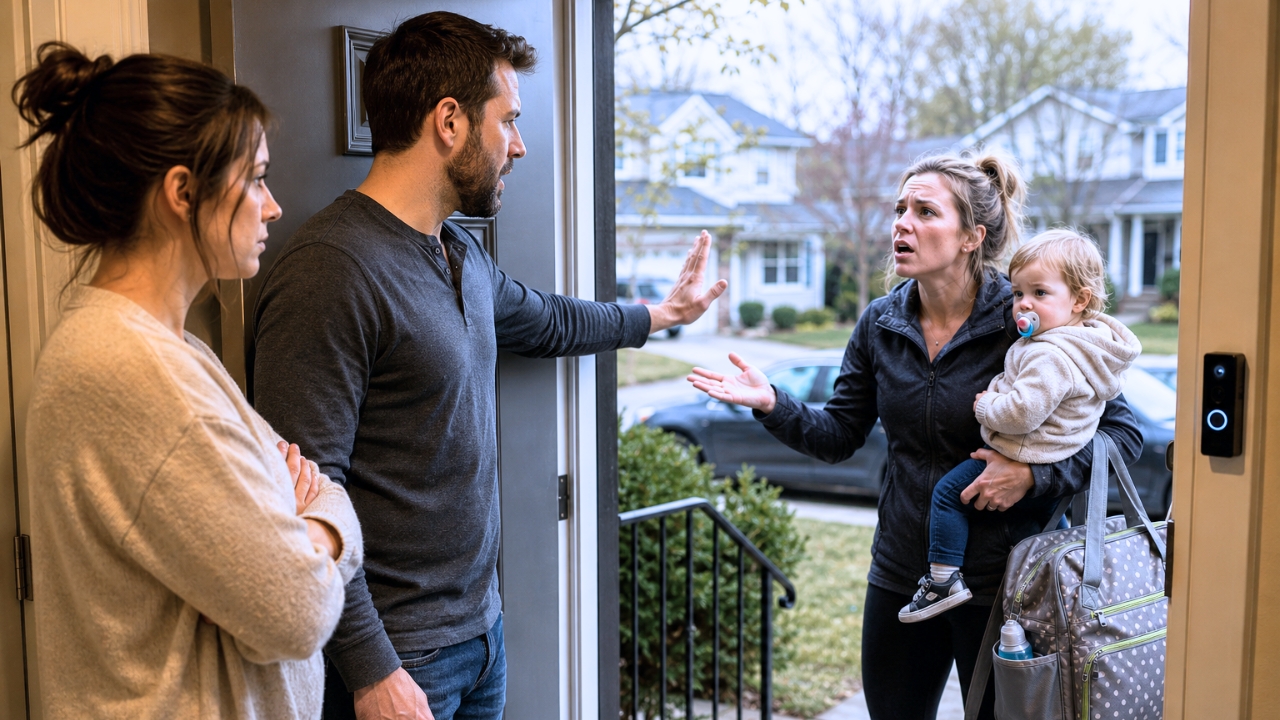
By the time Daniel got home on a Thursday, his front door camera had already logged the day’s third visit from his sister. Each time, she walked up with her toddler on one hip and a diaper bag swinging from her shoulder, then stood on the porch tapping her foot like she was waiting for a rideshare. She wasn’t there to say hello. She was there to hand her child off to Daniel’s wife, Mia, and leave.
Mia worked from home and kept a tight schedule. She also didn’t have children, didn’t run a daycare, and had never agreed to be anyone’s default babysitter. But Daniel’s sister, Kara, had started treating their house like it was part of her weekly childcare plan.
It didn’t begin as a blowup. It began as “just for an hour,” then “just until my shift ends,” then “I’m already late, please.” And after enough awkward doorstep standoffs, it turned into a family fight that spilled into neighbors noticing, a camera full of evidence, and Daniel realizing he couldn’t keep pretending it was “between them.”
It started with a favor, then became an expectation
Kara was a single mom who worked changing shifts. A few months earlier, her regular sitter quit with little notice. Daniel and Mia agreed to help in a pinch: one afternoon while Kara went to an interview, and another evening during a last-minute training session.
Those early favors came with gratitude. Kara dropped off snacks, offered to pay, and said she was working on a more stable plan. But once she got into a rhythm, her requests changed tone.
Instead of asking, she would text Daniel that she was “on the way,” sometimes with a time stamp that made it obvious she was already in the car. If Daniel didn’t answer quickly, she’d send Mia a message directly. Mia started replying with short, polite no’s, explaining she had meetings. Kara would respond with pressure: her job, her bills, how family is supposed to show up.
Daniel tried to smooth it over the way people often do when they want peace. He told Mia his sister was stressed and promised he’d talk to her. He told Kara that Mia was busy and suggested other options. What he didn’t do was draw a line that would actually hold.
The drop-offs kept happening, even after she was told no
The real escalation came when Kara started showing up anyway. On two occasions, she rang the bell repeatedly while Mia was on a video call. Mia didn’t open the door. Kara paced on the porch, then called Daniel. When Daniel didn’t pick up, she tried the doorknob.
The door was locked, but the attempt rattled Mia. She messaged Daniel saying she felt cornered in her own house. Daniel replied that Kara “wouldn’t do anything,” which only made Mia angrier. The next morning, Mia printed her meeting calendar and taped it near her desk, like she needed documentation to justify saying no.
Kara escalated again a week later. She arrived near midday, stood on the porch with her child, and shouted through the door that she had to get to work. Mia responded through the door that she couldn’t watch a child while working. Kara then walked to the side yard and knocked on a window.
That’s when the neighbor across the street noticed and texted Daniel, asking if everything was okay. Daniel was at his own job, reading messages he couldn’t solve from thirty minutes away.
The cameras turned “family drama” into something concrete
After that window incident, Mia pulled up their doorbell footage and saved it. She also checked the camera facing the driveway. It showed Kara arriving at inconsistent times, sometimes not even waiting for a response before heading back to her car to grab more items, as if she assumed the handoff would happen.
The footage also captured something Daniel hadn’t heard about. On one visit, when Mia didn’t open the door, Kara set her toddler down on the porch for a moment while she made a call, then knocked harder, louder, longer. Mia stayed inside. The child wandered toward the steps before Kara scooped them up.
It wasn’t dramatic in the way TV is dramatic. It was the kind of scene that makes your stomach tighten because it’s avoidable. If the child had fallen, if a stranger had walked by, if a dog had gotten loose, it could have turned into an emergency.
Mia told Daniel she was done negotiating. She wasn’t going to be bullied into childcare, and she wasn’t going to open the door to someone who treated “no” like a suggestion. She also warned him that if Kara tried to leave the child on their property, she would call for help. She didn’t frame it as revenge; she framed it as a safety issue.
He kept trying to stay neutral until it hit his own life
Daniel’s instinct was to make it go away quietly. He offered to cover a few days of a paid sitter and tried to get Kara to agree to a schedule. Kara brushed it off, saying she didn’t have extra money, and reminding him that Mia’s job was “at home anyway.”
Then Kara took the conflict to the rest of the family. Daniel’s mother called asking why Mia “won’t help,” and an aunt sent a message about how women used to support each other. Daniel felt himself being pushed into a familiar role: keep the peace, don’t make waves, don’t embarrass anyone.
The thing that snapped him out of it wasn’t a philosophical realization. It was the practical consequences landing on his front steps. Kara arrived one morning when Daniel was home sick. She didn’t text first. She knocked, then knocked again, then called his phone while knocking, like she was trying to force the door open with noise.
Daniel opened the door and told her directly that this was not happening. Kara tried to hand him the diaper bag anyway. When he refused, she accused Mia of turning him against family. She then raised her voice loud enough that a neighbor opened their door to look.
Daniel finally said what he should have said weeks earlier: they were not available for childcare, not today and not going forward, and she needed to stop coming to the house unannounced. When Kara tried to argue, Daniel told her that if she showed up again and didn’t leave when asked, he’d treat it like any other unwanted visitor.
Commenters focused on boundaries, documentation, and safety
When Daniel later described the situation to friends and coworkers, the advice was blunt and repetitive in a way that usually means it’s right. People told him to stop debating and start setting enforceable boundaries. No more explaining. No more “maybe next time.” Just a clear no, in writing.
Others zeroed in on the safety angle. Leaving a child on a porch, even briefly, isn’t just rude—it’s risky. Several people urged Daniel and Mia to keep saving footage, to document every drop-off attempt, and to be ready to call for assistance if Kara tried to abandon the child on their property to force compliance.
Some pointed out that the family pressure was a trap. If Daniel’s relatives believed childcare was a shared duty, then those relatives could step up, coordinate a rotation, or contribute money. The expectation that Mia should absorb the workload simply because she worked from home was treated as the core disrespect.
And a few people recommended practical steps that had nothing to do with drama: a locked gate if they had one, a posted “no trespassing” sign if needed, and a message to neighbors so nobody misunderstood a tense porch scene as a kidnapping or domestic incident.
The biggest problem was that the next move was hers
After Daniel confronted Kara, she stopped showing up for about ten days. Then she sent a long message accusing Mia of selfishness and Daniel of forgetting where he came from. Daniel replied once, calmly, restating the boundary and asking her not to come to the house without an invitation.
Kara didn’t apologize. She also didn’t fully disappear. She began testing the edges in smaller ways—calling at odd hours, asking for “just one afternoon,” saying she’d be there in fifteen minutes as if the decision had already been made.
Daniel and Mia held firm. They offered one thing: help finding resources, including paid sitters and community programs, but no in-home childcare. Kara rejected it, saying it wasn’t the same as family.
In the end, Daniel did pick a side, but it didn’t solve everything overnight. It just stopped the most immediate problem: the unannounced porch drop-offs and the pressure placed on Mia inside her own home. The tension with Kara—and the family members who enabled the expectation—didn’t vanish. But the message became unmistakable: their household wasn’t a service she could demand, and the front door was no longer a negotiation.