Grandma Lost Baby Visits After the Family Drama Crossed a Line
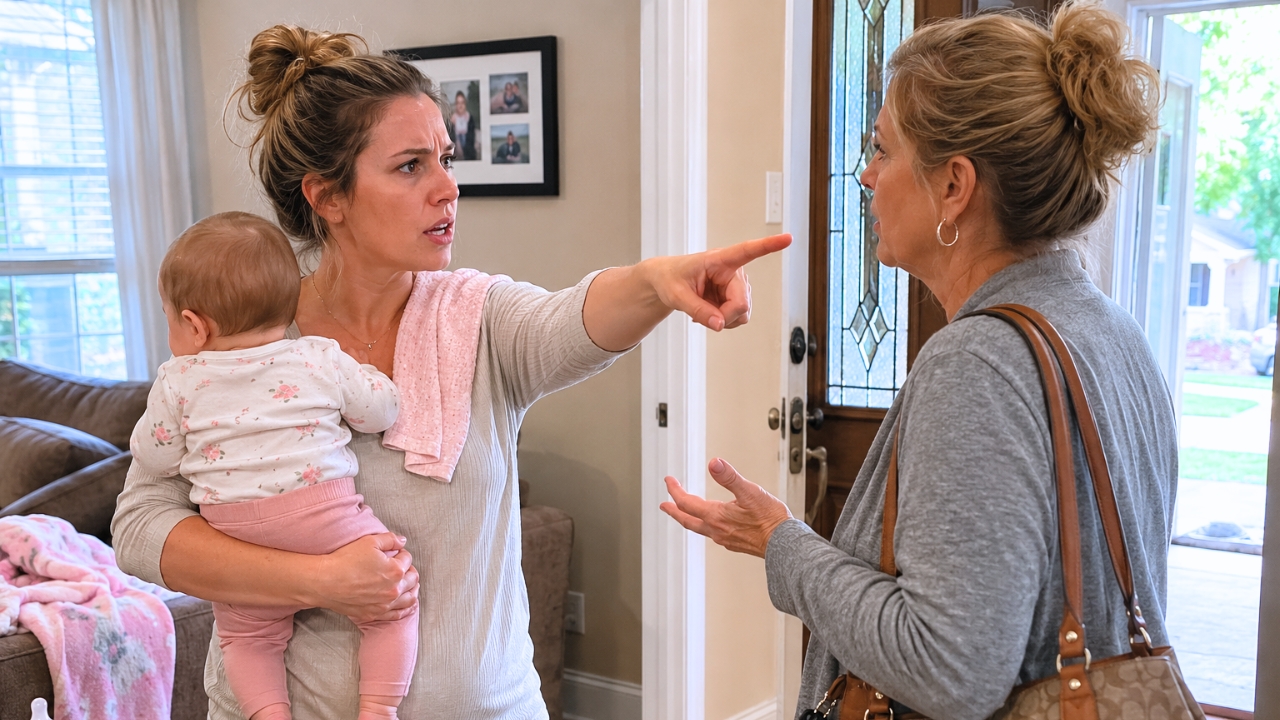
A young mother said she refused to let her mother-in-law visit her daughter after the older woman accused her of cheating, spread rumors about the baby, and rejected the child before suddenly deciding she wanted to be called Grandma.
The woman shared the situation on Reddit, explaining that she and her husband had been through severe relationship strain after their daughter was born. She was 21, her husband was 29, and they had been together since she was 18. Before the birth, she described their relationship as trusting and good.
Then their daughter arrived, and the family’s reaction changed everything.
The baby did not look the way relatives expected. The poster said she and her husband both have light hair, light eyes, and white skin. Their daughter was born with darker skin, brown eyes, and thick dark curly hair.
Instead of waiting for answers or supporting a brand-new mother, people immediately assumed the poster had cheated.
The poster said she never had. But the accusation spread quickly, and her mother-in-law played a major role in it. According to the poster, her mother-in-law convinced her husband to leave her at the hospital. While the poster was still recovering from giving birth, her husband stopped responding to her texts and ignored her pleas to get a DNA test.
The mother-in-law also posted pictures of the baby on social media without the poster realizing she had taken them. In those posts, she accused the poster of cheating.
The new mother said no one visited her. She felt completely alone.
Because her husband would not answer her and would not immediately agree to a DNA test, the poster had to stay at her sister’s house for about a month. Eventually, she was able to convince him to take the test.
The results showed he was the baby’s father.
Her husband apologized repeatedly and let her return home. But the poster said something in her feelings toward him had changed. After the way he treated her after the birth of their daughter, she felt more distant.
The DNA result did not stop her mother-in-law.
According to the poster, even after the test proved her husband was the father, the mother-in-law continued saying the poster had cheated. She claimed the DNA test was fraudulent. She called the baby cruel names tied to her appearance and said she would never treat the child as her granddaughter.
Then, recently, something changed.
The same mother-in-law who had rejected the baby suddenly asked to visit. She referred to the child as her granddaughter.
The poster felt uncomfortable and refused.
Her husband became angry. He said his mother should have a chance to bond with the baby and argued that a child has the right to know her grandparents.
The poster was not convinced. Her mother-in-law had never apologized. She had not taken back the accusations. She had not acknowledged the harm she caused when the poster was recovering from birth and trying to survive the most vulnerable moment of her life.
The woman brought the situation to Reddit in a post titled “Aita for denying my mother in law visits to her granddaughter”: https://www.reddit.com/r/AmItheAsshole/comments/pvy0bc/aita_for_denying_my_mother_in_law_visits_to_her/
The emotional conflict was not really about a grandmother wanting a visit. It was about whether someone who publicly rejected a baby and attacked the baby’s mother can later claim a family role without any apology or accountability.
The husband saw the situation as a chance for his mother to bond. But for the poster, that bond had already been damaged before it ever began. Her mother-in-law had seen the baby, made assumptions, spread accusations, and declared she would not treat the child as a granddaughter. Now she wanted access as if none of that mattered.
That request put the mother in an impossible position. If she said no, she was accused of keeping the baby from family. If she said yes, she would be handing her child to someone who had already spoken about the baby in deeply hurtful ways.
The poster’s hesitation made sense. A child does not need every biological grandparent in her life if that person brings rejection, hostility, or emotional harm. A grandparent relationship should be safe. It should not require the mother to ignore what happened in the hospital, the month she was forced out, or the rumors that followed her baby’s birth.
Her husband’s reaction added another layer of pain. He had already abandoned her when she needed him most, then apologized after the DNA test proved the truth. Now he was asking her to trust his mother with the same baby his mother had rejected.
For the poster, the answer was not as simple as “family is family.” Her mother-in-law had created a wound, and she wanted access without doing the work of repair.
Commenters overwhelmingly sided with the mother and said she was not wrong for refusing the visit.
Many were especially angry at the husband’s behavior. They said leaving his wife alone in the hospital after she gave birth, ignoring her texts, and refusing to immediately get a DNA test were serious failures. Several commenters felt the mother-in-law was not the only problem; the husband had also shown he was willing to believe the worst of his wife and abandon her when she was vulnerable.
Others focused on the grandmother’s treatment of the baby. Commenters said someone who called the child names, rejected her publicly, and claimed she would never treat her as a granddaughter had no right to suddenly demand bonding time.
A common concern was safety. Commenters warned the poster not to allow unsupervised visits and to document anything the mother-in-law had posted or said. Many said the lack of apology mattered because it showed the older woman had not taken responsibility for the harm she caused.
Several people pushed back on the husband’s claim that a child has a right to know grandparents. Commenters said children have a right to be protected from harmful adults, even when those adults are related by blood.
Some also questioned why the mother-in-law suddenly wanted access after previously denying the child. Many thought the poster was right to be suspicious and should not rush into any kind of visit until there was a real apology and a clear change in behavior.
The strongest advice was for the poster to put her daughter’s safety and emotional well-being first. A grandmother title does not erase what someone said or did. If the mother-in-law wanted a relationship, she needed to begin with accountability, not entitlement.