
8 things to know about the Pharisees before reading the Gospels
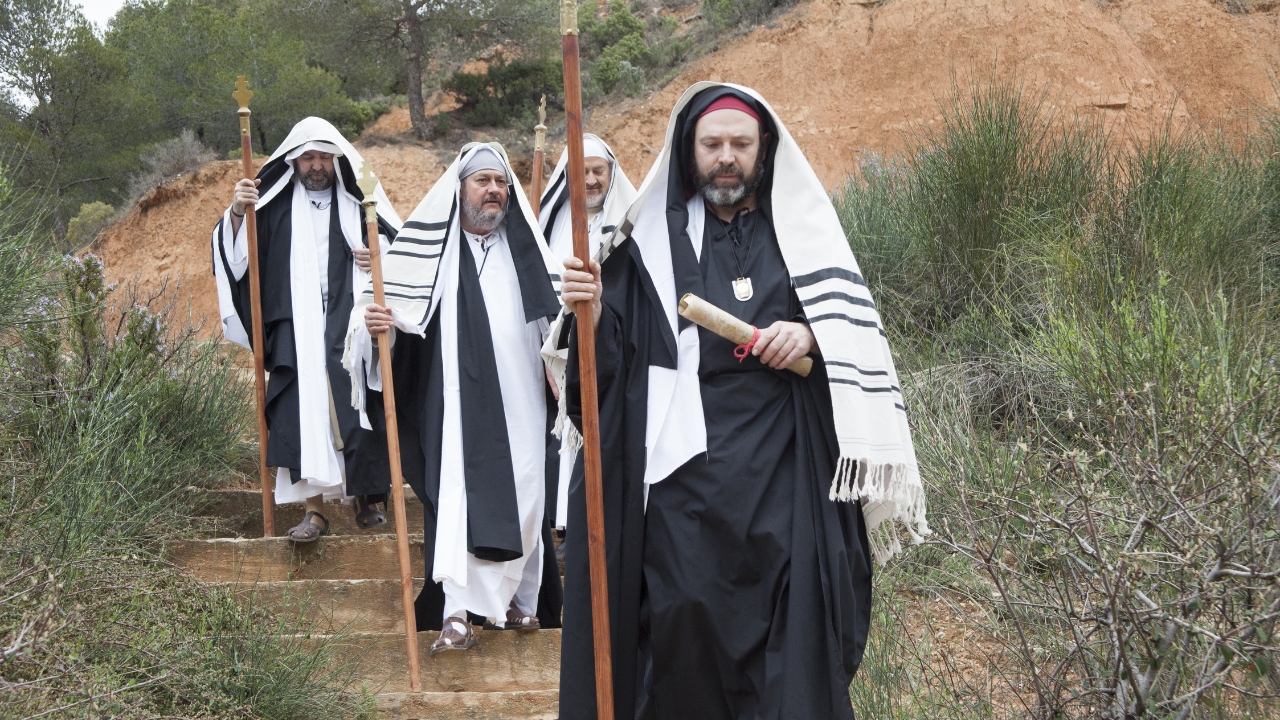
Photo credit: Bykofoto/Shutterstock.com
A lot of Christians read the Gospels with a very flat picture of the Pharisees. They show up, they oppose Jesus, and that is about as far as the thought goes. But if that is all you know, you will miss a lot. The Pharisees were not random villains dropped into the story to make Jesus look better. They were a real Jewish movement with real influence, real convictions, and real concerns about how God’s people were supposed to live. Once you understand that, the Gospel accounts start feeling a lot more serious and a lot less one-dimensional.
That matters because Jesus’ conflicts with the Pharisees were not shallow arguments. They were some of the sharpest religious confrontations in the New Testament, and they happened inside the shared world of Israel’s Scriptures, covenant life, and first-century Jewish practice. These eight things help make that world clearer.
1. The Pharisees were a real Jewish movement, not just a Gospel stereotype
The Pharisees emerged as a distinct group in the centuries before Jesus, likely sometime after the Maccabean revolt. Britannica describes them as a Jewish religious party that arose in opposition to the Sadducees and notes that they became one of the most significant groups in Jewish life. They were not invented by the New Testament writers. They were already a known and serious movement before Jesus’ public ministry ever began.
That changes how you read the Gospels. Jesus is not arguing with imaginary foils. He is confronting a movement that had history, influence, and deep roots in Jewish life. That makes the debates feel weightier. These are real disputes inside real first-century Judaism, not cartoon scenes where one side is just obviously bad from the start.
2. They were not priests like the Sadducees
One of the most helpful distinctions to know is that the Pharisees were not the same group as the Sadducees. Britannica explains that the Pharisees emerged as a party of laymen and scribes in contrast to the Sadducees, who were tied to the high priesthood. In other words, the Pharisees were not mainly the Temple elite. They were more connected to teachers, interpreters, and non-priestly religious leadership.
That matters because it helps explain why the Gospels show multiple kinds of religious opposition. Some conflict centers on priests and Temple leadership. Other conflict centers on Pharisees and legal interpretation. Those are related, but not identical, issues. If you blur all the groups together, a lot of the social and religious detail in the Gospels gets muddy.
3. They cared deeply about applying God’s law to everyday life
Britannica says the Pharisees were deeply concerned with the Mosaic Law and how to keep it, and that they were innovators in adapting the law to new situations. That is a really important line. The Pharisees were not careless about Scripture. They cared intensely about how obedience to God should work in ordinary life. They wanted holiness to shape daily practice, not stay locked inside the Temple system alone.
That helps explain why they show up so often in debates about Sabbath, washing, purity, fasting, and table fellowship. Those were not random pet issues. They were part of a larger concern: what does it actually look like for Israel to live faithfully before God in everyday life? Once you see that, Jesus’ clashes with them feel less like one-off arguments and more like a major disagreement about how God’s law should really be lived.
4. They believed oral tradition mattered alongside the written Torah
One of the biggest distinctives of the Pharisees was their commitment to oral tradition. Britannica says they held that Jewish oral tradition was as valid as the written Torah, and its Oral Law entry notes that this emphasis on the “unwritten Torah” became a lasting element in Jewish theological thought. That means the Pharisees were not reading Scripture in a vacuum. They were reading it through a living tradition of interpretation and application.
This is one of the reasons Jesus’ arguments with them can feel so sharp. He is not only disputing what the law says on paper. He is often confronting how that law is being interpreted, hedged, expanded, or prioritized in practice. If you miss the role of oral tradition, a lot of the Gospel disputes can feel overly picky. Once you know that oral tradition was central to Pharisaic life, the conflict becomes much clearer.
5. They were often closer to ordinary people than the Temple elite were
Britannica says the Pharisees fostered the synagogue as an institution of worship and struggled to democratize Jewish religion, arguing that the worship of God was not confined to the Temple of Jerusalem. That is a huge detail. It means the Pharisees were not simply a distant religious class. They were connected to the wider life of ordinary Jewish communities in ways that made them influential beyond priestly power in Jerusalem.
That helps explain why the Pharisees matter so much in the Gospels. They were not obscure specialists. They shaped the religious habits and assumptions of many ordinary people. So when Jesus confronts Pharisees, He is not only confronting a few difficult leaders. He is confronting a broader pattern of influence in Jewish life. That is part of why those encounters carry so much weight.
6. Not every scribe was a Pharisee, and not every Pharisee was a scribe
The Gospels often mention “scribes and Pharisees,” and it is easy to assume those words mean exactly the same thing. They do not. Britannica says that in the first century, scribes and Pharisees were two largely distinct groups, though some scribes were Pharisees. Scribes were experts in the law and legal documentation, while Pharisees were a broader religious movement.
This matters because it sharpens the scenes in the Gospels. When Jesus confronts scribes and Pharisees together, He is not simply repeating Himself. He is addressing both legal experts and a major religious party whose concerns often overlapped. That helps the Gospel narratives feel more textured. The conflict is not with one vague blob of “religious leaders.” It is with specific groups occupying different places in first-century Jewish life.
7. Their disagreement with Jesus was often about authority, not just morality
A lot of Christians read the Pharisees and assume the issue was simply that Jesus was good and they were bad. The truth is more searching than that. Because the Pharisees cared about law, tradition, purity, and faithfulness, the biggest question was often one of authority: who really understands what God wants, and who has the right to define faithful obedience? Britannica’s summaries of the Pharisees and New Testament history show that their hope was to make living the law possible for all people, which means their disagreement with Jesus was not usually about whether God mattered, but about how God should be obeyed.
That is why the Gospel clashes are so intense. Jesus does not merely disagree with the Pharisees on a few small rules. He repeatedly acts and teaches with an authority that challenges their interpretive framework itself. He forgives sins, re-centers purity around the heart, claims lordship over the Sabbath, and exposes hypocrisy that can hide under outward religious seriousness. Once you see the authority issue, the Gospels get a lot sharper.
8. They were not all the same, and the Gospels do not portray them all the same way
One of the most important things to remember is that the Pharisees were not all identical. The Gospels certainly record serious conflict, but they do not flatten every Pharisee into a single stereotype. Some are openly hostile. Some ask questions. Some appear cautious. Acts 23 even shows Paul using the theological differences between Pharisees and Sadducees to his advantage, which only works because those groups were not interchangeable.
This matters for believers because it keeps us from reading the Gospels lazily. Jesus’ words against hypocrisy are devastating, and they should be. But they should also lead us to look at the real spiritual issues in the text rather than just using “Pharisee” as a label for anyone we dislike. The more honestly we understand who the Pharisees were, the more seriously we can hear what Jesus was actually confronting.
Why this helps when you read the Gospels
The better you understand the Pharisees, the more the Gospels feel like real first-century encounters instead of flattened morality plays. You start to see why purity debates mattered, why oral tradition mattered, why Jesus’ authority felt so disruptive, and why these conflicts were so central to His public ministry.
And honestly, that makes the Gospels more searching for modern readers too. Because once the Pharisees stop being cartoon villains, Jesus’ warnings about outward religion, legal precision without mercy, and spiritual blindness start feeling a lot closer to home.