7 non-biblical records that mention people or events from Scripture
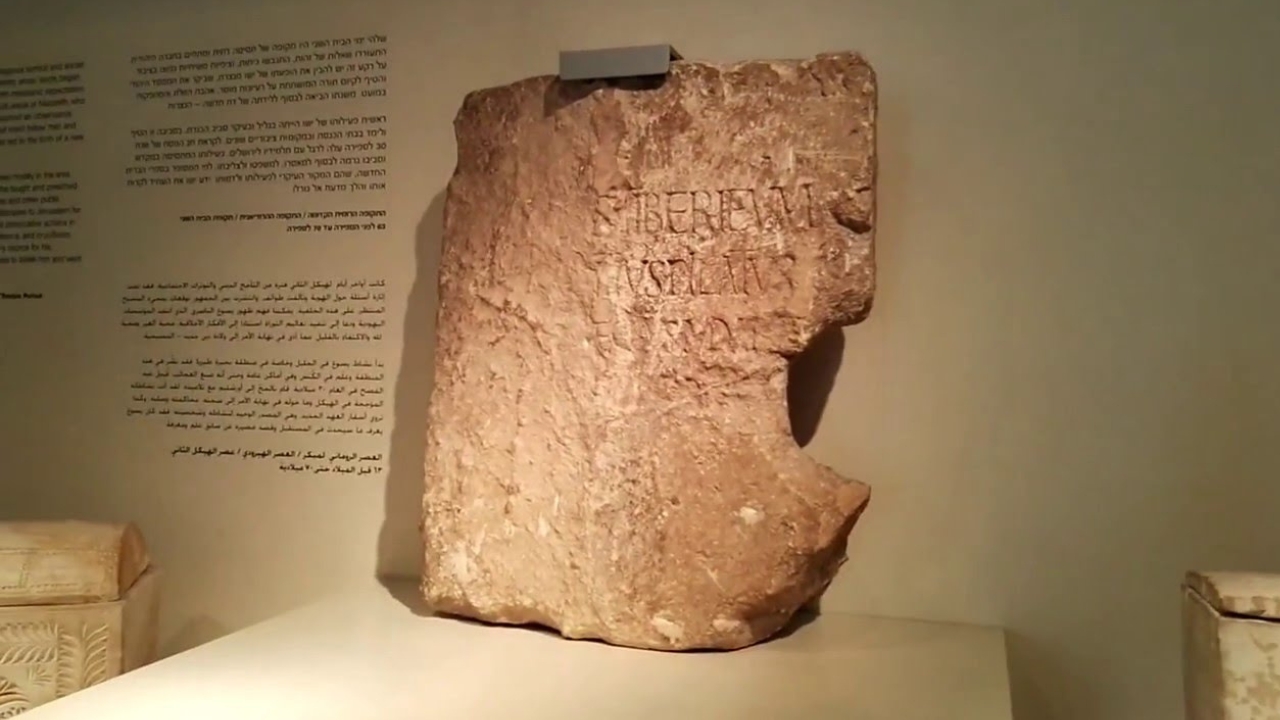
Photo credit: The Holy Land, by Zahi Shaked/Youtube
A lot of believers hear “outside sources” and immediately assume that means stepping away from the Bible. It does not. Sometimes it just means looking at the wider historical world the Bible itself lived in. That can be really helpful, especially for Christians who want to understand Scripture more deeply and help other believers feel confident that the biblical story is not floating out by itself with no contact with real history. Ancient inscriptions, stelae, government records, and non-Christian writers cannot tell the whole story Scripture tells, but they can still do something valuable: they can show that the Bible keeps intersecting with the public world of kings, empires, cities, and remembered events.
That said, this is a place to be careful. Not every outside source “proves” the Bible in some sweeping way, and Christians do not need to overstate the case to make it sound stronger. What these records often do is narrower but still meaningful. They confirm that certain rulers were real, certain dynasties existed, certain people groups were known, and certain conflicts or settings fit the world Scripture describes. That matters because Christianity is not built on vague symbolism alone. The Bible keeps landing in recognizable history. These seven examples are some of the clearest places where non-biblical records mention people or realities tied to Scripture.
1. The Tel Dan inscription mentions the “House of David”
The Tel Dan inscription is one of the most discussed discoveries in biblical archaeology because it includes the phrase widely read as “House of David.” That matters because David is one of the central figures of the Old Testament, and for years some critics argued that he may have been more legend than history. The Museum of the Bible describes the inscription as the earliest-known extrabiblical reference to the “House of David,” which makes it a major point of contact between biblical history and the wider ancient record.
This inscription does not retell David’s life or prove every detail of 1 and 2 Samuel. Christians should not claim more than it gives. But it does show that a Davidic dynasty was known outside the Bible in the ancient world. That is a big deal because the Old Testament does not present David as a vague tribal hero. It presents him as a king whose house mattered. The Tel Dan inscription fits that picture instead of cutting against it. For believers, this is one of the strongest extra-biblical anchors for the reality of David’s royal line.
2. The Pilate stone confirms Pontius Pilate by name
The Gospels place Jesus’ trial and crucifixion under Pontius Pilate, and that detail matters because it roots the passion narratives in a real Roman political setting. The inscription discovered at Caesarea Maritima mentions Pontius Pilate and identifies his office in Judea. The Israel Museum calls it the only object from Pilate’s own time that bears his name, which makes it one of the most important physical links to the New Testament world.
This is the kind of detail that can feel small until you really think about it. The Gospels are not presenting Jesus’ death in a fuzzy, once-upon-a-time setting. They place it under a real Roman official whose name survived in stone. The inscription does not prove every part of the Gospel account by itself, but it does confirm that the man named in the crucifixion narratives was a real governor in the world the New Testament describes. That kind of grounding matters because it shows the story of Jesus is set in public history, not in religious imagination detached from real events.
3. The Merneptah Stele mentions Israel
The Merneptah Stele is an Egyptian inscription from the late thirteenth century BCE, and it is famous because it contains what most scholars recognize as the earliest extra-biblical reference to Israel. The inscription is not a biblical retelling. It is an Egyptian victory text, and that is exactly why it matters. It shows that “Israel” was known in the ancient Near Eastern world outside the pages of the Bible.
This is especially useful for Old Testament context because it places Israel in the wider historical record very early. The stele does not solve every question about Israel’s beginnings, and Christians should not say it does. But it does support the broader biblical picture that Israel was a real people in the land and in the memory of neighboring powers. Scripture presents Israel as a people God dealt with in real history, and this Egyptian source fits that world rather than making it look imaginary.
4. The Mesha Stele overlaps with the world of 2 Kings
The Mesha Stele, also called the Moabite Stone, is one of the richest extra-biblical inscriptions connected to the Old Testament world. It was set up by King Mesha of Moab and describes his revolt against Israel. That is important because Mesha appears in 2 Kings 3, where he is described as a Moabite king who rebelled against Israelite rule. The stele also refers to the “House of Omri,” tying it directly into the political world of the northern kingdom described in Kings.
What makes this example especially strong is that it does not merely mention a name in passing. It gives the Moabite side of a real regional conflict. That is how history usually looks in the wild: multiple voices remembering the same world from different angles. Christians should notice that because it helps the Bible feel more concrete. Second Kings is not written in a vacuum. It belongs to a world where neighboring kings built monuments, celebrated victories, and remembered conflicts with Israel in their own words too.
5. The Roman historian Tacitus mentions Christ and His execution
Tacitus was not a Christian, and that is part of why his testimony matters. Writing in the early second century, he refers to “Christus” and says that He suffered the extreme penalty during the reign of Tiberius at the hands of Pontius Pilate. Tacitus is not trying to defend Christianity. If anything, he is hostile to it. But that is what makes the reference valuable. It shows that Jesus’ execution under Pilate was known outside Christian Scripture as part of the public memory of the Roman world.
This does not mean Tacitus is an alternative Gospel, and Christians should not use him that way. He is not giving a full portrait of Jesus or affirming Christian belief. But he does confirm core historical points that matter deeply to the New Testament story: Jesus existed, His movement spread, and His execution was tied to Pilate in Judea under Tiberius. For believers, that is significant because it means the basic frame of the Gospel story was visible even to non-Christian Roman writers.
6. Josephus mentions John the Baptist, James, and Jesus
Josephus is one of the most important Jewish historians for understanding the first century, and his writings matter a lot for Bible readers. In his works, he refers to John the Baptist, to James the brother of Jesus, and to Jesus Himself in passages that have been studied closely for generations. Christians do need to be careful here, because one well-known paragraph about Jesus appears to have later Christian additions in at least some form. But even with that caution, Josephus still remains a major non-biblical witness to key New Testament figures.
Why does that matter? Because it places the New Testament world in a broader Jewish historical setting. John the Baptist is not only a Gospel character. James is not only a church tradition figure. Jesus is not only someone Christians talked about among themselves. Josephus helps show that these people belonged to the real public world of Judea in the first century. That does not establish Christian doctrine by itself, but it absolutely reinforces the historical rootedness of the New Testament story.
7. Early inscriptions and records keep confirming the Bible’s world, not undermining it
Sometimes people want one single artifact that does everything at once. History usually does not work that way. More often, confidence grows because many records point in the same direction. A dynasty inscription mentions David’s house. A Roman stone mentions Pilate. An Egyptian monument mentions Israel. A Moabite king remembers conflict with Israel. Non-Christian writers refer to Christ and the movement built around Him. Each record has limits, but together they keep showing that the Bible belongs to the same real world ancient history keeps uncovering.
That cumulative effect matters a lot for believers. It means the Bible is not shrinking away from historical contact. It keeps standing in it. The outside sources do not replace Scripture, and they are not the foundation of Christian faith. But they do help Christians see that when the Bible names kings, governors, people groups, and conflicts, it is not speaking into empty air. It is speaking into real history, and the record outside the Bible keeps reflecting that.