New Mom Asked for No Visitors While She Recovered — Then Her In-Laws Showed Up With Overnight Bags
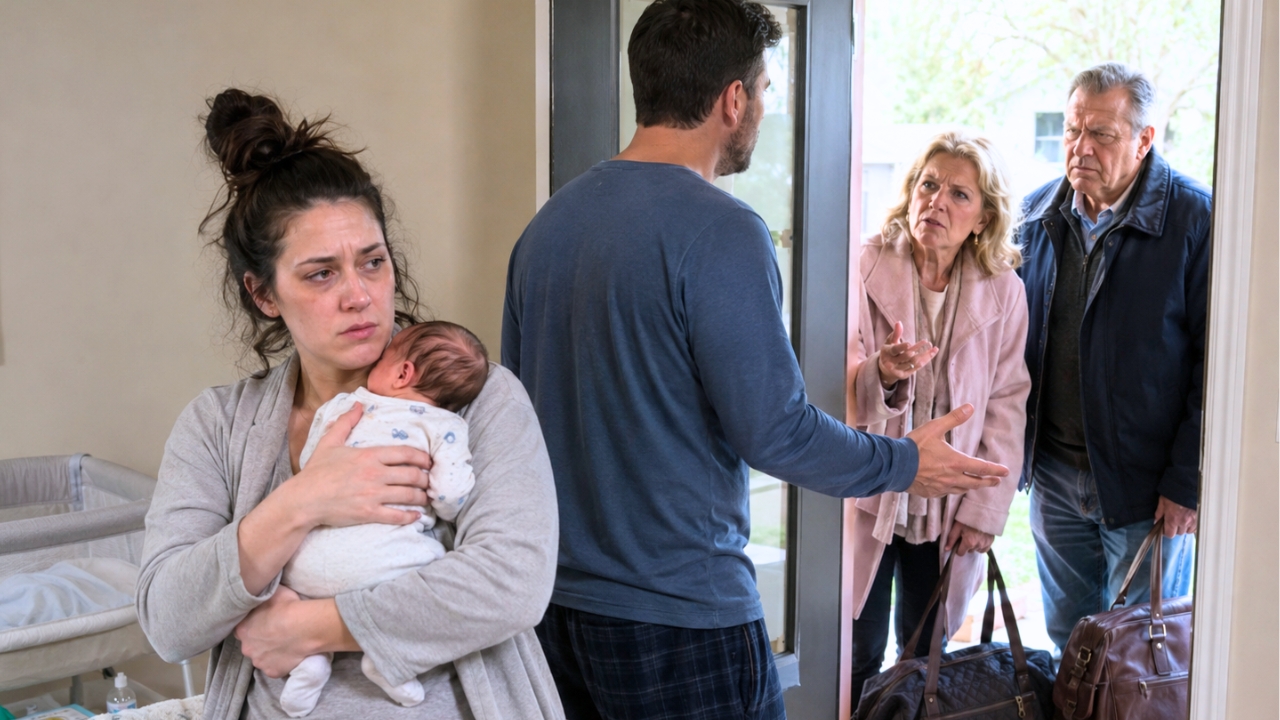
Photo credit: Thrivegirly
Three days after giving birth, she was moving between the bedroom and the couch in slow, careful steps, still sore and running on broken sleep. The plan had been simple: a quiet two-week bubble with her husband, the baby, and a rotating schedule of naps, feedings, and basic recovery. She’d sent a polite message before delivery asking for no visitors until she was healed and settled.
Then the doorbell rang mid-afternoon. Through the peephole, she saw her husband’s parents standing close together, smiling, and holding two large overnight bags like they were checking into a hotel.
A boundary was set early — and put in writing
She and her husband had talked about expectations for weeks. Her pregnancy had been complicated by high blood pressure, and the delivery ended with stitches and strict instructions to rest. The last thing she wanted was hosting, small talk, or passing the newborn around while she tried to figure out pain meds and breastfeeding.
So she did what people often recommend: she communicated clearly and ahead of time. A group text went out to both sides of the family asking everyone to wait for an invitation, explaining they’d share photos and updates, and that the first visits would be short. Her husband backed her up, adding that they would not be answering the door if anyone dropped by unannounced.
It wasn’t an especially harsh message. It was framed as medical recovery and bonding time, not a personal rejection. She thought that would be enough.
The visit started with a smile and ended with luggage
When she didn’t open the door right away, her mother-in-law called her husband’s phone from the porch. He answered in the kitchen, and she could hear the bright, insistent tone even from the couch. There were phrases about “just stopping by” and “we drove all this way.”
He stepped outside to talk, and a few minutes later he came back in looking tense. He said his parents were “already here” and wanted to see the baby “for a minute.” He also admitted they’d brought bags because they assumed they’d stay in the guest room.
She said no. Not later, not for a quick hello, and definitely not overnight. Her husband went back out and tried to explain, and that’s when the visit shifted from surprise to standoff. His parents didn’t leave. They stayed on the porch, then moved to the driveway, then back to the porch again, texting and calling as if persistence would turn the answer into a negotiation.
Pressure tactics turned it into a public scene
After about 20 minutes, the father-in-law walked around to the side yard, claiming he needed to “stretch his legs” after the drive. That put him close to the back door, where the couple kept a spare key hidden for emergencies. The husband intercepted him before he could reach it, and the conversation got loud enough that the neighbor’s dog started barking.
The new mom stayed inside, holding the baby and watching through the curtains. The most stressful part wasn’t just the boundary being ignored; it was the sense that her home didn’t feel sealed anymore. Her husband locked the back door, then checked the windows, like they were preparing for someone to try a handle.
When the mother-in-law realized they weren’t going to be let in, she sat on the front step and began calling relatives. Within minutes, the new mom’s phone lit up with messages from extended family asking why she was “keeping the baby away” and suggesting she was being unreasonable. It felt coordinated, like the porch became a command center.
The couple shifted from debating to documenting
Her husband asked them again to leave, and this time he said it plainly: if they didn’t go, he would call for help. That escalated things fast. The father-in-law argued they had a “right” to meet their grandchild, and the mother-in-law insisted they were only trying to help, pointing at the overnight bags as proof they’d come prepared to “take over chores.”
At that point, the new mom opened the notes app and started recording the timeline: the time they arrived, the calls, the walking toward the back door, the relatives messaging her. She didn’t want to live in a world where she had to keep a paper trail about family, but she also didn’t want the story twisted later.
Her husband pulled up the doorbell camera feed on his phone and saved clips. He also texted his parents a short message so it was in writing: they were not welcome to visit yet and needed to leave the property. He didn’t argue point-by-point. He just repeated the boundary.
When they still didn’t go, he called the non-emergency line. An officer arrived, spoke with the parents near the sidewalk, and then walked up to the door to confirm the homeowners wanted them gone. After another round of pleading, the parents finally loaded their bags back into the car and left.
The fallout hit harder than the actual doorstep encounter
Once the car disappeared, the house stayed tense. The new mom tried to feed the baby, but her hands shook. Her husband kept refreshing the camera app like he expected them to circle back.
That evening, the relatives who’d been contacted earlier kept messaging. Some said the couple had embarrassed the grandparents. Others offered “compromises” like letting them stay at a hotel but visit all day, or allowing them inside if they wore masks and promised not to hold the baby. The new mom felt like she’d been pushed into a debate she never agreed to join.
Her husband sent one more group message, calm and firm, stating that they would reach out when they were ready for brief visits and that showing up again uninvited would result in another call for assistance. He also told his parents directly that their decision to arrive with bags and refuse to leave had damaged trust, and that rebuilding it would take time.
They changed the locks the next day. The spare key was removed. The husband also notified the building manager—partly because the scene had drawn attention, and partly because he didn’t want any “well-meaning” attempt to get a key or be buzzed in later.
People focused on safety, not etiquette
When the new mom described the situation to friends and a few parenting groups, the advice she got wasn’t about being nicer. It was about staying safe and keeping control of the home. Several people urged her to treat it like any other unwanted visitor: keep doors locked, don’t open them to argue, and use cameras.
Others suggested writing a simple visiting policy and sticking to it: short windows, no surprise arrivals, and no visits if anyone is sick. A few encouraged her husband to take the lead with his family every time, so the blame couldn’t be shifted onto her as the “gatekeeper.” And more than one person told her to keep the camera clips and the text thread, just in case the pattern repeated and she needed a formal record.
The most practical responses centered on one point: postpartum recovery is not a performance, and “help” that arrives on someone else’s terms isn’t help. If relatives truly want to support a new family, they wait to be invited and accept no the first time.
For now, the couple has their quiet back, but the calm feels provisional. The baby’s needs don’t stop, and neither does the pressure from people who think access is automatic. The new mom has been focusing on healing and keeping the house peaceful, while her husband works through the harder problem: how to protect their boundaries long-term without turning every milestone into another doorstep showdown.