Bride Refused To Give Her Estranged Father a Wedding Role — Then Relatives Said She Was Embarrassing the Family
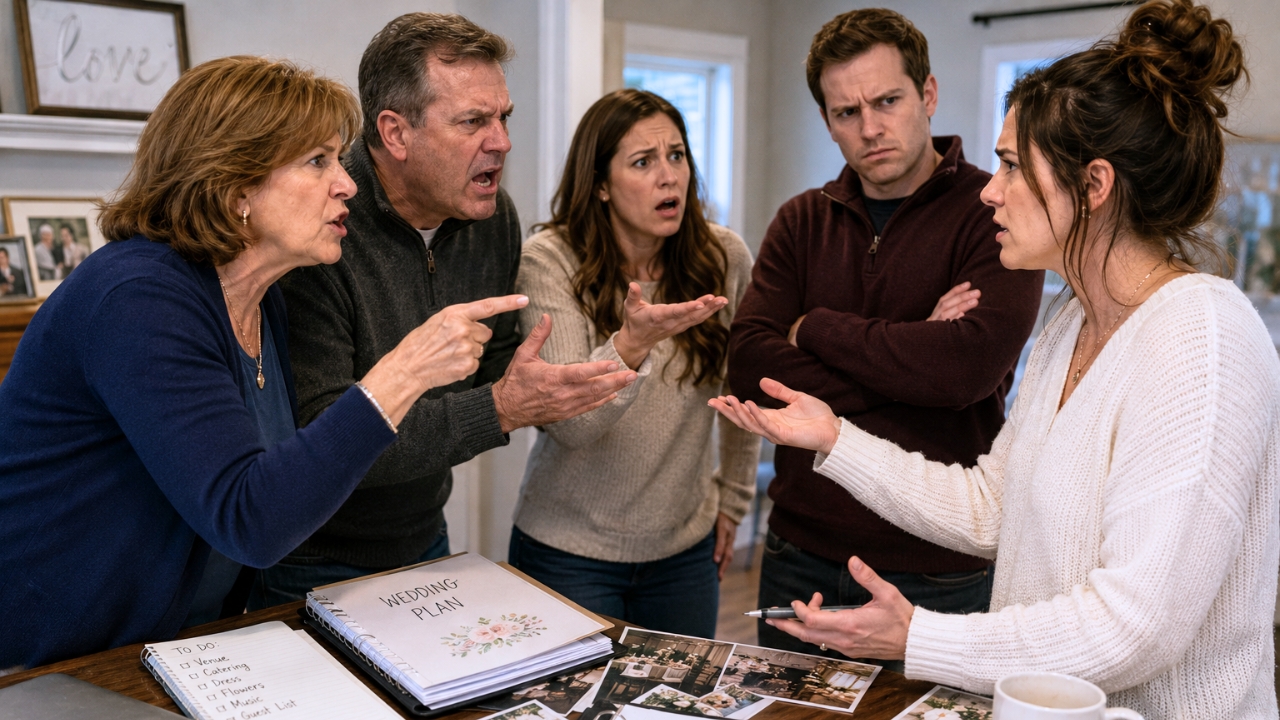
Photo credit: Thrivegirly
Two weeks before her wedding, Maya thought she had finally gotten ahead of the only thing that kept souring her engagement: her father’s habit of turning big milestones into a stage for himself. She had already booked the venue, paid the deposits, and finalized a small ceremony plan that felt safe and calm. The only thing left was getting through the family expectations without reopening old wounds.
Maya hadn’t spoken to her dad in any real way for years, outside of short, tense exchanges around holidays. He missed graduations, skipped birthdays, and showed up at one family funeral long enough to argue about seating and leave. When Maya got engaged, she mailed him an announcement with a polite note and no invitation, hoping that would be the end of it.
A boundary turned into a family referendum
The problem started when Maya’s aunt asked if Maya’s dad would be walking her down the aisle. Maya replied that she wasn’t doing that tradition and that her father wouldn’t have a role. She said her fiancé’s mother was doing a reading, and Maya’s older brother would stand with her for photos, but there wouldn’t be a “father moment” at all.
Within a day, relatives were calling to argue that it would “look bad” if he was sidelined. A cousin sent a long message saying people would talk and that Maya was putting everyone in an awkward position. Another family member warned her that older guests would see it as disrespect and that it would “reflect on the family,” not just on her.
Maya tried to keep it simple: she wasn’t cutting anyone out to punish them. She was protecting her wedding from the person most likely to disrupt it.
The history behind the silence wasn’t a single fight
Maya’s estrangement wasn’t the result of one dramatic blowup. It was a slow accumulation of broken plans, embarrassing scenes, and periods where her dad would disappear and then reappear demanding closeness on his terms. Her mother had raised Maya and her brother, with sporadic child support and constant uncertainty.
As an adult, Maya kept trying for low-stakes contact. She invited him to brunch. She sent photos. She offered to meet halfway when he complained about driving. It always ended in last-minute cancellations or a public argument that left Maya apologizing to waitstaff or explaining to strangers why her father was yelling.
The last straw was a small event—her fiancé’s graduation ceremony—where he showed up uninvited after hearing about it secondhand. He insisted on sitting in the front, argued with an usher, and later cornered Maya outside, loudly blaming her mother for “turning her against him.” Maya left in tears, and her fiancé drove them home in silence.
After that, she stopped trying. She changed her phone settings, muted extended family group chats, and decided her wedding would not be another test of whether he could behave.
The father didn’t accept “no,” and the pressure escalated
When Maya’s dad learned he wouldn’t have a role, he didn’t call her directly at first. He called her grandmother, then her aunt, then two of Maya’s cousins. Within hours, Maya had messages asking her to reconsider “for peace” and suggesting she let him do something small, like a toast or a dance.
Maya’s fiancé offered to handle communication, but she didn’t want him dragged into it. She sent one short text to her dad: he was invited as a guest only, with the same expectations as everyone else, and any disruption would mean he’d be asked to leave. She also told him she wouldn’t discuss it further.
That message triggered a new wave. Some relatives said she was humiliating her father. Others insisted it was cruel to invite him but not honor him. One family friend even offered to “mediate” a sit-down in the week before the wedding, as if Maya’s wedding timeline was the appropriate place to process years of damage.
Meanwhile, Maya started worrying about more than hurt feelings. Her father had a habit of showing up early, wandering into back rooms, and escalating if he felt ignored. The venue was a converted historic building with multiple entrances, and Maya realized how easy it would be for a determined person to create a scene.
Wedding logistics became a safety and control plan
Maya met with the venue coordinator and quietly asked what their options were for dealing with an unwanted disruption. They walked through entrances, staff-only areas, and how they’d handle someone refusing to leave. The coordinator suggested adding a security guard for the evening and having a point person who could make quick calls without involving the couple.
Maya also looped in her photographer and DJ. She didn’t want an announcement that highlighted the absence of a father-daughter moment, and she didn’t want a microphone grabbed during dinner. The DJ agreed to keep the microphone off the table and to only hand it to pre-approved speakers.
At home, Maya started documenting everything. She saved messages from relatives that included threats like “you’ll regret this” and “don’t embarrass us.” She kept screenshots of her father’s texts and wrote down dates of incidents she remembered in case she needed to explain the situation to venue staff or, in a worst case, law enforcement.
The financial side stung too. Adding security wasn’t free, and neither was the stress of wondering whether the day would be about her marriage or about managing one person’s emotions. Maya also worried about workplace fallout because a few guests overlapped with her professional network. She didn’t want her wedding remembered as a spectacle.
Relatives pushed a “public image” argument that landed badly
The family’s main argument wasn’t that her dad had changed. It was that people would notice. Maya heard versions of the same line: if she didn’t include him, it would look like she was the problem. A few relatives framed it as a duty, saying a wedding was about family unity, not personal feelings.
That logic made Maya dig in harder. She told her aunt that a public ceremony didn’t erase private history. She said she wasn’t obligated to hand someone a spotlight just so other guests could feel comfortable for five minutes.
The most painful part was that relatives who knew the past still wanted the appearance of normal. Maya realized they weren’t asking her to reconcile. They were asking her to cover for everyone’s discomfort, like she’d done as a kid when she’d smoothed things over after her dad’s outbursts.
One cousin even suggested that Maya’s father might “act better” if he felt honored. Maya heard it as a gamble: reward the unpredictable person in hopes he behaves, and blame the bride if he doesn’t.
What people around her emphasized: keep it in writing and control access
Friends who’d dealt with messy family events told Maya to stop negotiating and start setting firm procedures. They pushed her to keep every communication in text or email, avoid phone calls that could be twisted later, and assign a small group of trusted people to handle any conflict on the day.
A few advised her to share a photo of her father with the security guard and the coordinator, not to shame him but so staff wouldn’t be caught off guard. Others recommended telling the wedding party not to engage if he tried to argue, because arguing would give him an audience.
Some people also urged her to think about seating and exits. Put him near a side door, not near the couple. Avoid alcohol service to anyone who shows signs of agitation. Make sure the venue knows who has authority to ask someone to leave.
Maya took the advice seriously. She didn’t want drama, but she wanted leverage if drama arrived anyway.
In the end, Maya held her boundary: no formal role, no symbolic moment, no public performance of a relationship that didn’t exist. A few relatives RSVP’d “no” in protest. Others stayed quiet but frosty. Her father said he was coming, then stopped responding when asked to confirm.
On the morning of the rehearsal, Maya looked at the seating chart and the security contract on her kitchen table and felt a mix of grief and relief. She couldn’t control what her father chose to do, or what her relatives chose to gossip about. But she could control the structure of the day, and she could refuse to trade her peace for someone else’s idea of a respectable family photo.