Her MIL Expected a Spot in the Delivery Room — Then the Mom Told the Hospital No Guests Were Permitted
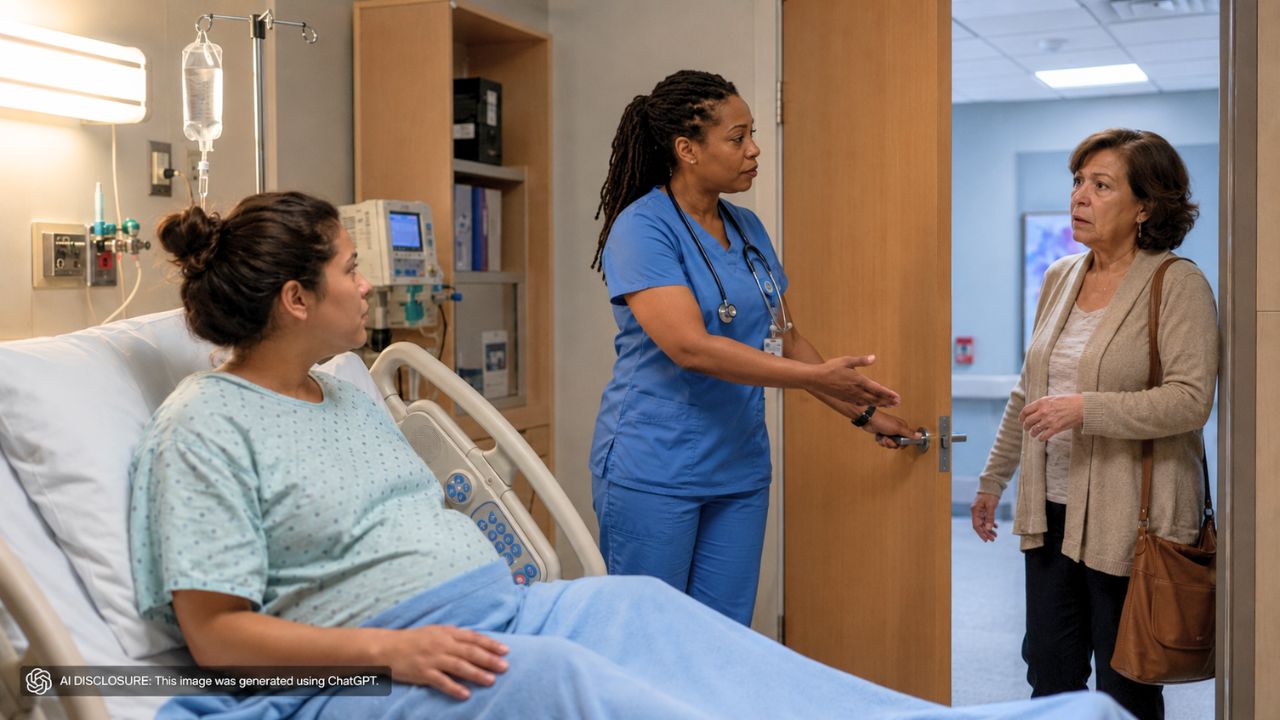
Photo credit: AI-generated image created using ChatGPT. Illustrative only.
At 33 weeks pregnant, she thought she’d be spending these last few weeks doing the normal first-time-mom stuff: folding tiny onesies, daydreaming about meeting her daughter, and trying to sleep while her body still lets her. Instead, she was stuck in a fight she never expected to have—over who gets to be in the room when she gives birth.
In the original post, the mom-to-be explained that this pregnancy already feels like a miracle. She’d been told at 19 that she was infertile, so carrying her first baby—a little girl—has felt like a gift she’s not taking for granted. But as excited as she is, her husband’s mother has turned the entire experience into something that feels weirdly performative… and way too crowded.
The miracle pregnancy came with an unexpected extra guest
She’s been with her husband for just over three years, and at the beginning, she and her mother-in-law got along well. Nothing seemed off. No glaring red flags, no constant power struggles, no feeling like she was competing for her own husband’s attention.
Then she and her husband moved in together, and everything shifted. Suddenly, her mother-in-law wasn’t just “close with her son.” She was there constantly—so often that it stopped feeling like visits and started feeling like residency.
According to the mom-to-be, her mother-in-law was at their house literally every single night, staying until around 10 p.m. And it wasn’t the kind of quick pop-in where someone drops off leftovers and leaves. It sounded like hours of her sitting in their space, eating up the one time of day most couples count on to decompress and be together.
It wasn’t just frequent visits—it was the way she treated the mom
The pregnant woman said the part that really got under her skin wasn’t only the constant presence. It was the vibe. She described her mother-in-law as overbearing, the type of parent who still acts like her grown son is 12 years old.
And once the pregnancy became real, the dynamic got even worse. Instead of talking to her like a person, her mother-in-law started treating her like a delivery system. One detail said everything: sometimes the mother-in-law would speak directly to her stomach without even acknowledging her.
That kind of thing might sound small to someone who hasn’t lived it. But day after day, it adds up. Being pregnant already makes you feel like your body is public property. Having someone literally talk around you, like you’re not even in the room, can feel humiliating in a quiet way—especially when it’s happening in your own home.
Meanwhile, she said her husband and his mom are extremely close. Close enough that she feels like she rarely gets real alone time with him anymore because his mother is always there, taking up the space where their relationship should be allowed to breathe.
When the delivery room came up, her husband picked his mom
Eventually, the conversation moved from “why are you here every night” to the biggest moment of all: labor and delivery. The mom-to-be admitted she didn’t want her mother-in-law in the delivery room. Not because she’s trying to be cruel, but because she knows herself—and she knows she’ll feel stressed and exposed with her there.
She wanted her husband’s support. That’s the whole point of having your partner with you when you give birth. But she couldn’t picture him being fully present if his mom was in the room too. In her mind, it would become a situation where he’d be tending to his mother’s feelings instead of focusing on the woman actively giving birth.
Her husband’s response wasn’t gentle. He was adamant that his mother should be there. When she tried to explain how uncomfortable it made her, he told her she was being ridiculous and selfish.
Then came the line that probably made her stomach drop: he told her she needed to get used to his mother being around a lot. Not just for the delivery, but as a general expectation for her life.
She felt cornered—because everyone acted like her discomfort didn’t matter
The mom-to-be said she felt selfish for even wanting to say no, which is how you can tell this has been going on for a while. When someone’s been steamrolling you long enough, you start apologizing for having basic preferences.
And she wasn’t getting much backup. Her friends told her to let her mother-in-law be in the room and “ignore her.” Which sounds nice in theory, until you picture labor. You don’t “ignore” someone while you’re in pain, half-naked, exhausted, and trying to do something that can turn scary quickly.
On top of that, her husband was refusing to “let” her ban his mother. That wording alone shows how trapped she felt—like the person giving birth wasn’t the decision-maker, and like access to her body was up for debate.
By the time she asked if she was wrong for not wanting her mother-in-law there, it wasn’t just about a guest list. It was about whether she was allowed to have any say in one of the most intimate medical events of her life.
The question wasn’t really about one day—it was about the pattern
Nothing in her story suggested this was a one-time request from an excited grandparent. This sounded like a pattern: showing up nightly, staying late, taking up space, and acting like the pregnancy belonged to her.
That’s what made the delivery room fight feel inevitable. If her mother-in-law already treated her like an incubator in the living room, what would she be like in the hospital?
The mom-to-be clearly wasn’t imagining a calm, supportive presence at her bedside. She was imagining a situation where she’d be emotionally managing someone who doesn’t even acknowledge her as a full person. And if her husband is already siding with his mom now, there’s no reason to believe he’d suddenly turn into a protective partner in the middle of labor.
It also didn’t help that her husband framed it as something she should accept long-term. That’s the kind of statement that turns a single disagreement into a full-blown reality check about what marriage will look like after the baby arrives.
So she decided to keep the room private—no guests permitted
She didn’t describe some dramatic screaming match or a big family meeting. She described a woman getting more and more certain that her birth would be stressful if she didn’t take control of it.
And that’s where the decision landed: she planned to tell the hospital no guests were permitted. Not “no mother-in-law.” Not “only certain people.” Just a clean, simple rule that protects her from being argued with while she’s in labor.
It’s the kind of move people make when they feel like their “no” won’t be respected unless someone with authority enforces it. And it’s also telling that she had to think that way at all—because ideally, your partner is the person making sure you feel safe, not the person trying to negotiate your comfort away.
With only a few weeks left until she meets her daughter, the bigger question isn’t whether her mother-in-law gets a front-row seat. It’s whether her husband is willing to show up as a teammate—or whether she’s about to become a mom while still being treated like she’s second place in her own family.