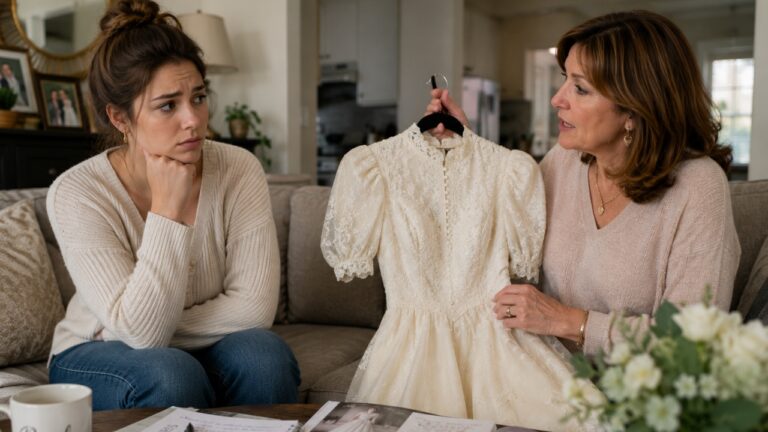
She Stepped Down From the Wedding Party Four Months Out — Then the Bride Said She’d Broken an Unspoken Promise

Photo credit: AI-generated image created using ChatGPT. Illustrative only.
Four months before a wedding, one bridesmaid realized the numbers weren’t just “tight.” They were spiraling. And when she tried to step back before things got worse, the bride acted like she’d committed a personal betrayal—like there had been some silent agreement she’d broken just by saying, “I can’t do this.”
It wasn’t about not wanting to support her. It was about being asked to hand over serious money on a deadline, without clear answers on what it was for. And the moment she hesitated, the whole wedding party started to wobble.
It wasn’t just a dress—suddenly it was a $500 deadline
The bridesmaid had been trying to show up as a friend. She and the bride weren’t related, but she’d always been closer to her than to her own cousin, which made the whole “wedding party loyalty” thing feel even more personal.
But then there was the money. The bride had given the group an “until today” deadline to pay $500, and it didn’t sound like a casual “chip in if you can.” It sounded like a requirement.
As the date got closer, it became harder to ignore the uncomfortable part: nobody seemed totally sure where the money was going, and the cost didn’t match what people thought they were agreeing to in the first place.
The group chat update that made everything feel shakier
The day before the deadline, the bride sent a message in the wedding group chat that changed the mood completely. She said she’d be changing bridesmaids and calling off the bachelorette party.
Her reason was blunt: only one person out of 16 who were supposed to be involved with the bachelorette had paid, and only one out of four bridesmaids had paid, too. Two people (and the narrator herself) had already bailed because of the pricing.
That’s the moment it stopped being a private money stress and started looking like a full-on wedding planning crisis—one where the bride was expecting her friends to patch the holes.
Then the bride admitted the dresses were $35
After the group chat message, the bride reached out again and tried to smooth it over. She said the dresses were actually $35.
Not $500. Thirty-five dollars.
And then came the explanation that made things messier, not clearer: she was running out of funds for the bachelorette party and decided charging everyone $500 was the “best” way to pay for it.
Suddenly, the bridesmaid wasn’t just dealing with a pricey wedding expectation. She was dealing with a friend who had essentially tried to re-label bachelorette costs as “bridesmaid expenses,” without being upfront about it.
A last-minute pivot… and a refund conversation
At that point, the plan changed again. Instead of paying the bride, everyone would pay the $35 personally to the seller, and accessories would be optional and up to each person.
That adjustment alone showed how shaky the original setup had been. It also raised a bigger question: what about the people who already paid the larger amount?
The bridesmaid advised the bride to refund anyone who’d paid, because it wasn’t right to use other people’s money like that. And to the bride’s credit, she did.
It didn’t magically fix the awkwardness, but it turned the situation into something more workable—and less like friends were being pressured into silently funding a party they didn’t agree to bankroll.
Guests started canceling after being asked to pay for food and drinks
What made the whole thing feel even more precarious was that the bridesmaid started seeing the same pattern outside the bridal party.
Guests were beginning to cancel because the bride had also tried to charge them in advance for food and drinks.
At that point, it wasn’t just one questionable request. It sounded like the bride was trying to run the wedding like a pay-to-enter event, likely because her budget couldn’t support what she’d planned.
The bridesmaid said she was trying to help her “do things right” and accept that she needed to accommodate according to her budget. Not her dream version. Not her Pinterest version. Her actual bank account version.
In the end, she stayed—because the bride was basically alone
After everything, the bridesmaid made a decision that wasn’t really about the dress cost anymore.
She agreed to be a bridesmaid after all. Not because the situation suddenly felt normal, but because she felt bad that the bride ended up by herself.
She described it as being there “for support,” even admitting she hated to say she felt guilty—but she did. It’s hard to watch someone’s big day start unraveling, even if they’re the one tugging at the loose threads.
And despite the money drama and the messy planning choices, she said they were on good terms, and she was trying to be a good friend right now.
For anyone who wants to read her full update in her own words, it’s shared in the original post.
The uncomfortable truth is that this wasn’t just a bridesmaid stepping back. It was a bride learning—late—that you can’t build a wedding budget on other people’s wallets and hope nobody notices. And it was a friend deciding that even when someone handles things badly, you still have to choose what kind of person you want to be in the fallout.