The Bride Said the Costs Were Fine Because She Could Afford It — Then the Bridesmaid Said Affordability Was Never the Point
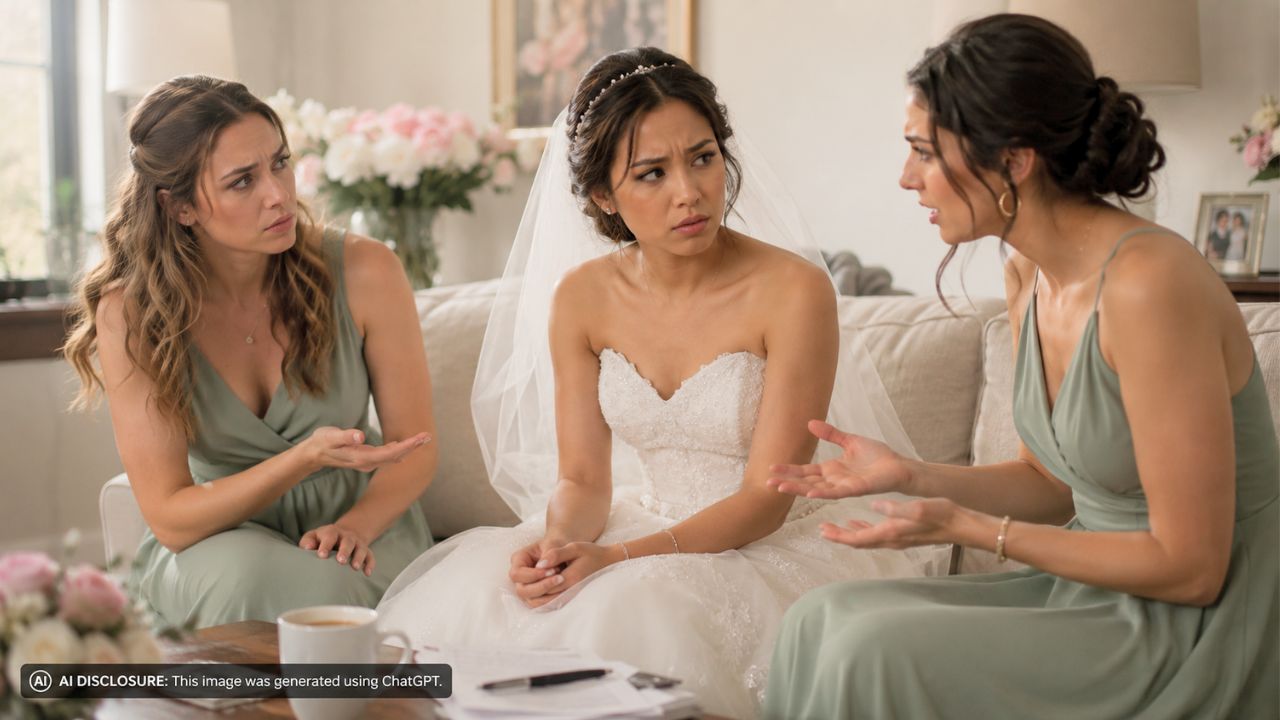
Photo credit: AI-generated image created using ChatGPT. Illustrative only.
It started the way a lot of wedding drama starts: with a friend group that was never actually a friend group. One woman had already gotten through her own wedding without a single bridesmaid bill landing on anyone else’s lap. Now, she was being asked to shell out thousands for someone she doesn’t even like—and suddenly, everyone was acting like her bank account was the real deciding vote.
A 28-year-old woman explained that she got married last year and made her close friend Anne, 29, her maid of honor. The tricky part was Belle, also 28: a longtime “friend” by proximity who, in her words, bullies her and only acts nice when she’s drunk. The dislike goes both ways, and it wasn’t subtle.
But because Anne felt guilty leaving Belle out—since Belle apparently doesn’t have other friends—the bride made a choice that kept the peace at the time… and set the stage for what came next.
The problem started before the engagement announcements
This wasn’t a sudden personality clash. The bride described Belle as someone who shows up to compare lives and try to put her down. That’s not “we don’t click,” that’s “this person makes me feel small on purpose.”
Still, Anne is the connector in their trio. She’s the friend who feels responsible for everyone’s feelings, even when someone’s behavior makes that feel impossible. And because Anne didn’t want to exclude Belle, Belle stayed in the orbit.
When the bride planned her own wedding, she could already see the outcome if Belle wasn’t included. Belle would “kick up a fuss behind my back,” she wrote. So instead of risking a months-long whisper campaign, she made Belle a bridesmaid.
It wasn’t because they were close. It was because she was trying to keep the day from turning into a stress festival.
She paid for everything, and it quietly rewrote expectations
Here’s where the story takes a turn that matters: the bride covered all of her bridesmaids’ expenses. Dresses. Bachelorette party. The whole thing. She said she did it because she thought it was unfair to burden them with costs for her wedding, and because she could afford it.
And honestly? That choice probably made the entire experience smoother. She said everyone had a blast, and “luckily there was no drama.”
But paying for everyone doesn’t just remove financial pressure. It also sets a new normal—especially for someone like Belle, who already treats everything like a competition.
So when Belle got engaged and planned her own wedding, the old dynamic came back… except this time, Belle was the one making demands.
Belle’s bridesmaid request came with a price tag
When Belle asked both women—her frenemy and Anne—to be bridesmaids, the bride said she wouldn’t have had a huge issue with it at first. Annoying? Yes. But manageable, if it stayed simple.
It did not stay simple.
Belle expected them to cover their own expenses. The bride is “well off,” and she acknowledged she could pay, but she didn’t want to—especially because she’s saving for a home in a high cost-of-living area. She wasn’t saying she couldn’t. She was saying she didn’t want to spend that money on this.
So she declined the bridesmaid role and offered a compromise: she’d happily attend as a guest.
That’s usually where a reasonable person says, “Totally understand, we’ll miss you up there but can’t wait to celebrate together.” Belle did not do that.
“You can afford it” turned into the whole argument
Belle got upset and pointed straight at the bride’s finances. She argued that the bride could “easily afford the expense,” like affordability was the only measure that mattered.
The bride didn’t pretend it was about hardship. She told Belle she simply didn’t want to pay, and that was that. It’s blunt, but it’s also refreshingly honest. She wasn’t asking Belle to discount the dress or rearrange the plans. She was stepping out of the role entirely.
Then Belle went for the guilt button: she reminded her that she’d been a bridesmaid at the bride’s wedding.
Except that comparison fell apart immediately, because the bride reminded Belle of a key detail—Belle didn’t pay for anything when she was a bridesmaid. Her entire participation had been funded by the bride.
In other words, this wasn’t a trade. Belle wasn’t returning a favor. She was sending an invoice.
For anyone wanting the original details, they were shared in the original post.
The blowup didn’t stop with her—Anne got dragged in
This is where it stopped being awkward and started being ugly.
After the bride declined, Belle reportedly “had a fit” and threatened to remove Anne as a bridesmaid too. And suddenly, Anne was standing in the splash zone of a fight she didn’t start.
Anne’s reaction was complicated. On one hand, she was actually relieved. She couldn’t afford the cost anyway, and the dress alone was already $2,000 “so far.” That wording matters, because it suggests other expenses were coming—events, travel, hair and makeup, shoes, gifts. The usual snowball.
On the other hand, Anne’s feelings were hurt. Belle’s threat made it clear that Anne’s spot was conditional, like a bargaining chip. And instead of being mad at Belle for turning the bridal party into leverage, Anne turned to her close friend and said she should have “sucked it up and paid.”
That’s the moment the bride started wondering if she was the one in the wrong. Not because she couldn’t afford it. Because someone she cares about was now paying emotionally for her decision.
Affording something doesn’t mean you owe it to anyone
The most interesting part of this story is how quickly the conversation stopped being about weddings and became about entitlement.
The bride wasn’t refusing to attend Belle’s wedding. She wasn’t demanding Belle change her plans. She wasn’t trying to convince anyone else to drop out. She just didn’t want to spend a large amount of money to participate closely in the wedding of someone who treats her badly.
Belle’s argument basically boiled down to: if you have the money, you should hand it over. Not because it’s fair. Not because you agreed. Just because she decided this role comes with a bill, and she knows you can cover it.
And Anne—sweet, guilt-prone Anne—seems stuck in the middle, still operating like it’s her job to keep Belle from feeling excluded. Even when Belle is the one creating the mess. Even when the “friendship” is clearly one-sided.
There’s no neat ending here. Belle is still threatening to cut Anne, Anne is still hurt, and the bride is left holding the uncomfortable truth: sometimes paying for peace only works once. The next time, people don’t remember the generosity—they remember the precedent.